Benjamuna's Blog

Stories…. with a touch of India….

Chai! Chai! May 23, 2026

Filed under: Food,INDIA,Travels — benjamuna @ 1:25 pm
Tags: , , , , , , , , , , ,

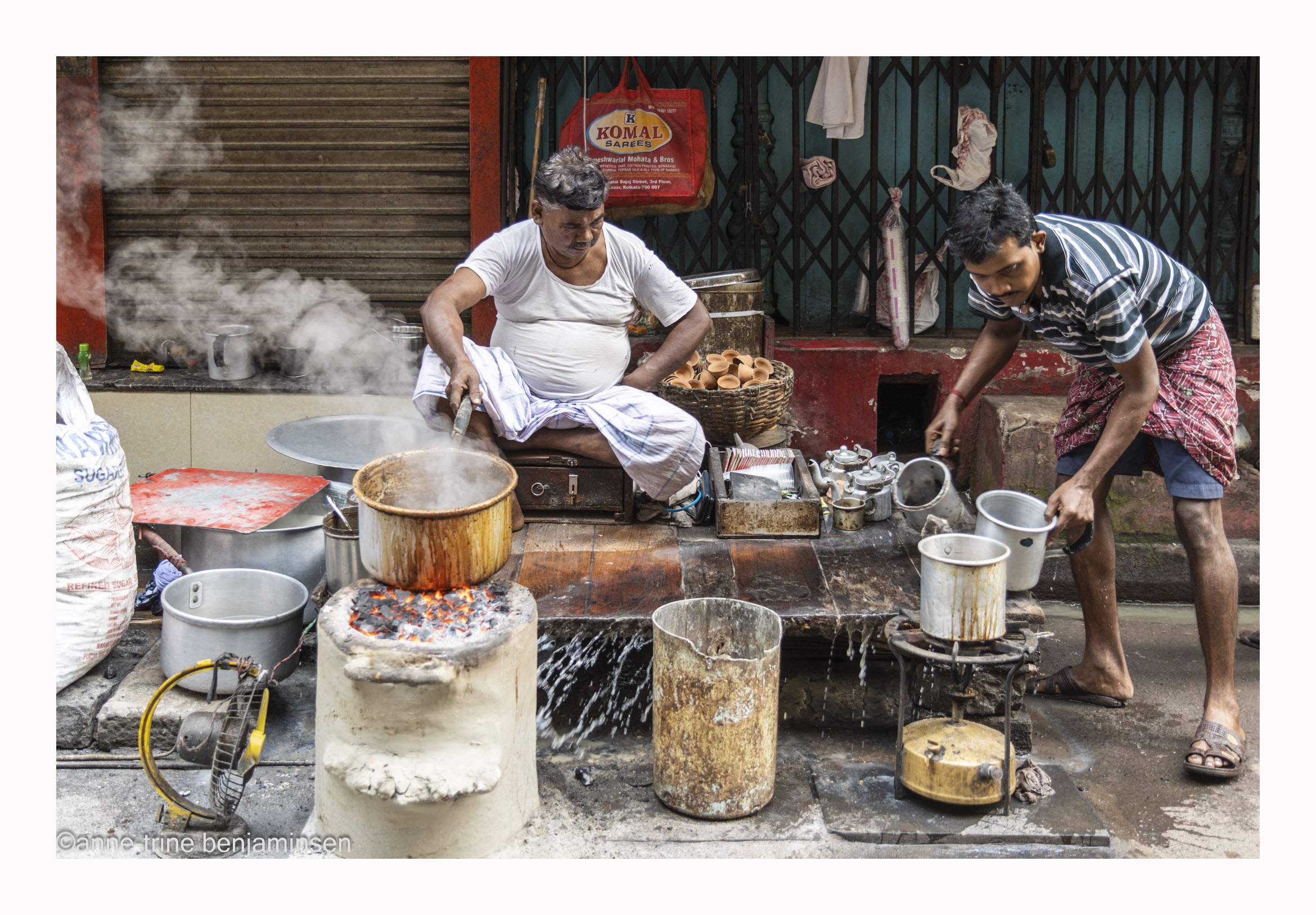
India runs on chai, I once read. And that might well be true. You’ll find chai sellers, called chaiwallahs, around every corner, along every stretch of road. You’re not served chai in a big mug, you drink it from tiny earthen cups – at least when you buy on the streets. But I have been enough times to India to notice the change: some stalls have sadly replaced the earthen cups with tiny plastic or paper cups. It’s disappointing, from several points of view.

The earthen cups are smashed after use, you’ll see the chards around every stall – whereas plastic cups most likely end up as “runaway” garbage – still a major problem in India. And of course, chai tastes a lot better in earthen cups – or maybe that’s just a sentimental truth … But the tea definitely looks better and more genuine in those cups.

Chai is India’s unofficial national obsession, is another highly appropriate quote. There is always time or a reason for chai. As a foreigner it might be a challenge to buy chai because some chai stalls don’t meet with Western expectations of hygiene.
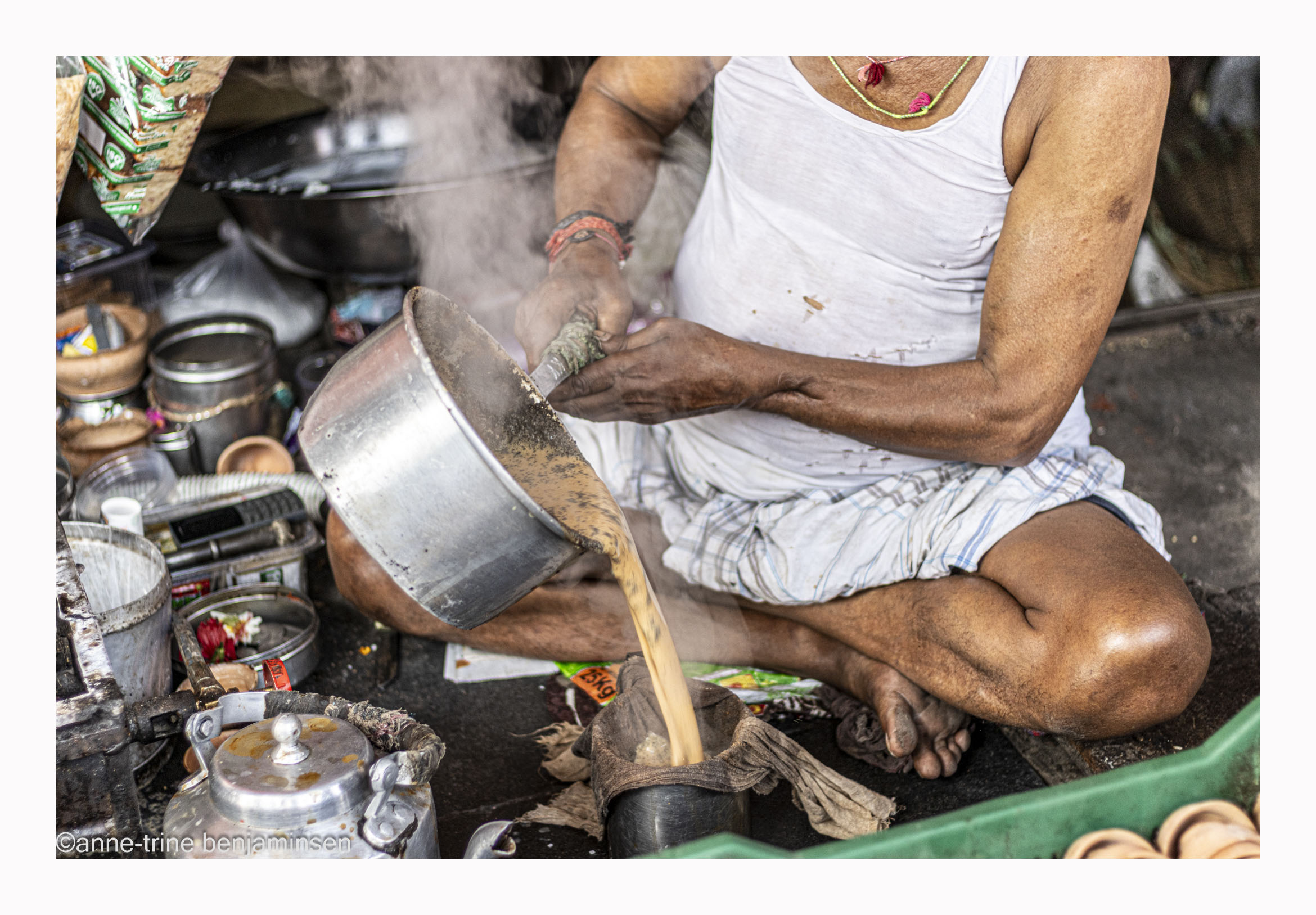
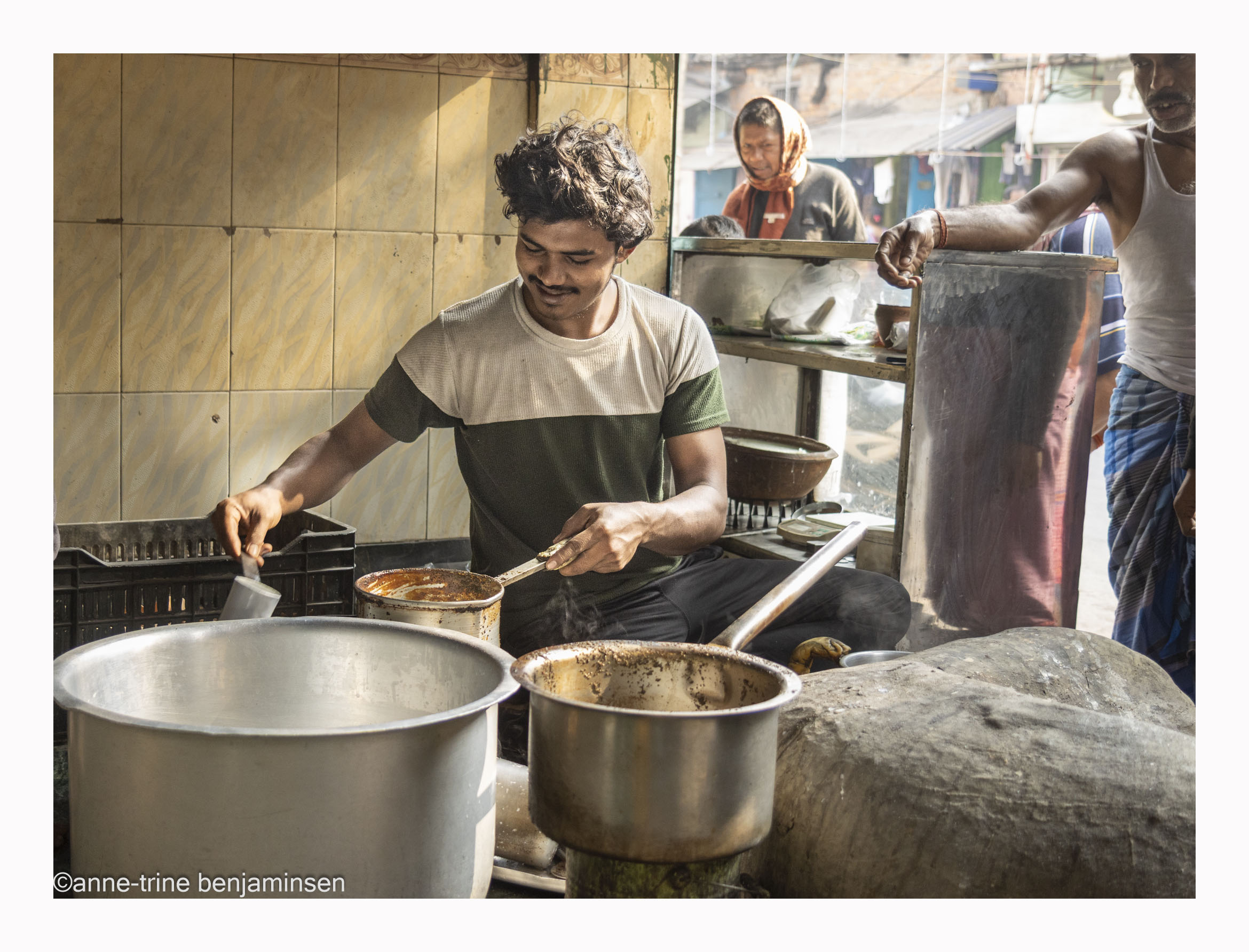
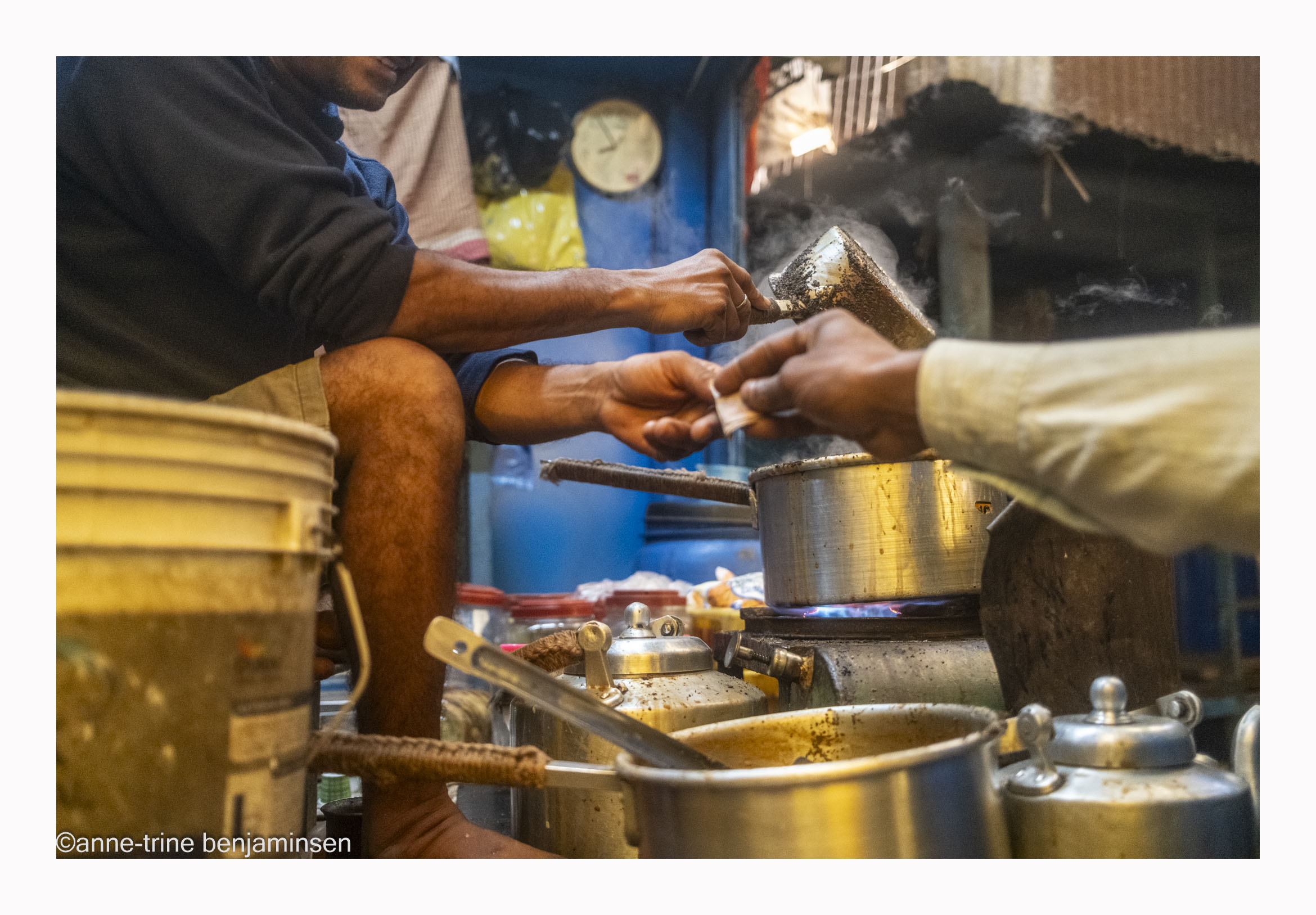
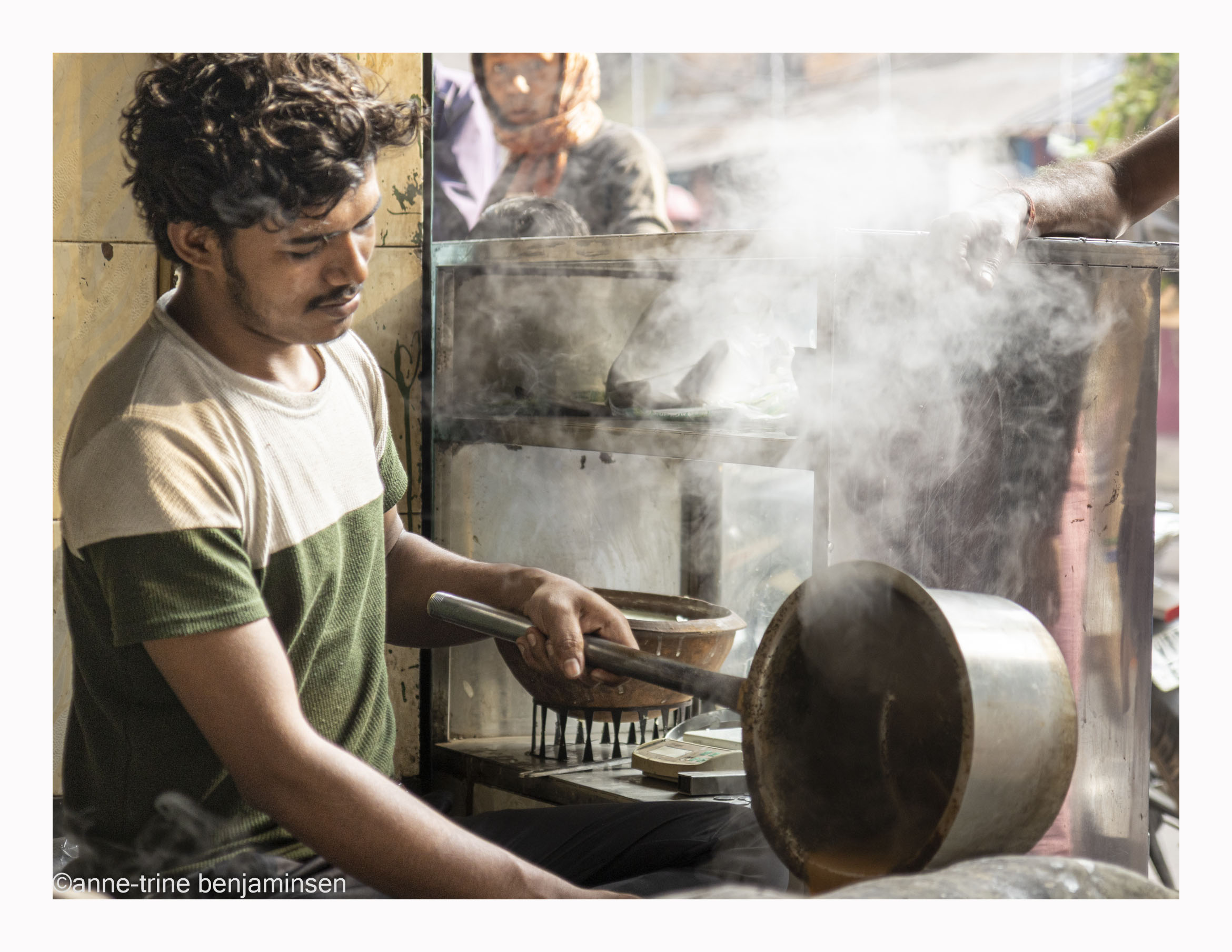
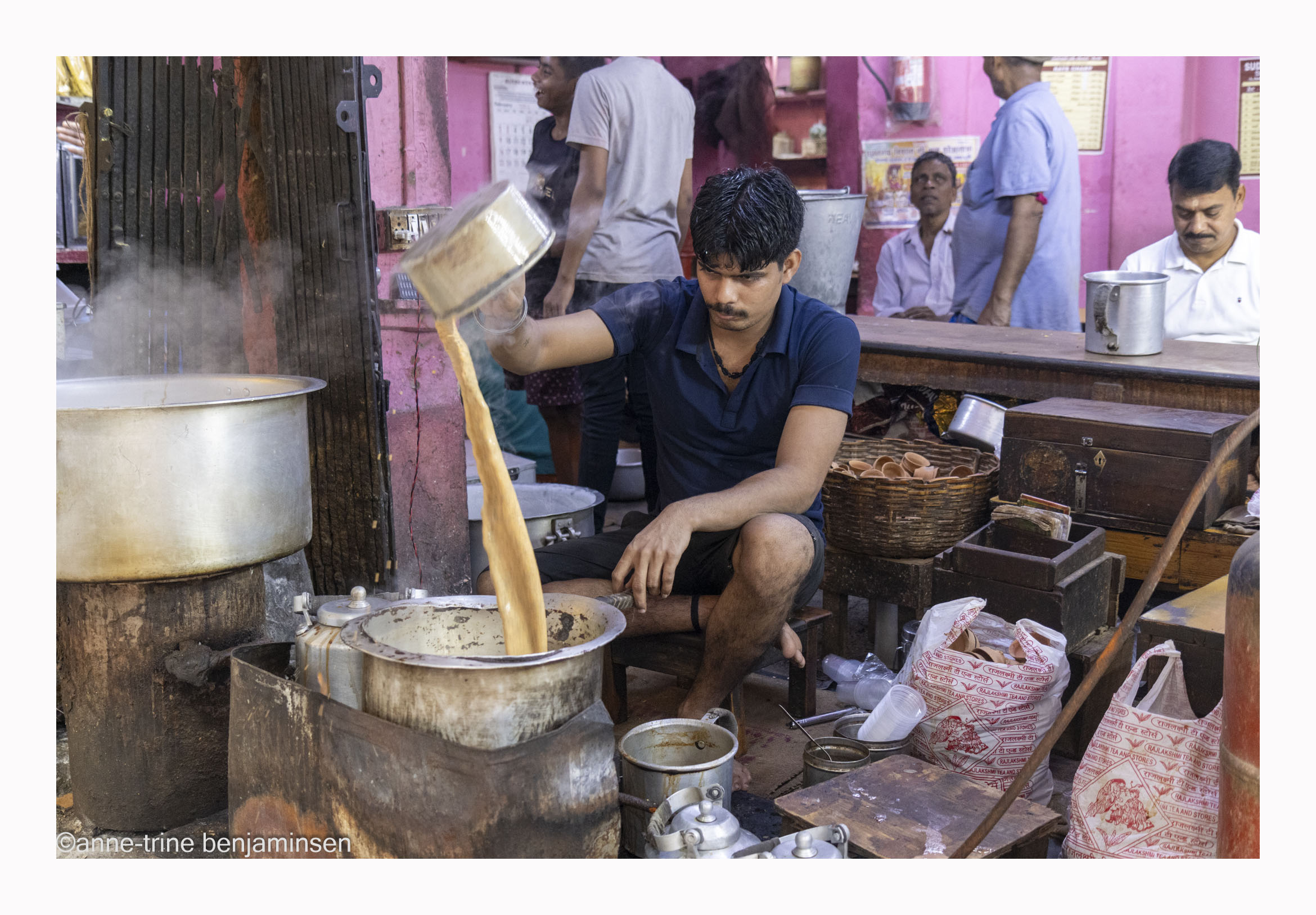
Chai is always boiled because it then extracts stronger flavour and blends spices with milk more effectively. Watching the chaiwallahs, often cross legged surrounded by all their paraphernalia, lifting the ladle up in the air and letting go of the light brown jet of tea back into the pot, is very pleasing to the eye – not to mention a camera. Often, the chaiwallahs put on a show for the keen goras with cameras in hand.

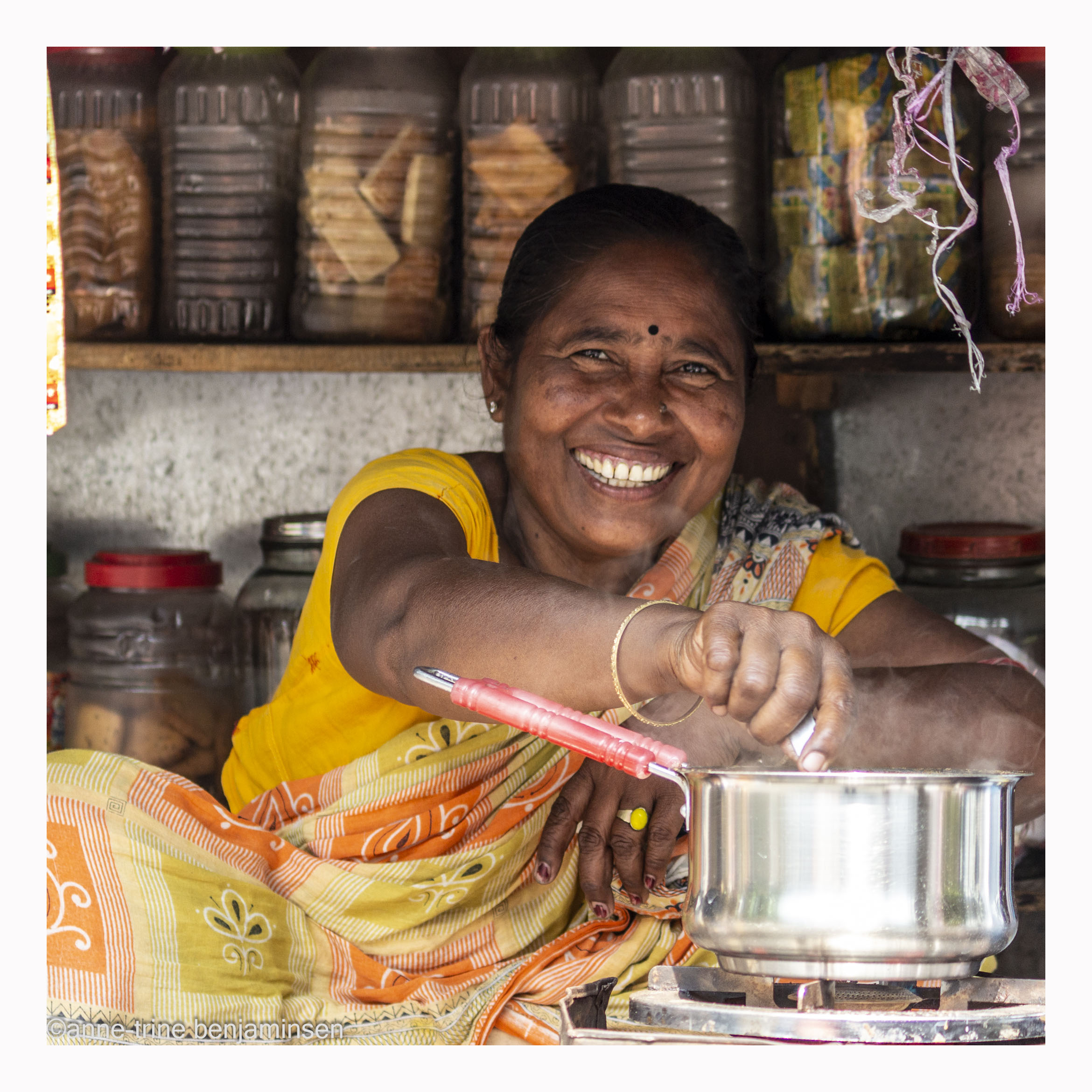
Those small pit stops, savoring a tiny cup of chai and a couple of sweet biscuits – the latter always kept in plastic jars, it’s simply India! If you haven’t been through this ritual, you haven’t been to India.
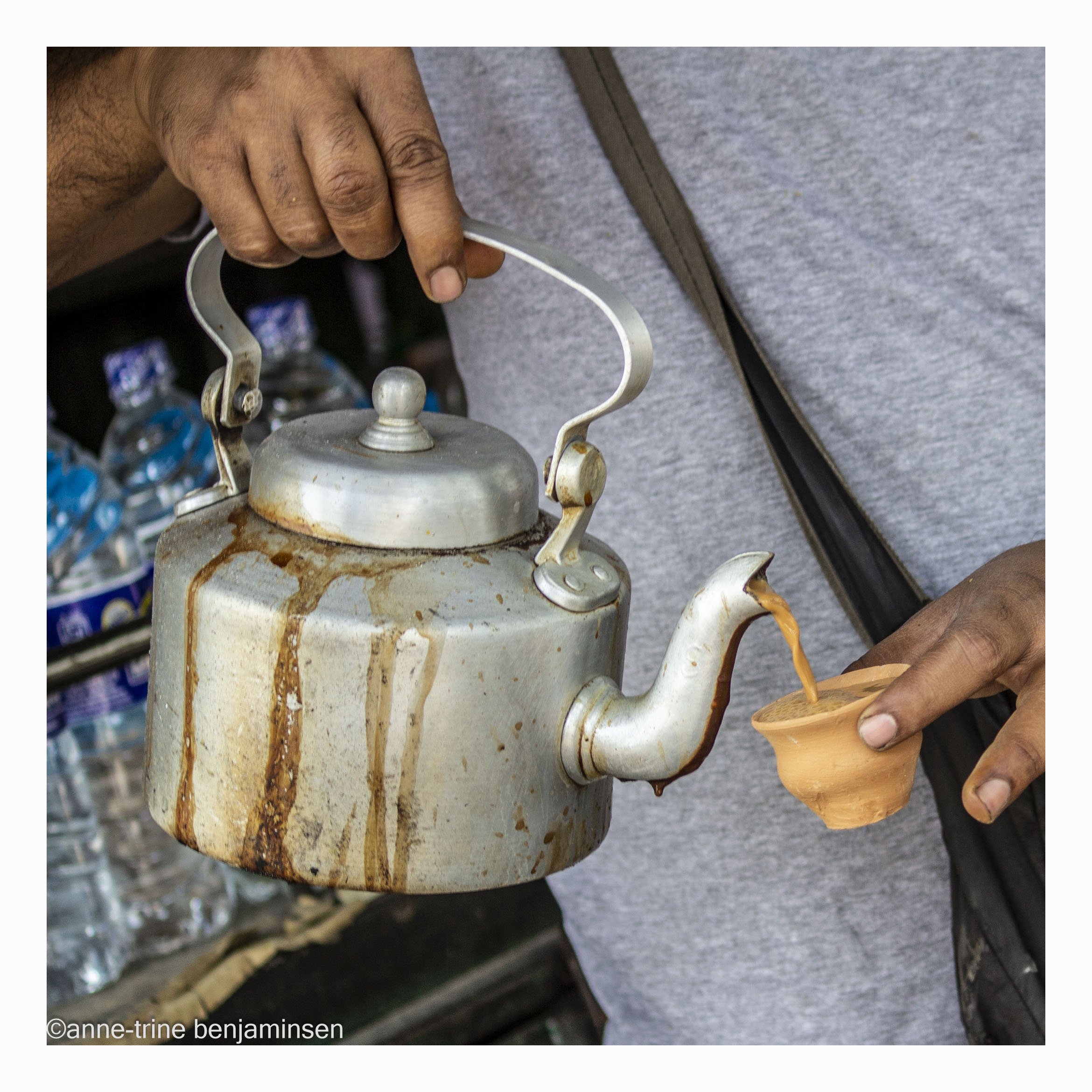
The history of chai goes back to British rule. The British established tea plantations in Assam and Darjeeling in the 1830’s to compete with Chinese tea imports. As production increased, tea became widely available across India. Initially, tea was said to be too complicated for the poor, but it eventually spread to the whole population. It was sold and made easily available on the streets by chaiwallahs. And over time, tea evolved into what we know as chai by adding heaps of sugar and milk which made tea into a sweet and milky concoction. What tastes even better is Masala Chai, chai spiked with cinnamon, cloves, ginger and pepper; sometimes said to be India’s way of reclaiming tea from the British.
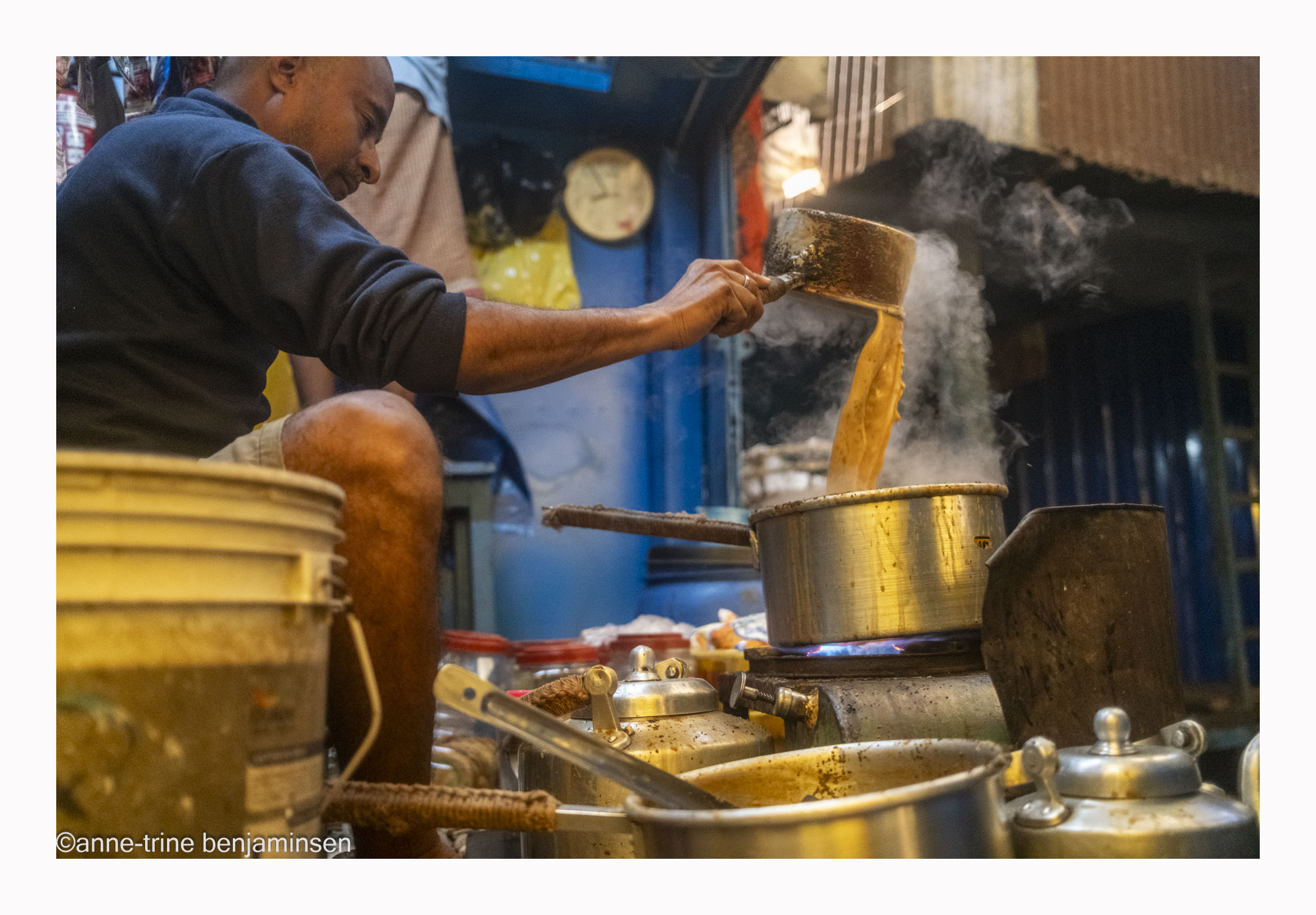
Tea in India went from a foreign habit into the soil of Indian life. Chai is affordable and uniquely Indian. You don’t pay a lot for those small cups of chai so wildly available.
India is the world’s second-largest tea producer of tea, after China. India is also the world’s largest consumer of tea and the second-largest exporter.

Chai means tea. When Western cafes put “Chai” on the menu, or even “Chai Tea” they most probably serve tea with milk and Masala Chai would rightly be tea with spices.

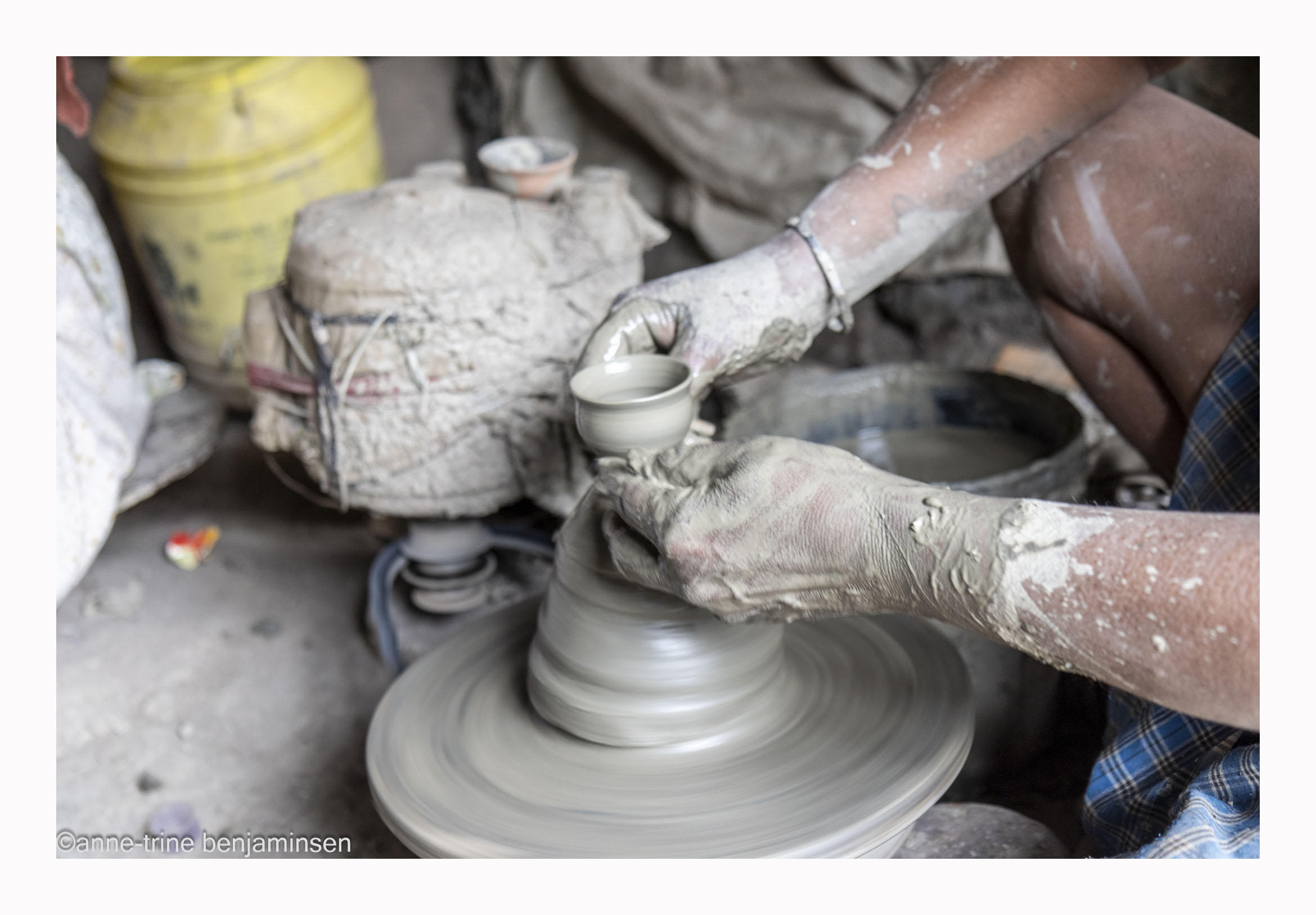
Left photo: Small home industry at the banks of Hooghly river in Calcutta. Earthen cups are produced at high speed before they are set to dry in the sun.
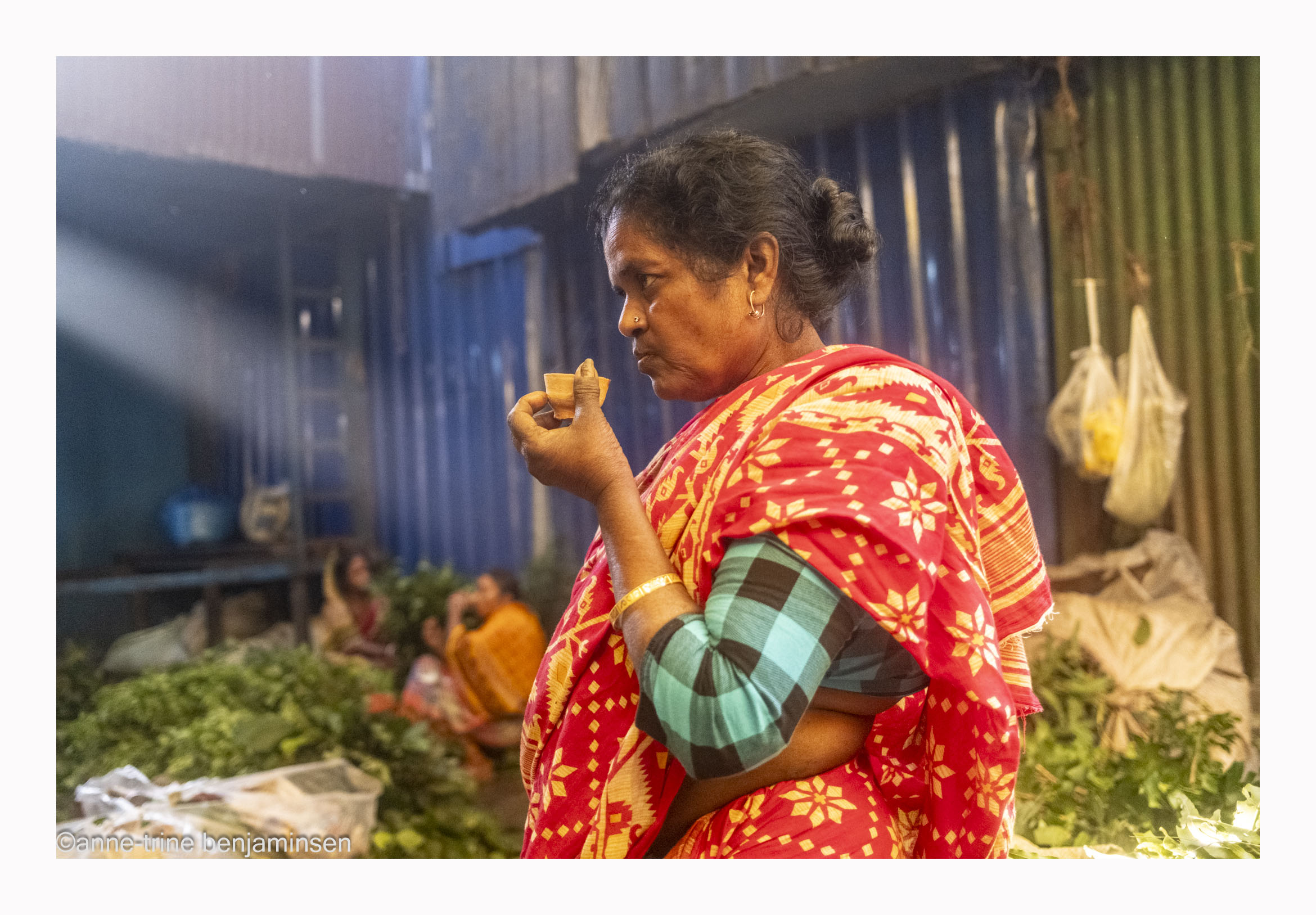
Right photo: A woman at the Mullick Ghat flower market in Calcutta taking a small break, a chaiwallah is never far away.
 

The fate of the Yellow Taxi March 22, 2026

Will any yellow taxi in Kolkata still be a Yellow Taxi?

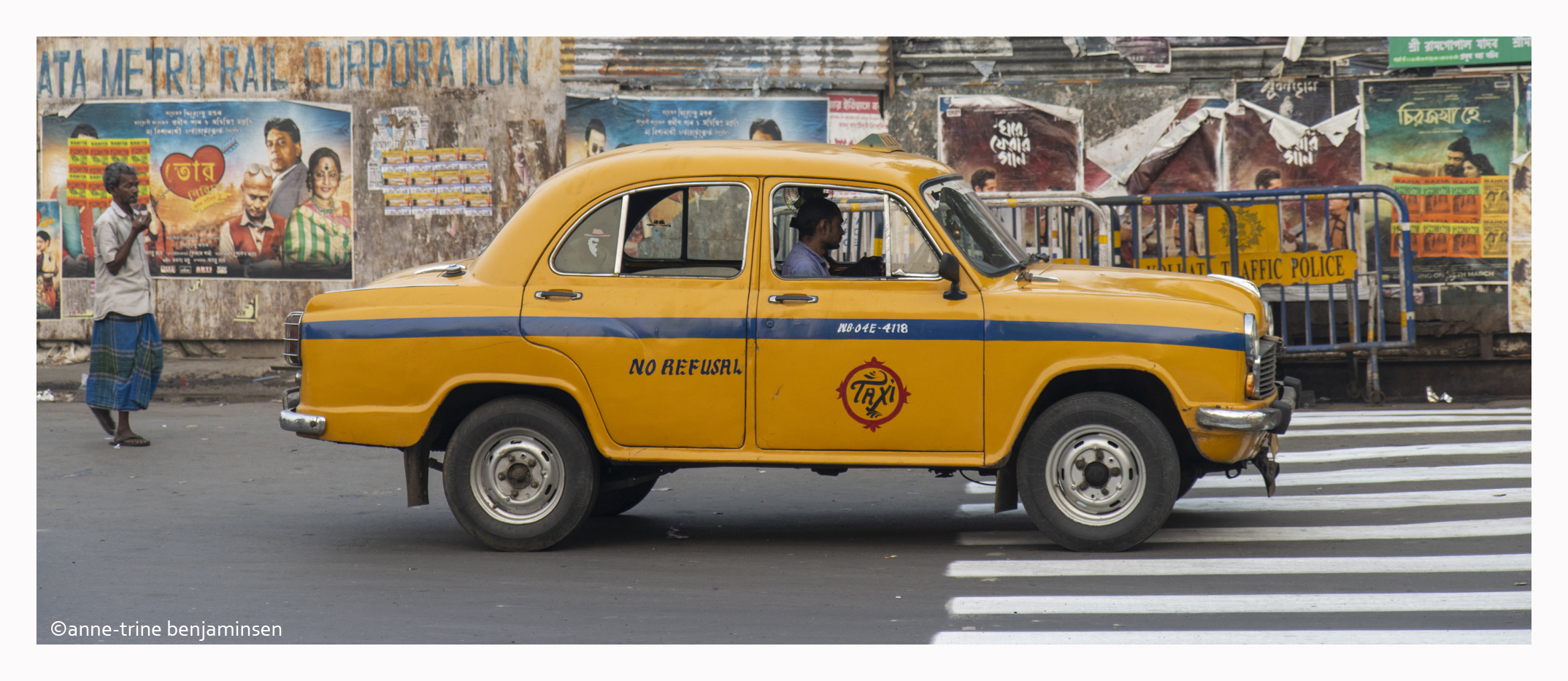
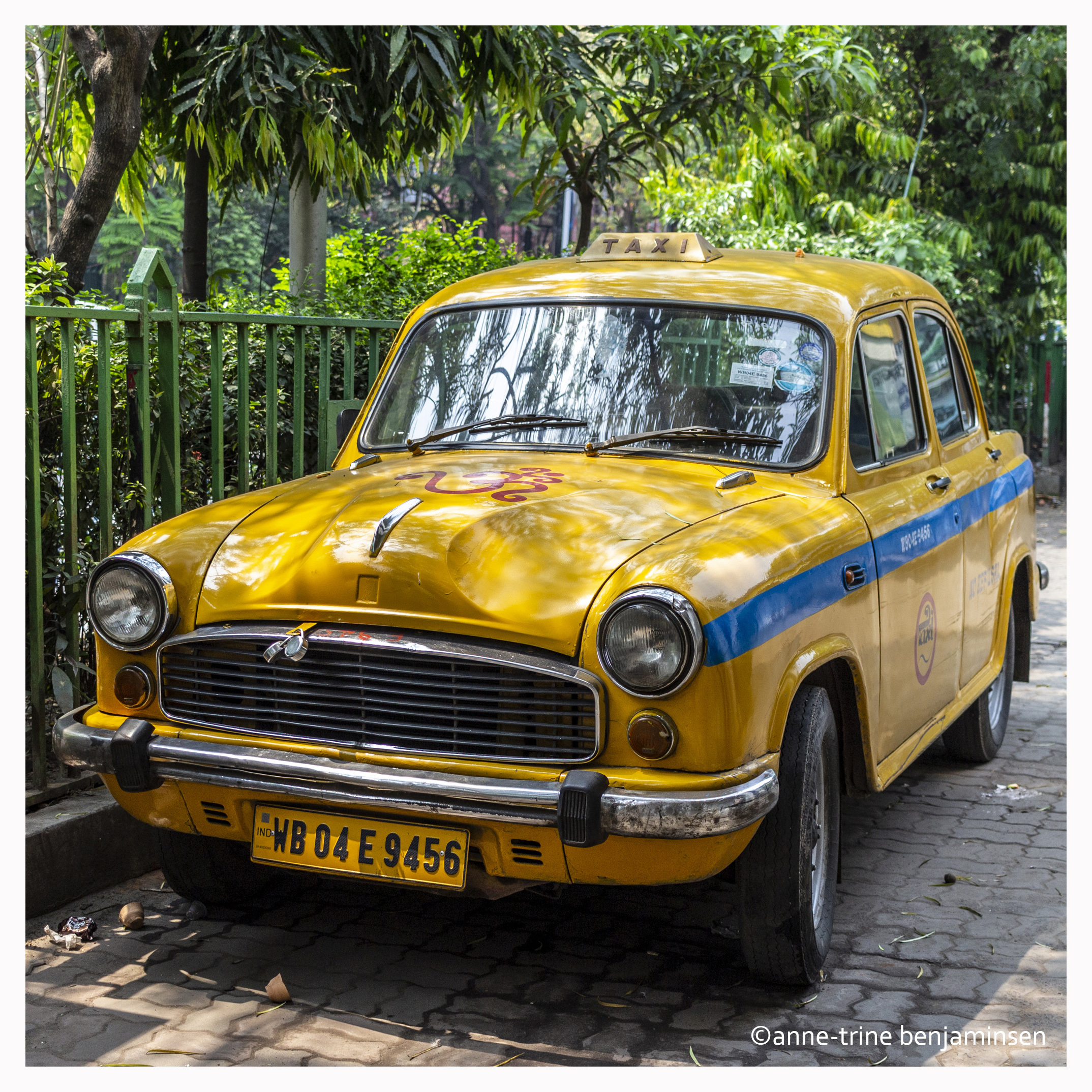
Everybody who visits Kolkata for the first time, and with a camera in hand, most probably feels an urgent need to click-click-click. What they have seen is the iconic “Yellow Taxi”. Not only is the color beautiful, a deep yellow – like an egg yolk, but the shape of an Ambassador car is a style of its own. Round shapes all over. Pure nostalgia.

In recent years these yellow taxis have been replaced by white ones and who would lift their camera to take a photo of a white car. Instead, we stand firm with our cameras, ready at every corner and wait for a yellow taxi to pass. We place ourselves in a position so that when a yellow taxi appears it matches what we have already decided to put in the frame. If the first try fails, there will soon be another chance. The sea of cars is endless, pleasing to the eye only because of those yellow cars that light up even the most horrible traffic jam. In Kolkata, a yellow taxi always completes a photo.

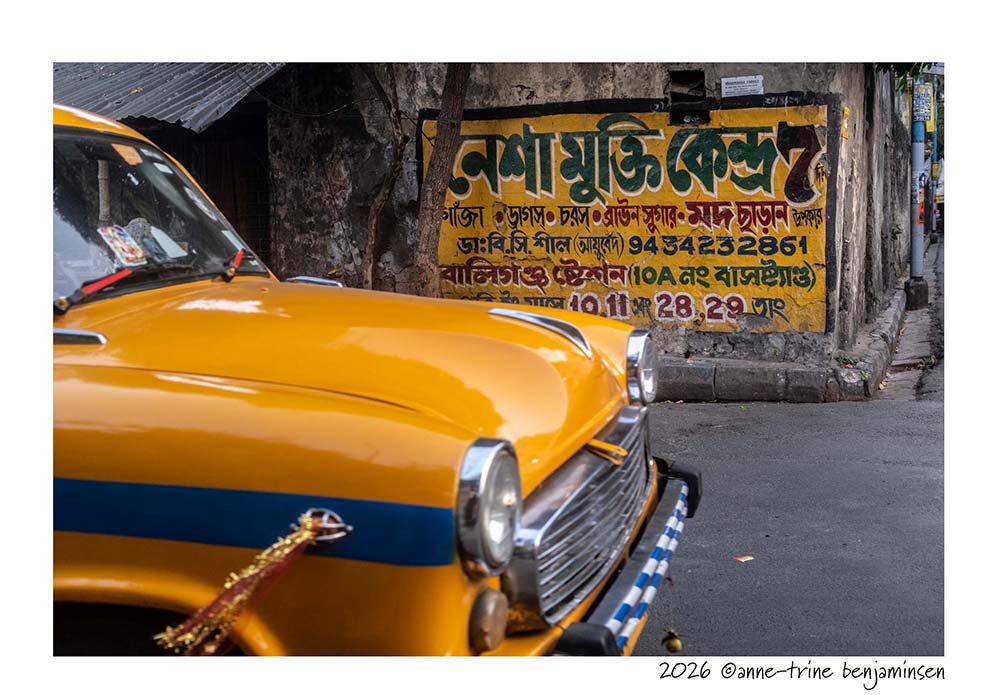
Above: A yellow sign needs a yellow taxi. Just wait for it!

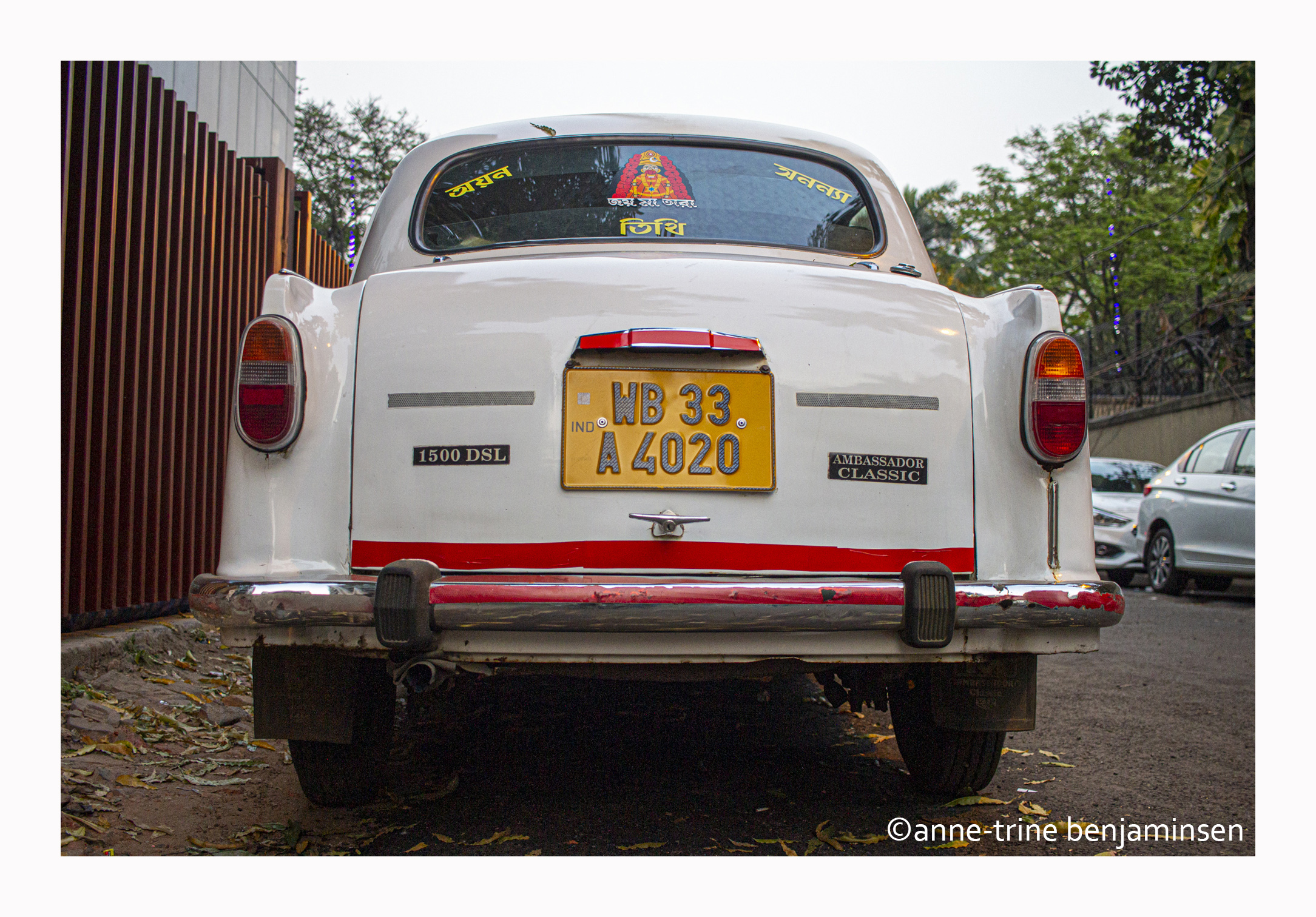
Above: The white Ambassador doesn’t draw the same attention as the yellow!

The facts are: The yellow taxis were introduced in 1962, but the yellow Ambassador was down to 7000 in 2024. India has a 15-year service limit on commercial vehicles which means that numbers will still decline. But will Kolkata let go of their yellow taxis? A cultural staple for decades?

There are still plenty left to make good photos, or so it seemed in February 2026. But the yellow taxi is probably not the chosen one when you’re going somewhere. We want Ubers and their likes who can tell us the price in advance and support us with GPS tracking.

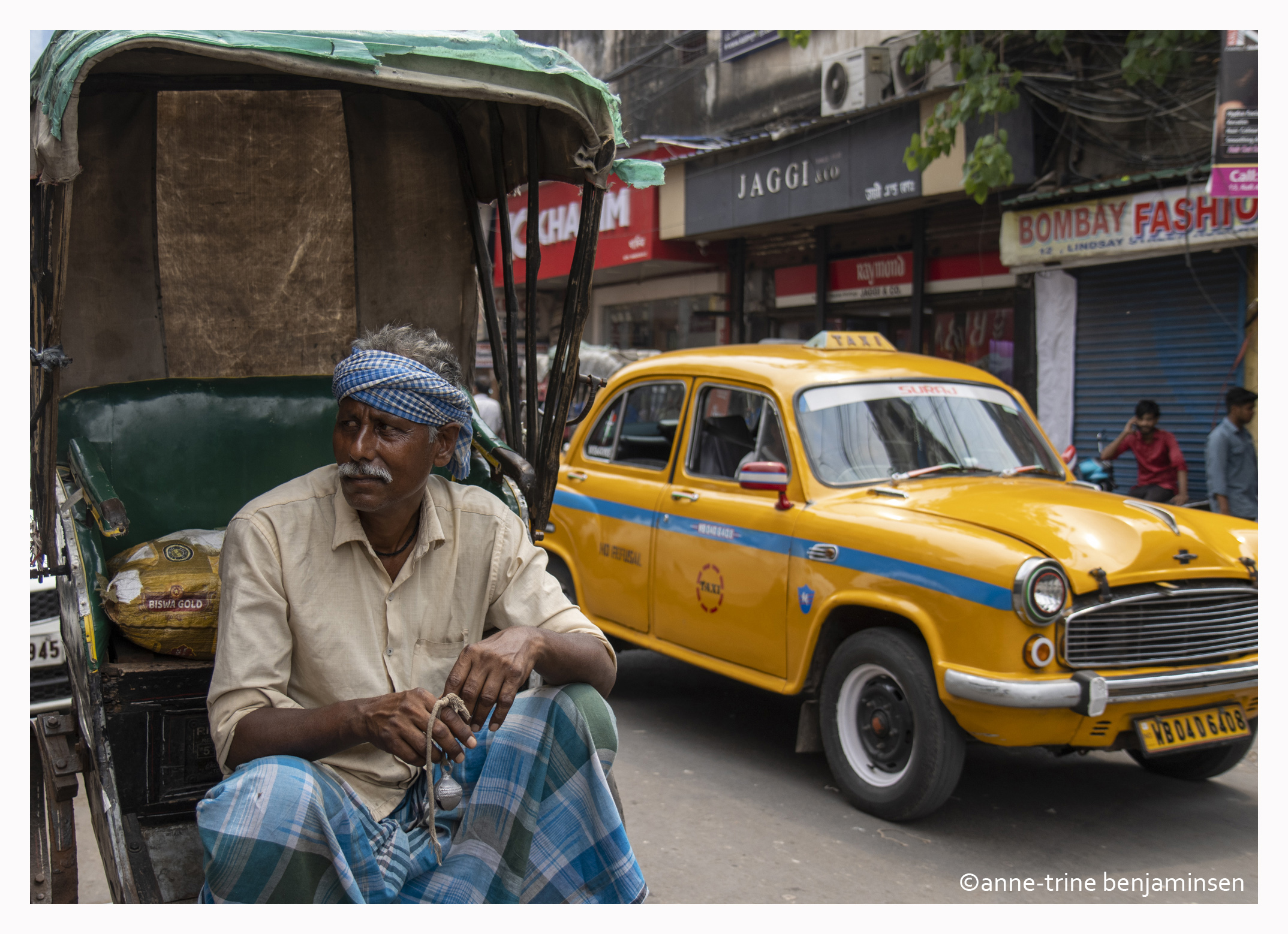
Every member of the Kolkata Tourist Board is of course aware of how the Yellow Taxi is part of the city’s cultural identity. As are the hand-pulled rickshaws, but that is an identity harder to maintain.

A newspaper article in The Times of India (2025) reveals how the taxis of Kolkata can still be yellow, but alas, not necessarily in the shape of an Ambassador. The last Ambassador was manufactured in 2014 and the ones who still cruise the streets will slowly disappear. Instead, any taxi can now be painted yellow. But will a yellow taxi of any brand still be a Yellow Taxi? Probably not – at least not from a photographer’s view. Before the remaining 3000 yellow Ambassadors become history – get your camera ready!

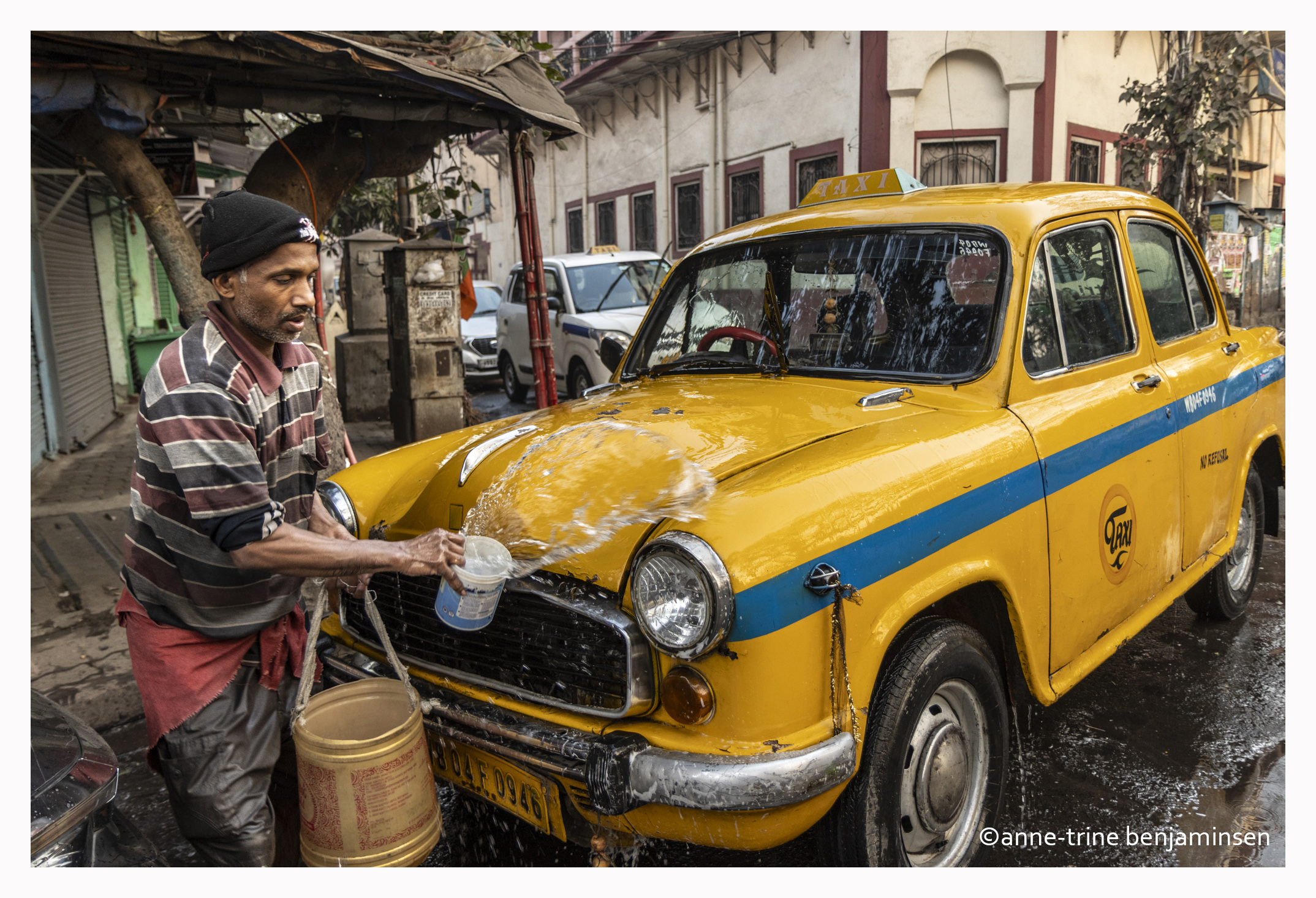
Over: Taxis come to Wellington Square every morning where they’re groomed and made ready for another day!
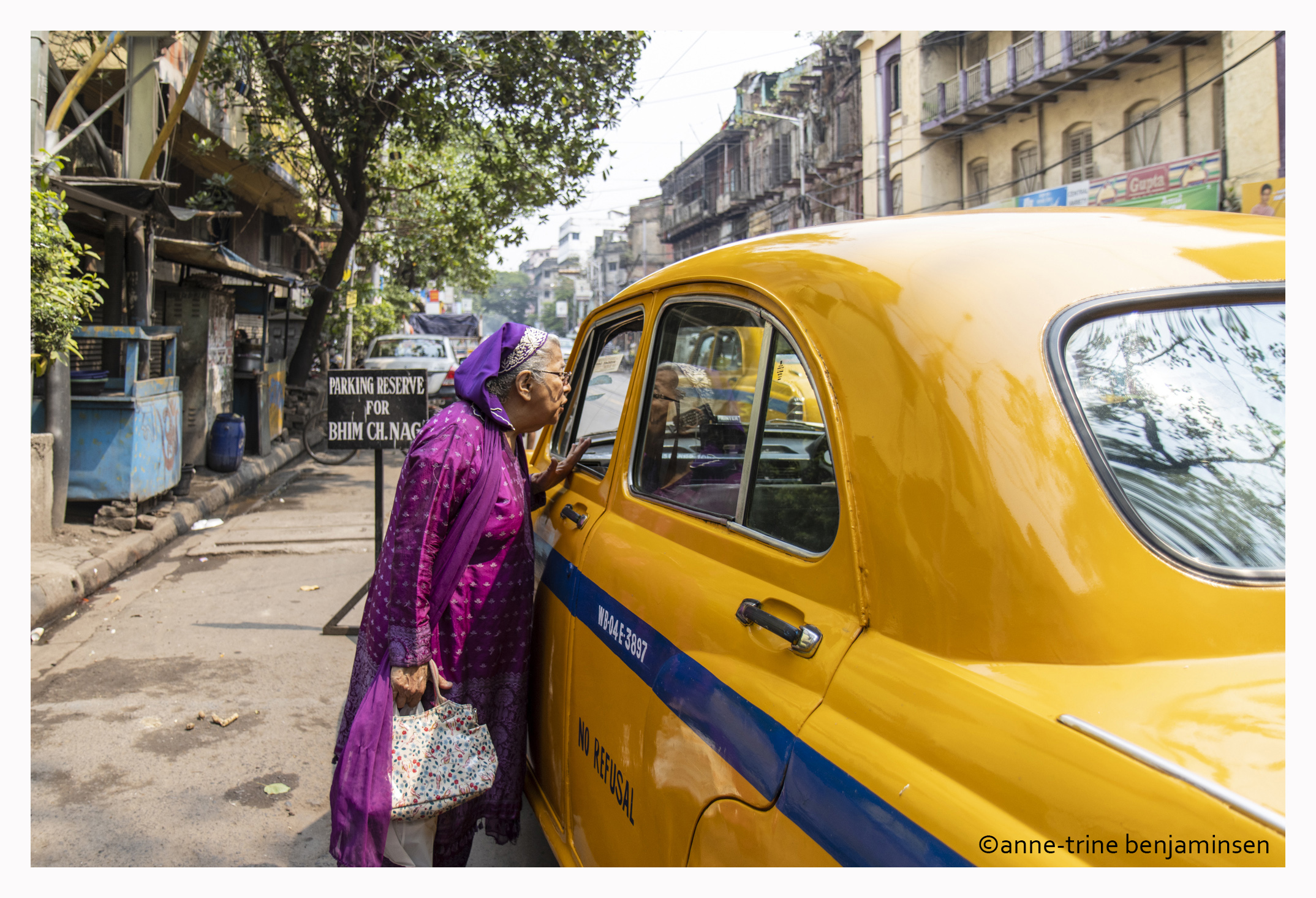
Below: Negotiating a price is part of the game!


Airport yearning … September 9, 2020

Filed under: INDIA,Travels — benjamuna @ 3:58 pm
Tags: , , , , ,

I never, never thought I’d miss the long and exhausting immigration queue at Mumbai, or Delhi airport. And before that, the long strides; trying to overtake other passengers when KLM and Lufthansa are emptying their big bellies at midnight. But miserably enough, the line seems endless once I reach. The straps of the rucksack with my photo gear start gnawing into my shoulders the minute I find my place, the over-sized handbag seems even heavier than when I left home although the apples are eaten – and a book doesn’t feel lighter only because it’s almost finished.
The air is thick and moist. The cardigan and wind jacket, once useful when I was waiting for the airport shuttle back home at 4 am in 8 degrees C, are now superfluous and nowhere to be stowed away. And how come the shoes seem to have shrunk so badly. I’m telling myself I’m not tired, and text a message to the homefront: Grounded.

People are moving slowly towards the immigration counters, and everybody is at one point asking the same question: Why are only x out of y counters manned? The most important question of our times, when stranded in this Godforsaken queue. And we stretch our necks and realise that the grave men behind the counters, their faces cut in stone, are still struggling with that little remedy we all have to put our finger(s) on and apparently this remedy still doesn’t go well with clammy index fingers, so in turn we all try and several times again until luck (certainly not technology) strikes. But contrary to US immigration, we are not cross-examined about our whereabouts in India, just nodded tiredly away from the counter. Thank God for small mercy’s!

Released, everybody rush through the sparkling tax free, but why would we rush to pick up the luggage when we know it’s probably still roaming the underbelly labyrinth of the airport. I grab a trolley, check the monitor and meander through the throngs of people, trolleys, luggage, loitering airport staff, and silently place myself in the middle of chaos surrounding belt 40, scanning it in the hope that my suitcase has won the lottery: already spitted out and hit the belt. Alas no. Instead the fear, no horror, of not getting the suitcase at all is what occupies my mind.

I wait politely and patiently among the unruly mass of people, text another message just to kill time: Waiting for the luggage, while I in wonder and amazement watch the amount of luggage the native Indians lift off the belt and how they make towers of king size suitcases while they’re waiting for more. And I keep thinking that Mumbai might not be their final destination and how they, past midnight, maybe after several flights from the US or Canada via Amsterdam must check in their towers again and take that dreary shuttle bus to the domestic airport. It makes me feel a little less miserable.
I cling to my trolley while waves of fatigue races through my body, and just as I give up hope my suitcase pops up – and down, and I grab it before it goes for another swing.

Nearly there, I tell myself, relieved (should I text a message?) – before another worry takes hold of my stomach as I rush towards the green channel. Why if the driver is not outside to pick me up? (I mean, it has happened once or twice, so why not a third time?)

This is what I miss right now. And I miss it badly!