Benjamuna's Blog

Stories…. with a touch of India….

Chai! Chai! May 23, 2026

Filed under: Food,INDIA,Travels — benjamuna @ 1:25 pm
Tags: , , , , , , , , , , ,

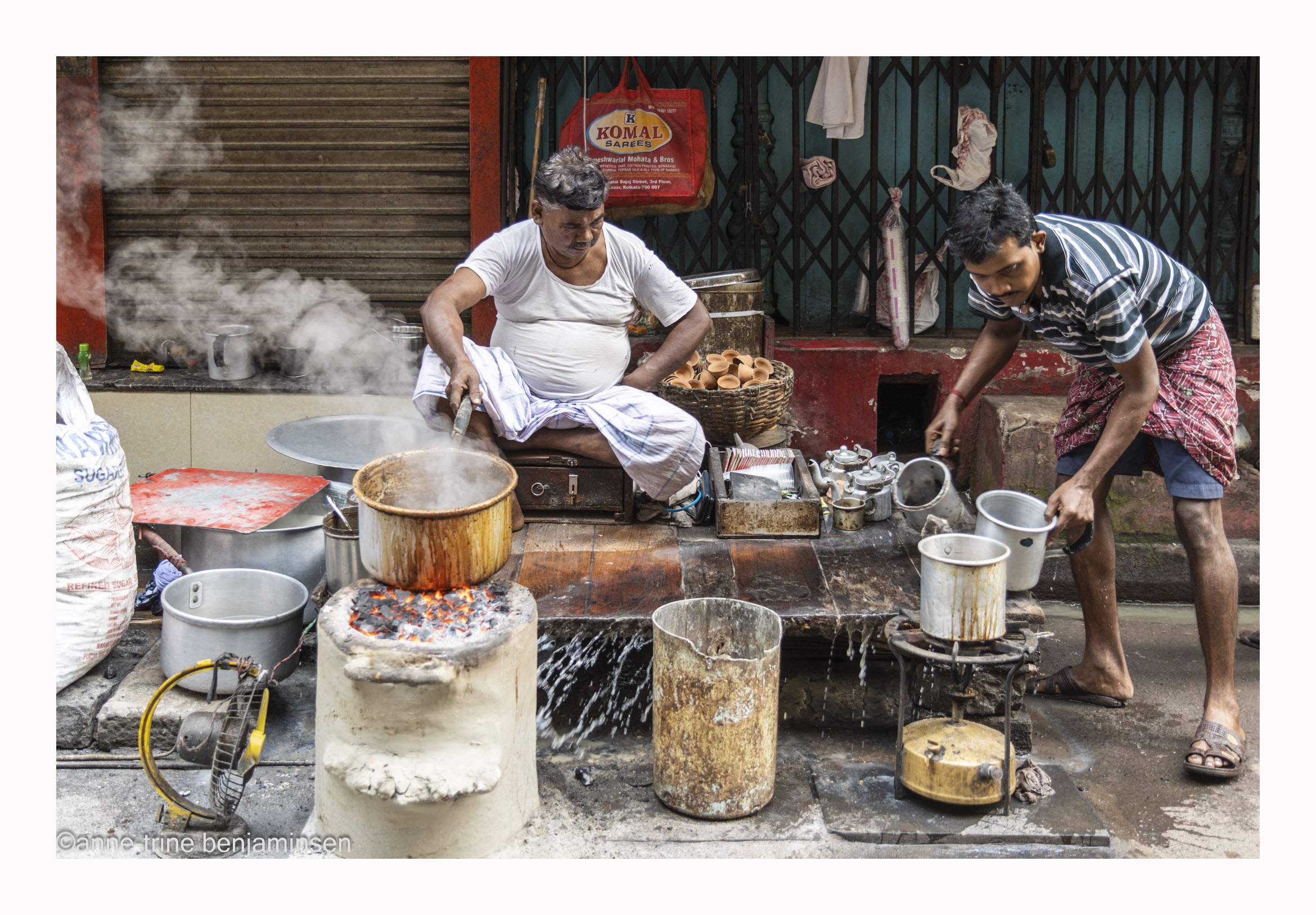
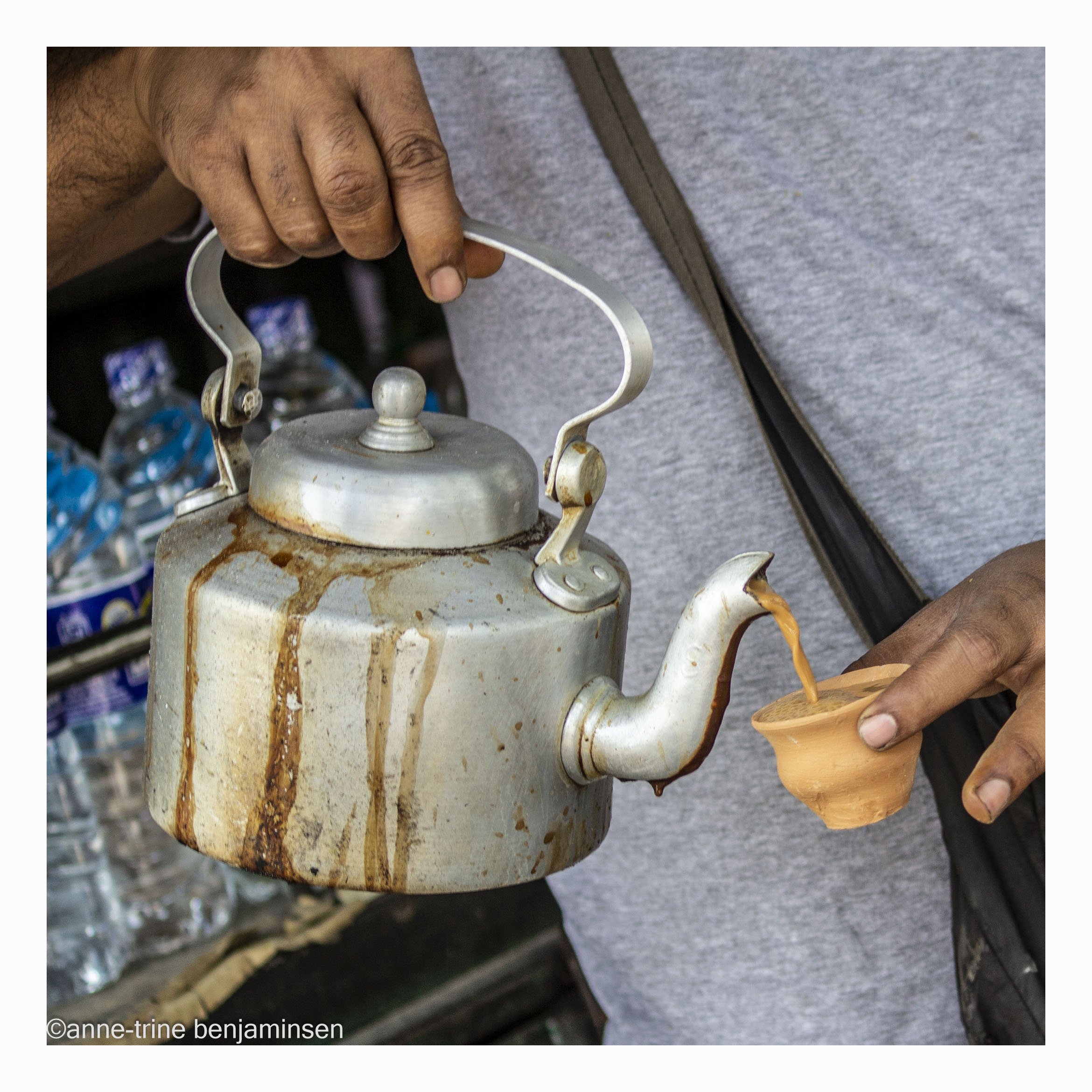
India runs on chai, I once read. And that might well be true. You’ll find chai sellers, called chaiwallahs, around every corner, along every stretch of road. You’re not served chai in a big mug, you drink it from tiny earthen cups – at least when you buy on the streets. But I have been enough times to India to notice the change: some stalls have sadly replaced the earthen cups with tiny plastic or paper cups. It’s disappointing, from several points of view.

The earthen cups are smashed after use, you’ll see the chards around every stall – whereas plastic cups most likely end up as “runaway” garbage – still a major problem in India. And of course, chai tastes a lot better in earthen cups – or maybe that’s just a sentimental truth … But the tea definitely looks better and more genuine in those cups.

Chai is India’s unofficial national obsession, is another highly appropriate quote. There is always time or a reason for chai. As a foreigner it might be a challenge to buy chai because some chai stalls don’t meet with Western expectations of hygiene.
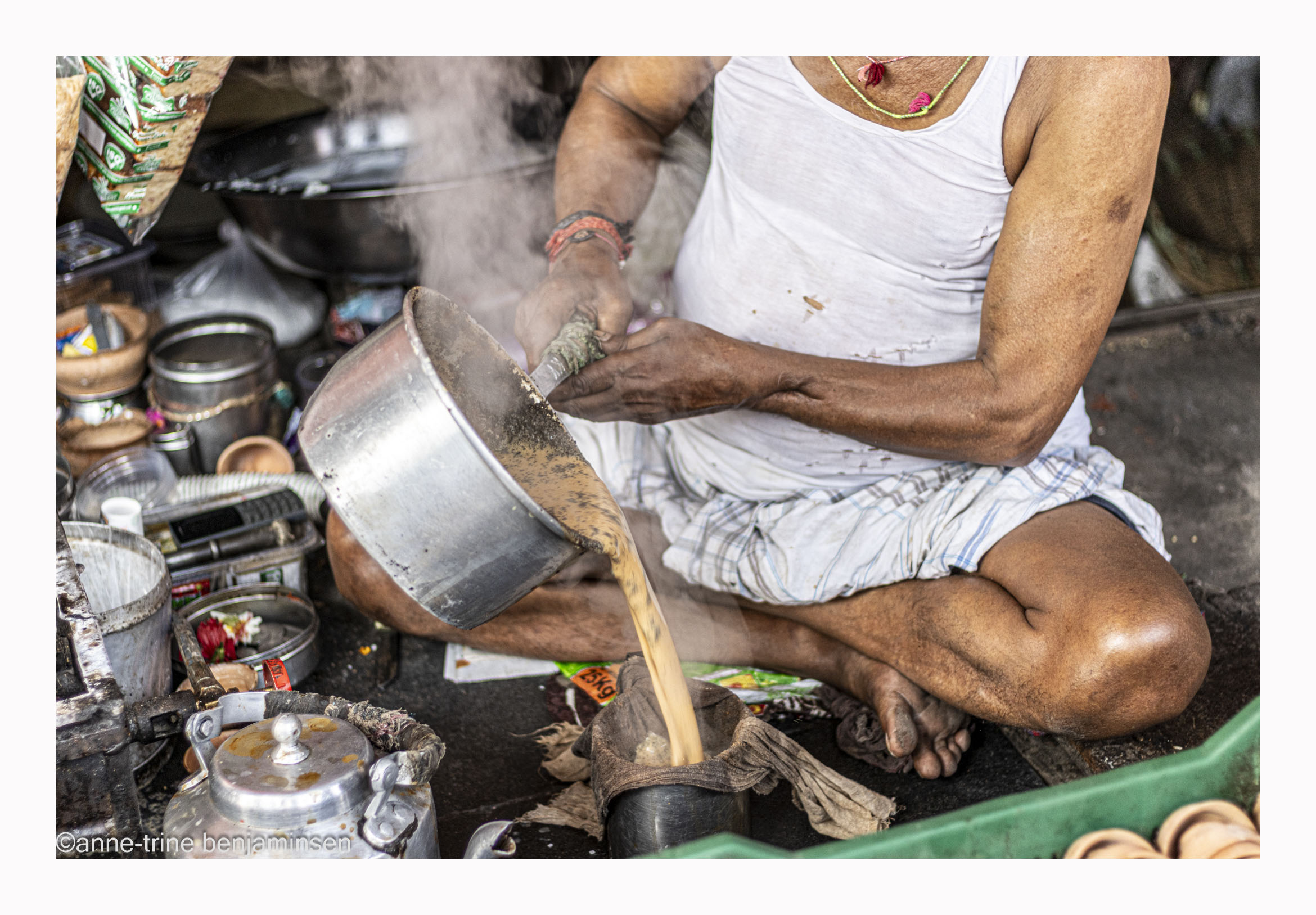
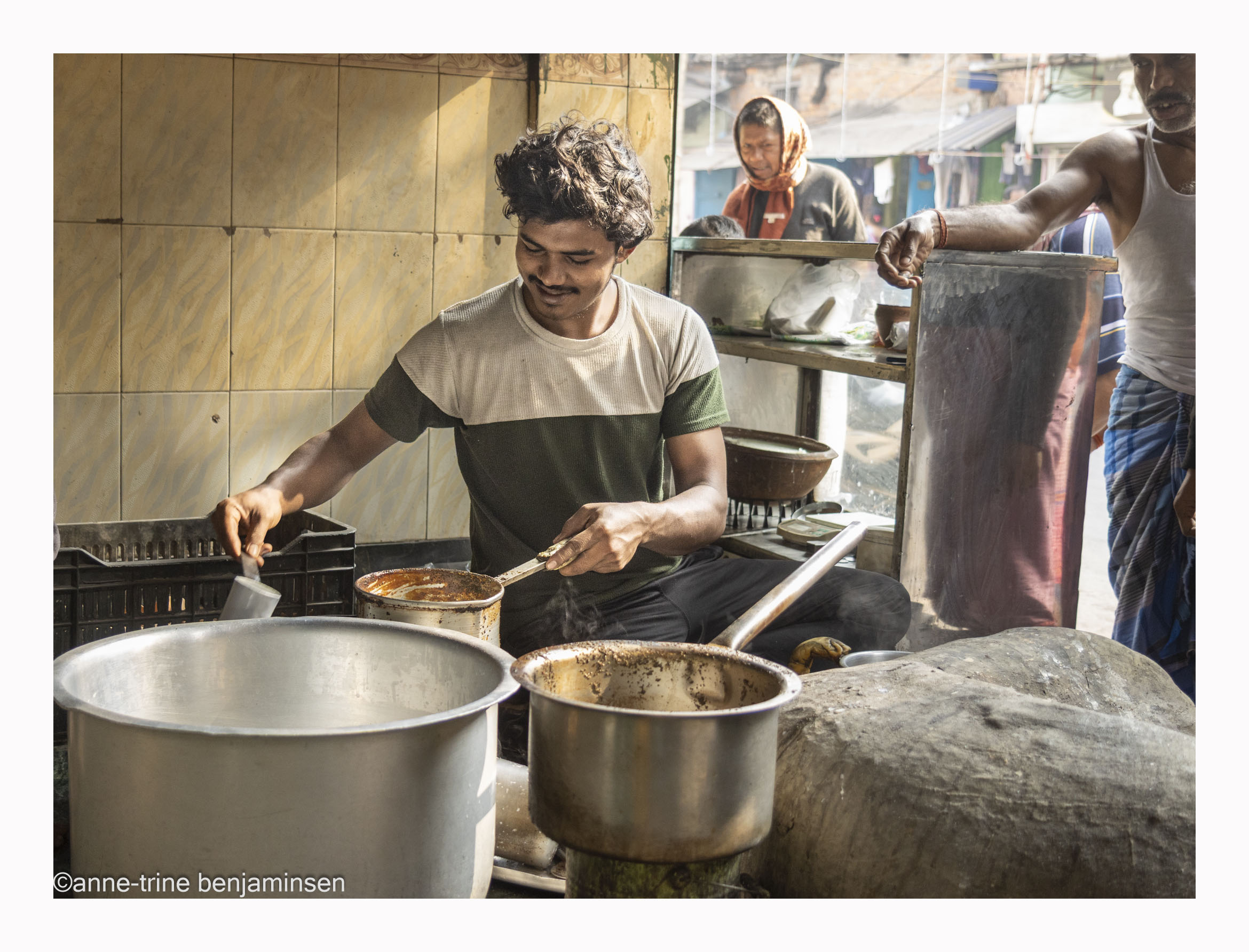
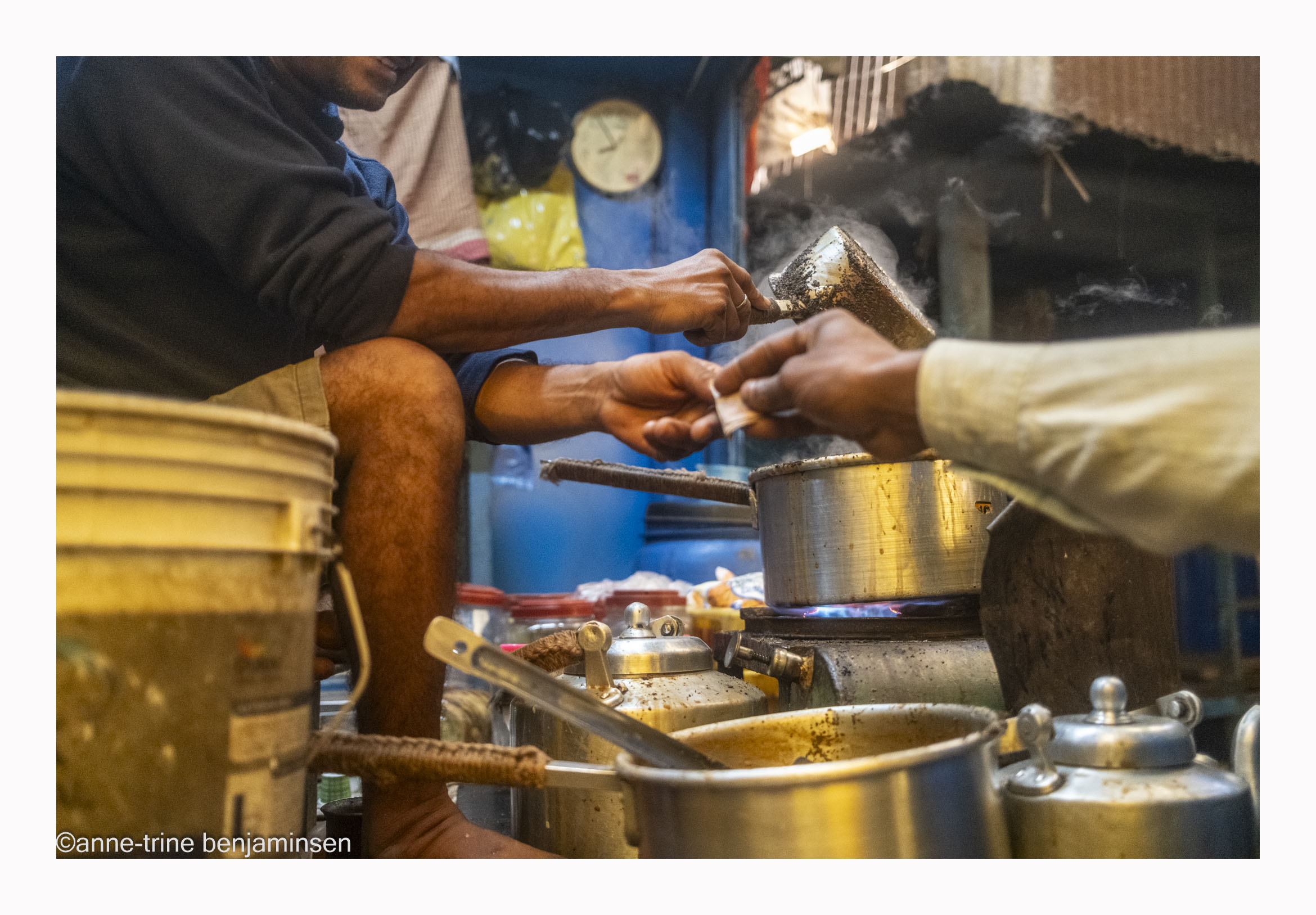
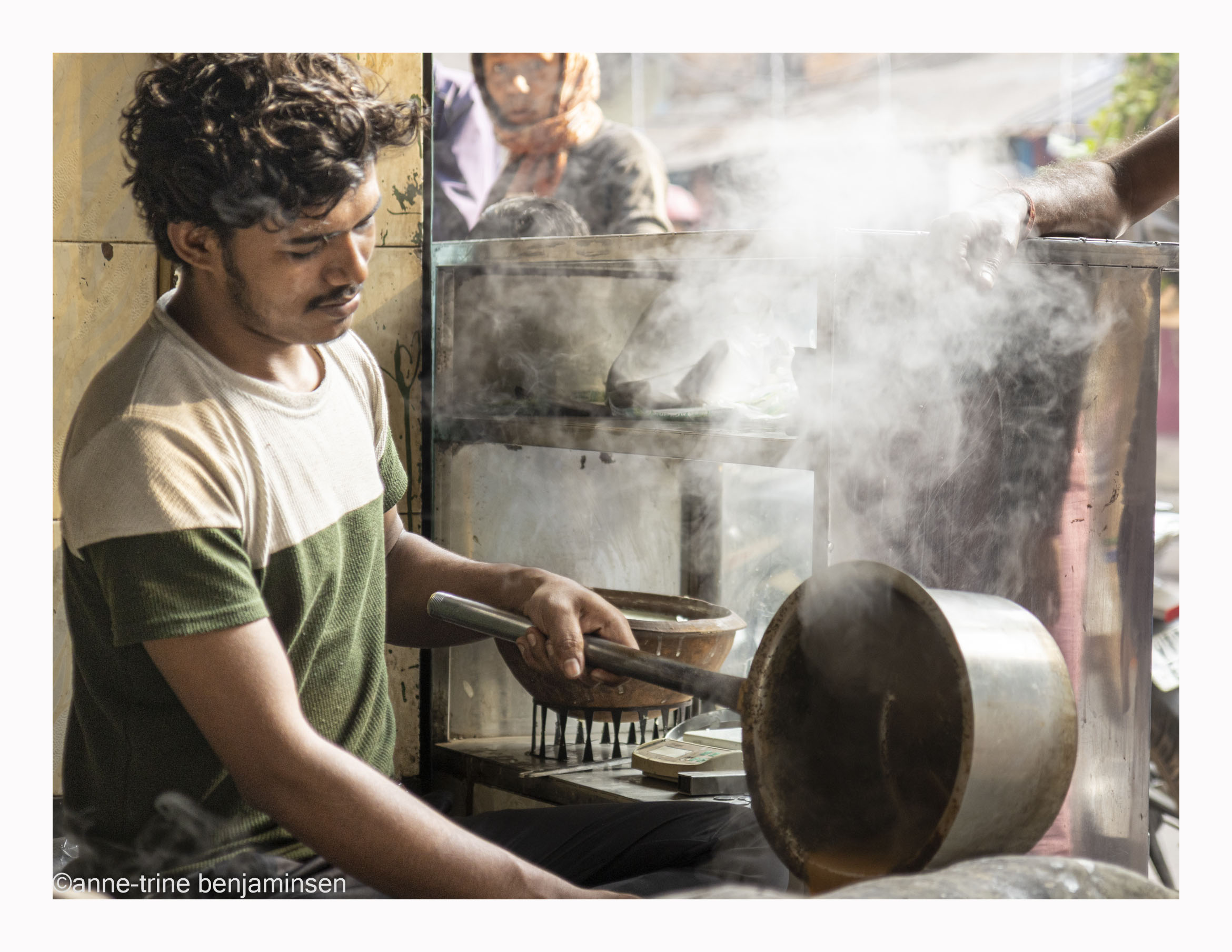
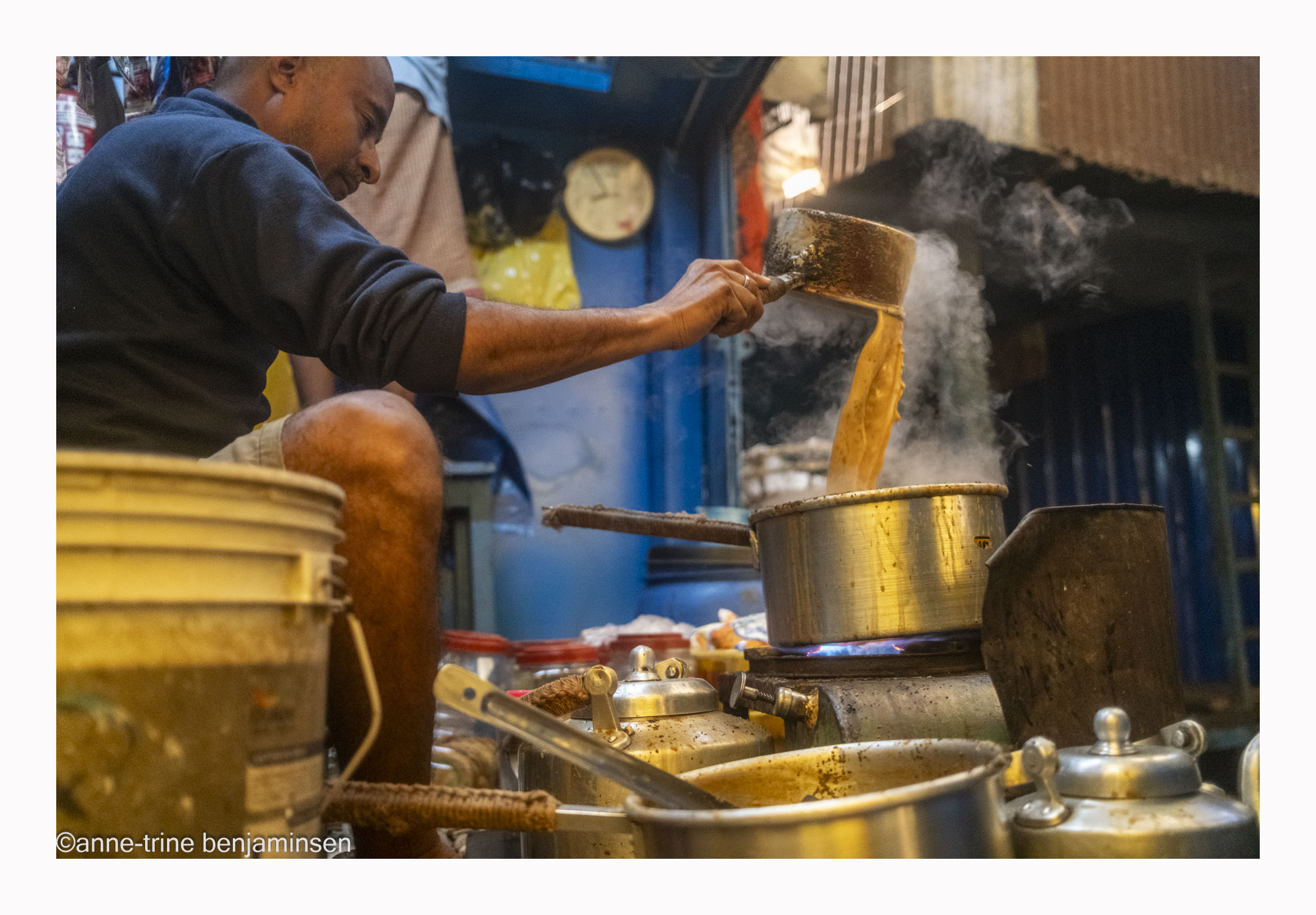
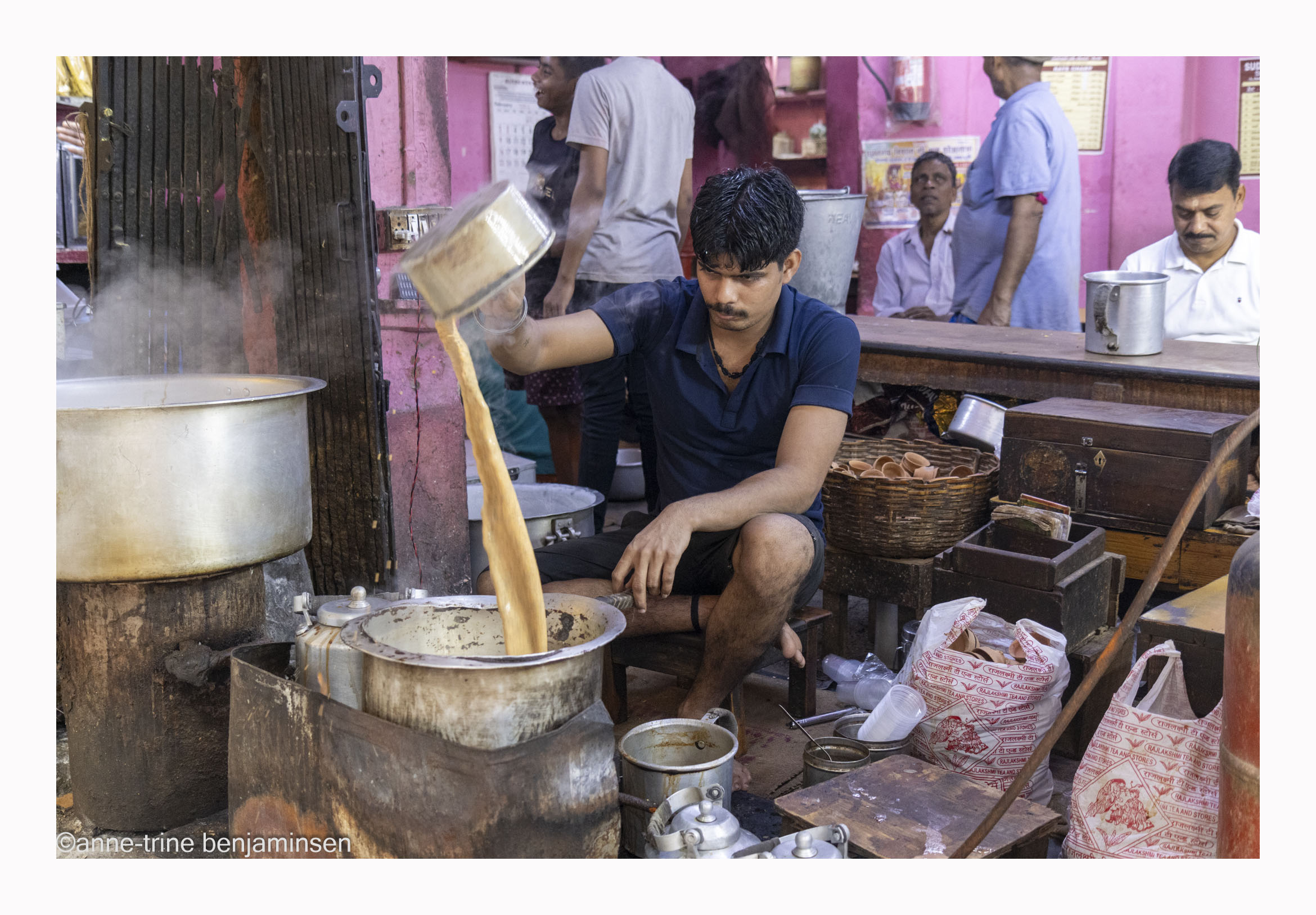
Chai is always boiled because it then extracts stronger flavour and blends spices with milk more effectively. Watching the chaiwallahs, often cross legged surrounded by all their paraphernalia, lifting the ladle up in the air and letting go of the light brown jet of tea back into the pot, is very pleasing to the eye – not to mention a camera. Often, the chaiwallahs put on a show for the keen goras with cameras in hand.

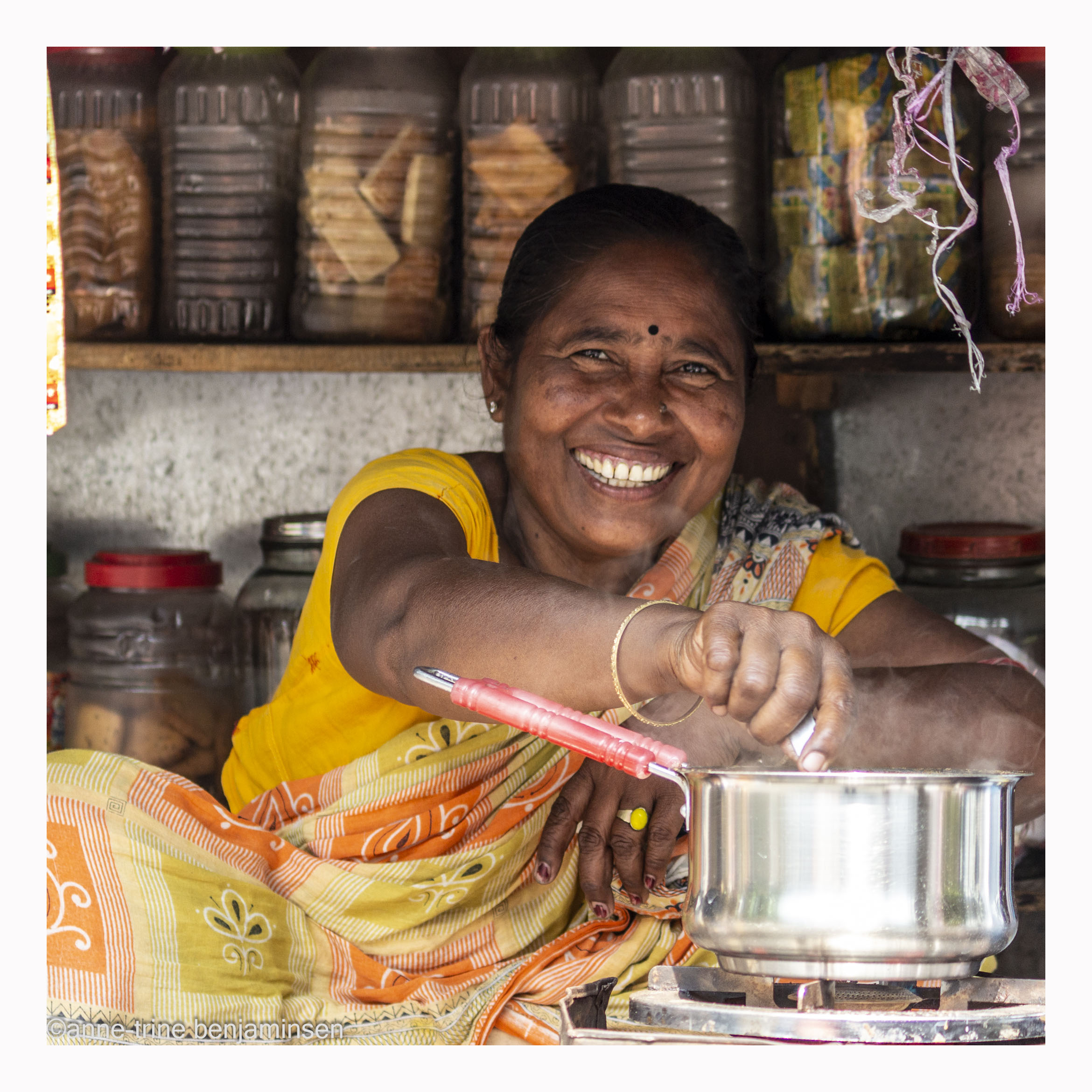
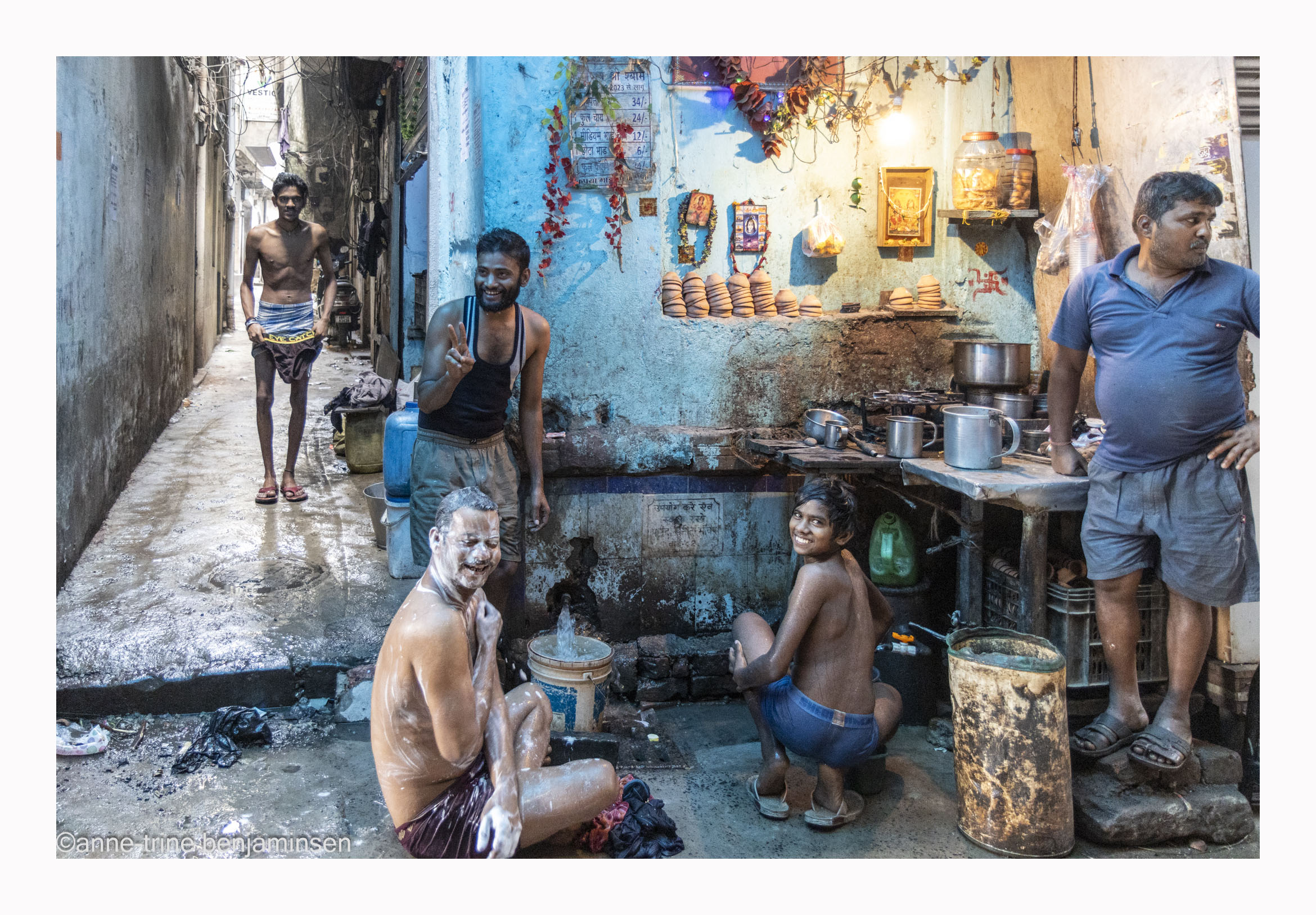
Those small pit stops, savoring a tiny cup of chai and a couple of sweet biscuits – the latter always kept in plastic jars, it’s simply India! If you haven’t been through this ritual, you haven’t been to India.
The history of chai goes back to British rule. The British established tea plantations in Assam and Darjeeling in the 1830’s to compete with Chinese tea imports. As production increased, tea became widely available across India. Initially, tea was said to be too complicated for the poor, but it eventually spread to the whole population. It was sold and made easily available on the streets by chaiwallahs. And over time, tea evolved into what we know as chai by adding heaps of sugar and milk which made tea into a sweet and milky concoction. What tastes even better is Masala Chai, chai spiked with cinnamon, cloves, ginger and pepper; sometimes said to be India’s way of reclaiming tea from the British.
Tea in India went from a foreign habit into the soil of Indian life. Chai is affordable and uniquely Indian. You don’t pay a lot for those small cups of chai so wildly available.
India is the world’s second-largest tea producer of tea, after China. India is also the world’s largest consumer of tea and the second-largest exporter.

Chai means tea. When Western cafes put “Chai” on the menu, or even “Chai Tea” they most probably serve tea with milk and Masala Chai would rightly be tea with spices.

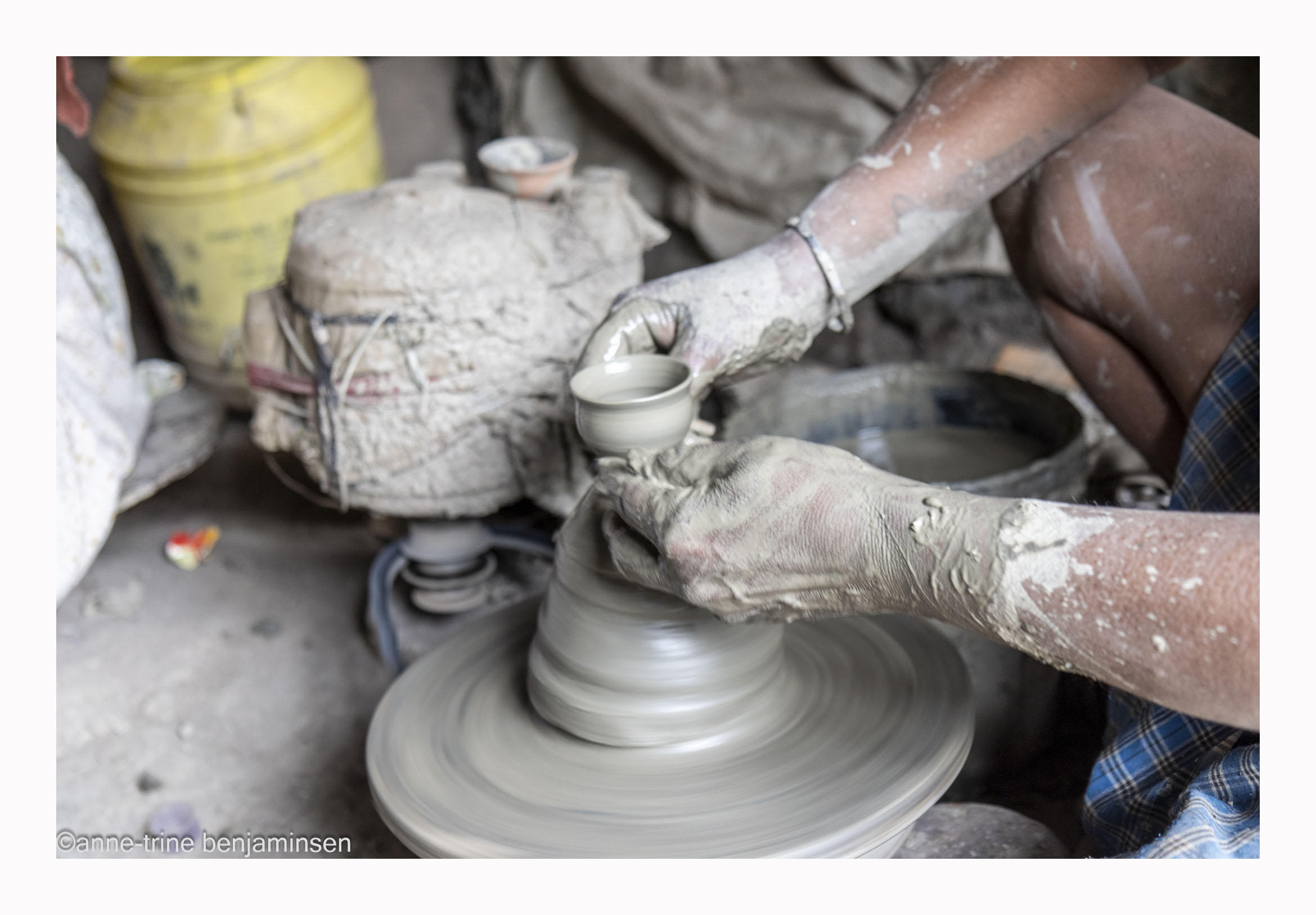
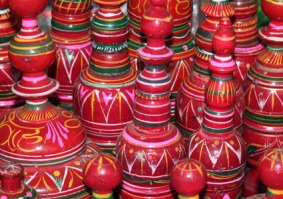
Left photo: Small home industry at the banks of Hooghly river in Calcutta. Earthen cups are produced at high speed before they are set to dry in the sun.
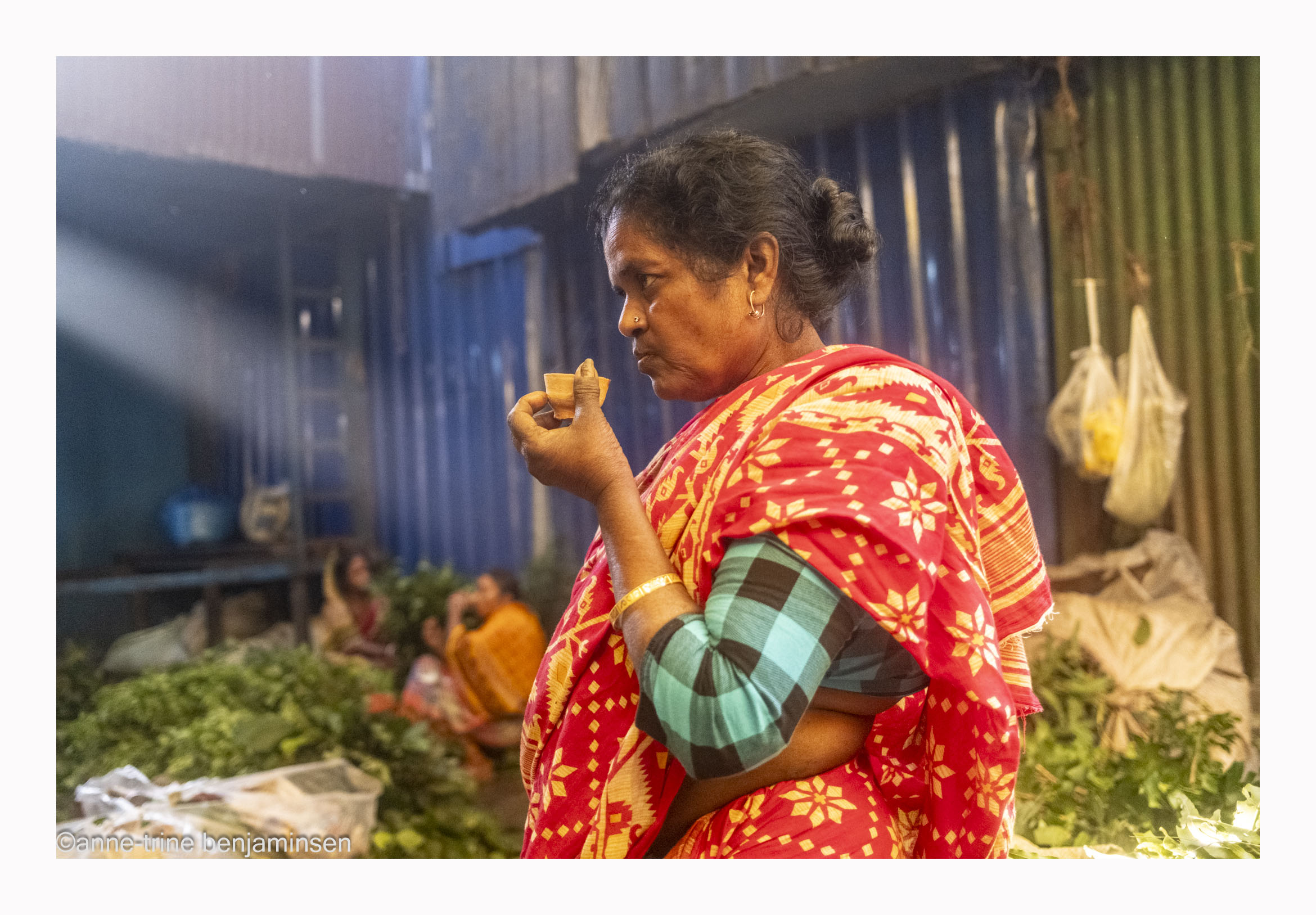
Right photo: A woman at the Mullick Ghat flower market in Calcutta taking a small break, a chaiwallah is never far away.
 

Hooghly & Howrah May 25, 2023

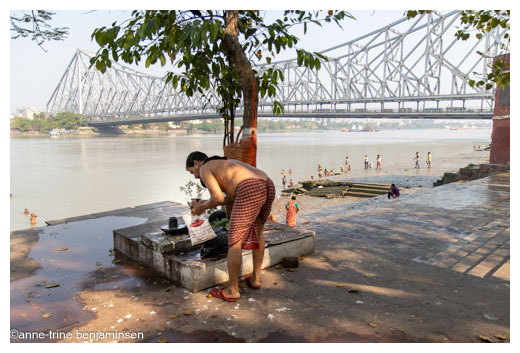
Water – a river, a lake, the seashore – adds atmosphere to a city. Calcutta, or Kolkata as the city’s official name is, proudly hosts River Hooghly. And where there is water, there might be a bridge, such as Howrah Bridge. One of my favourite spots in Calcutta is the beach close to Howrah, where life unfolds in many ways.

According to Association for Asian Studies, “The Hooghly weaves through the Indian state of West Bengal from the Ganges, its parent river, to the sea. At just 460 kilometers (approximately 286 miles), its length is modest in comparison with great Asian rivers like the Yangtze in China or the Ganges itself. Nevertheless, through history, the Hooghly has been a waterway of tremendous sacred and secular significance.”
The river is also a major waterway providing a year-round water supply to the plains of West Bengal. Its water is used for irrigation, as well as consumption by both the public and the surrounding industries. 

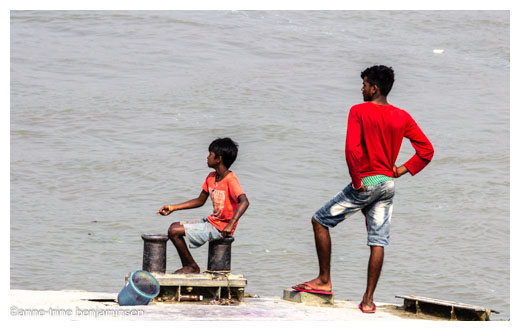
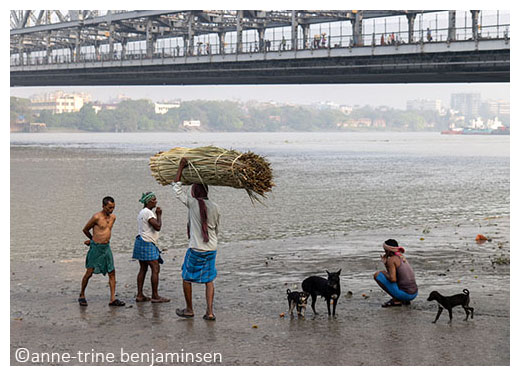
I first came close to Hooghly after a visit to Mullick Ghat, the city’s renowned wholesale flower market. After walking through this fabulous place, I stepped through a gate and the Hooghly appeared just in front of me. Many of the people who inhabit the area are engaged on various sacred rituals, the river being the centre of many ritual activities in the Hindu life. Others carry out work related to the flower market, some are simply taking a bath or washing clothes. The atmosphere always seems relaxed void of the usual Indian commotion. In contrast, I have walked along the river bank on a busy, narrow road trafficked by colourful trucks, taxis and auto rickshaws, and the bustling life is also marked by shops and stalls – not at least chai stalls.

Across the river is District Howrah with its magnificent railway station.
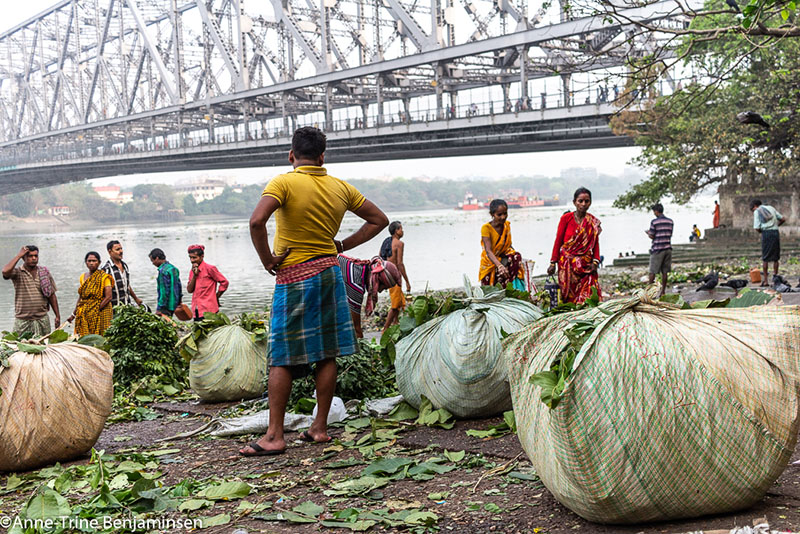
Offerings and other sacred rituals take place by the Hooghly. Howrah bridge makes a beautiful backdrop.

The Hooghly has a large traffic flow, both commercial traffic and that related to the tourist industry. You may, not surprisingly, go on midnight cruise, or other types of boat rides.

Right: Many people try their luck with the fishing rod.

Howrah Bridge

Several bridges go across Hooghly river, but the Howrah Bridge, opened in 1943, is one of the iconic landmarks in Kolkata. Howrah Bridge is a cantilever bridge with a length of 705 meter – It claims to be one of the longest cantilever bridges in the world. It’s said to carry 100,000 vehicles and countless pedestrians daily.

Not sure if I had managed 700 meter with this load on top!

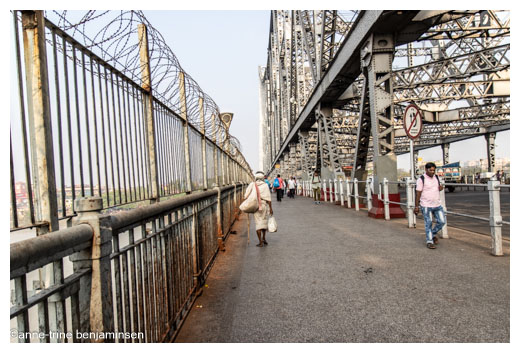
I have been one of those pedestrians as well, watching countless people walking fast across for so many reasons. The traffic rumbles in two directions and the barbed wire reminds us of what bridges sometimes must endure – thus the precaution.

My most intriguing memory is that of a man who sat on the railing towards the traffic reading a newspaper. There must be so many other places to sit down and read, my first thought was. But maybe he found the backdrop relaxing …

You can hear it throughout the city, the cries from the conductors at the colourful buses: Howrah, Howrah, Howrah …

Howrah bridge connects Kolkata with Howrah, located on the western banks of the river.  The two cities are known as twin cities. Howrah is an important transportation hub and gateway to Kolkata and West Bengal through its magnificent railway station.

Hooghly river is also known as the Rabindra Setu, named after the great Bengali poet and Nobel laureate Rabindranath Tagore.

END


At Mullick Ghat March 28, 2019

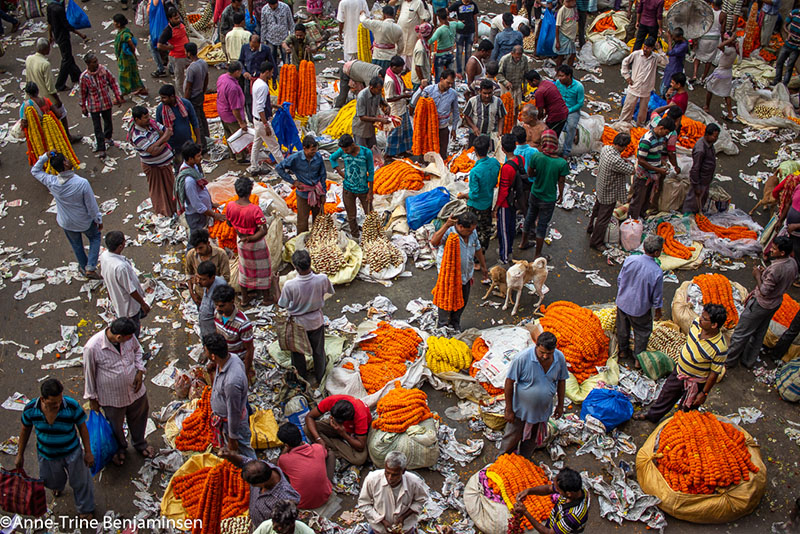
Jumping off the bus that took us to Howrah Bridge, I didn’t know that Calcutta was about to attack my senses. The Mullick Ghat wholesale flower market swallowed us into its odorous frantic belly, and held us in a firm grip until it was time to leave.

We first entered via a narrow footbridge where people – mostly men – were brushing past in both directions; fast and furious, shouting unknown words. There was no gallantry, only a determined rush! So big was the shock that when a faceless man grabbed me – not by the pussy to quote ‘the boss’ of America – but somewhere else one doesn’t like to be grabbed by a stranger, I didn’t raise even a mental brow. The act seemed to belong to the show. I sped forward and grabbed Soham, my guide, by his shirt telling him not to let me out of sight.

Go with the flow, I reassured myself. I was pushed and squeezed from side to side, back and forth, as I made an effort to cross the bridge unharmed. Then we hit the ground and ducked into a maze of alleyways. There was a continuous movement of men speeding through the market, some with flowers on their heads, or on their shoulders, it was like a rough sea. I embraced my bag; what if somebody stole my money, my cell phone – or grabbed my camera. But they wouldn’t have time for that, would they? f

The vendors sat mostly on the ground, some on a dais. It struck me that they looked like birds in nests of flowers. I pointed my camera this way and that, but I felt in the way, I was disturbing somebody’s working day. My photos got blurry because of all the locomotion and every second time I pressed the shutter somebody walked into my picture; they became cluttered with odd limbs and half faces. My strategy is all wrong, I thought.

The early morning had felt so cool and fresh when Soham and I had crossed the Maidan from where we jumped on the bus, now it was hot and humid. “Mind the mud,” he warned and stepped aside in front of me. I hadn’t noticed, but now felt my sandals slip continuously as we meandered past the many-coloured flowers of species I couldn’t always name.

We entered another vantage point to watch the spectacle from above. The millions of orange and yellow marigolds shone towards us, from enormous sacks on the ground or from vendors’ heads. The garlands were slung over their backs like a bunch of snakes, those on the path looked like sparkling coils. In between, shreds of newspaper littered what was left of open space.

Suddenly, a big truck rumbled into the area. In slow motion, the crowd parted and gave way to the intruder who claimed its right and no one seemed to blame him. The truck looked like an enormous animal from a bygone time amongst the people and the flowers which now looked small from above.
“You might think it is all chaos,” said Soham, “but it’s not. Every one knows their place, what to do and where to go.”
        I did believe him.


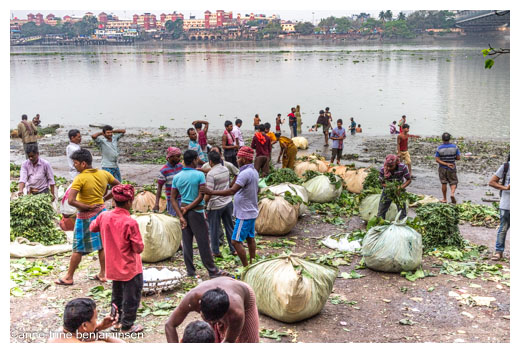
We left the market and walked into open space, to the beach below the iconic Howrah Bridge where we watched more work in progress, although in a slower motion. Men, and now also women, stuffed big sacks with leaves. Up on the bridge, I could see people walking on the footpath, millions a day, I had read somewhere. My eyes eventually rested on Hooghly river, its traffic had just about come to life.

It was the most amazing start of the day!

#calcuttacapsule

https://bestwalksofkolkata.wixsite.com/calcuttacapsule