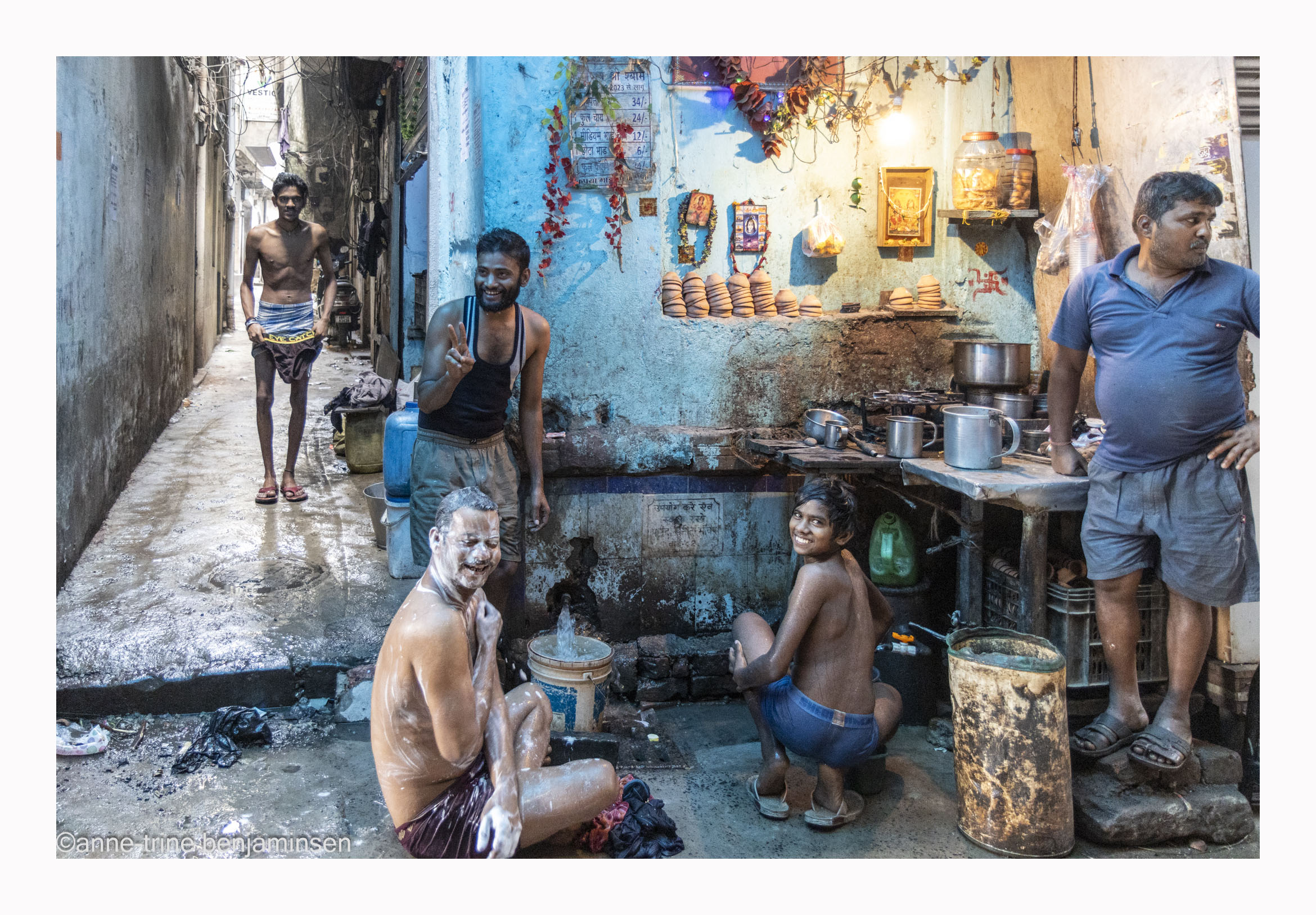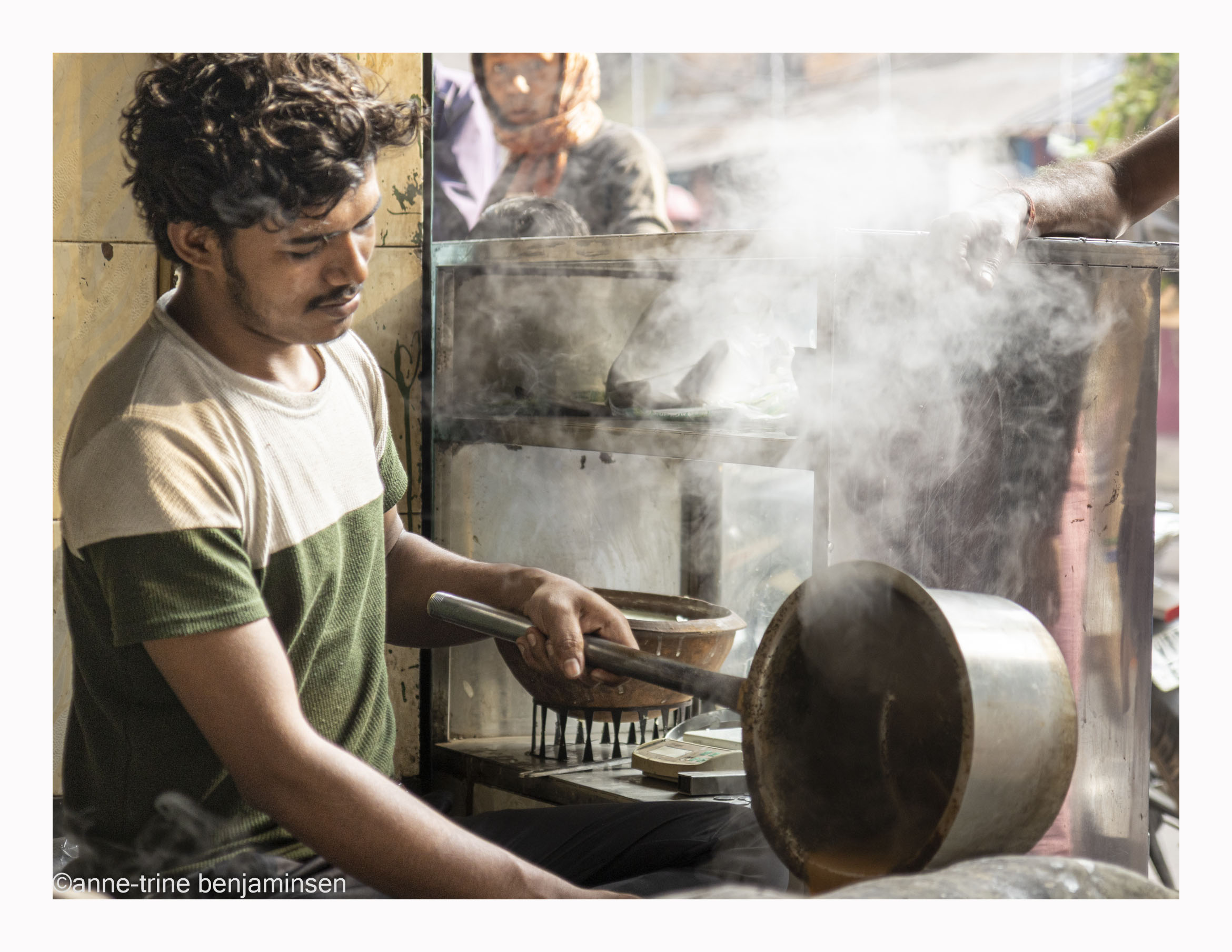
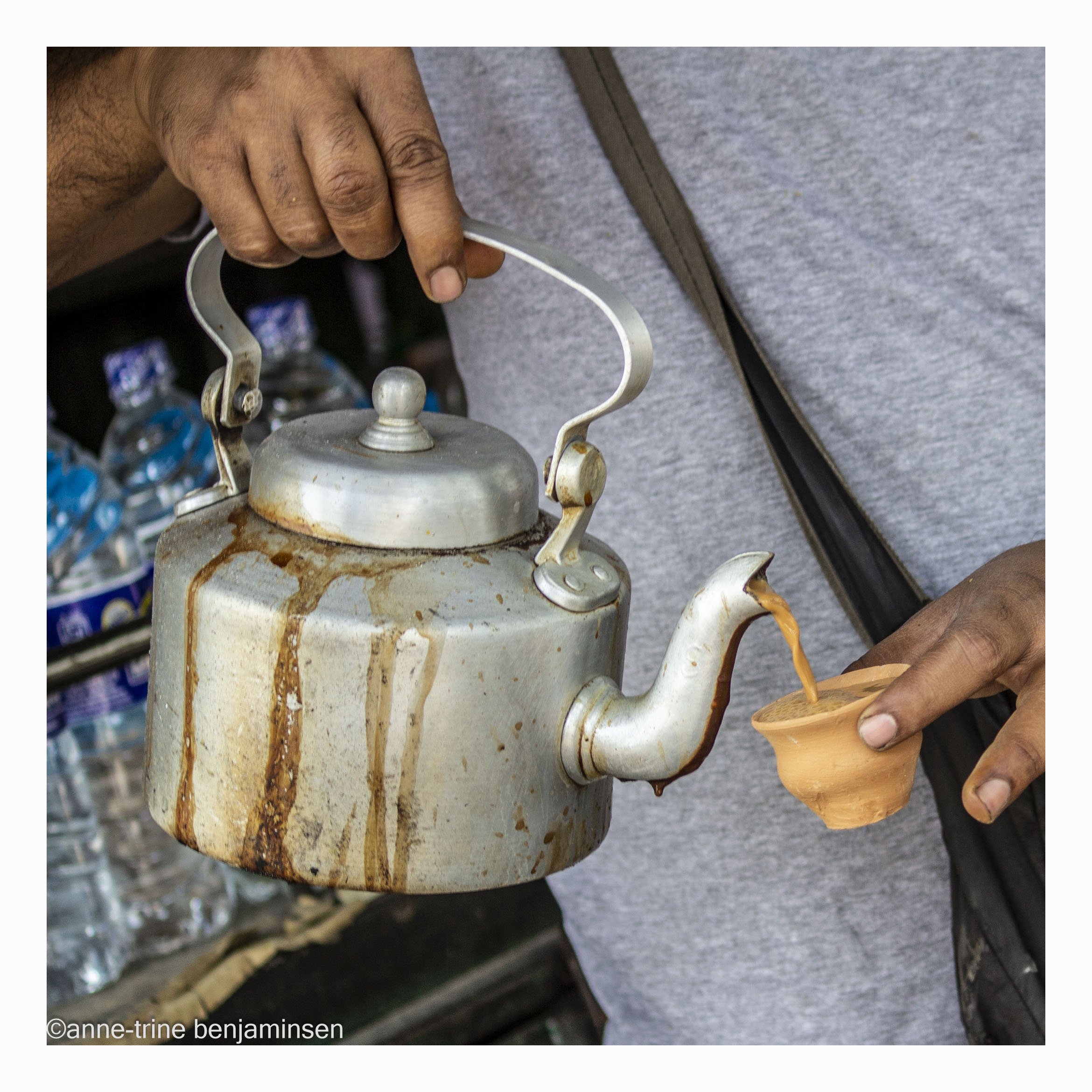
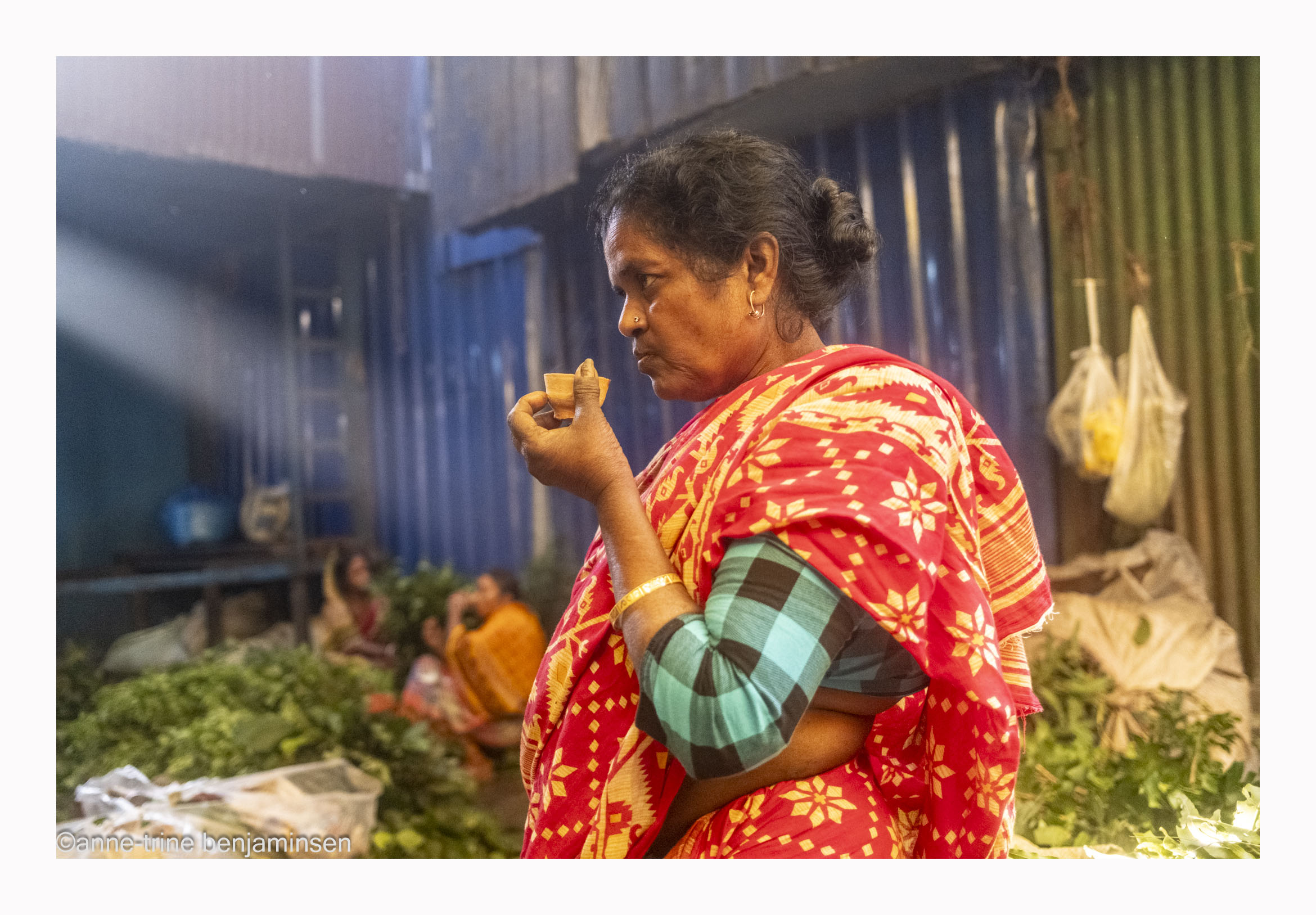
India runs on chai, I once read. And that might well be true. You’ll find chai sellers, called chaiwallahs, around every corner, along every stretch of road. You’re not served chai in a big mug, you drink it from tiny earthen cups – at least when you buy on the streets. But I have been enough times to India to notice the change: some stalls have sadly replaced the earthen cups with tiny plastic or paper cups. It’s disappointing, from several points of view.
The earthen cups are smashed after use, you’ll see the chards around every stall – whereas plastic cups most likely end up as “runaway” garbage – still a major problem in India. And of course, chai tastes a lot better in earthen cups – or maybe that’s just a sentimental truth … But the tea definitely looks better and more genuine in those cups.
| Chai is India’s unofficial national obsession, is another highly appropriate quote. There is always time or a reason for chai. As a foreigner it might be a challenge to buy chai because some chai stalls don’t meet with Western expectations of hygiene. | 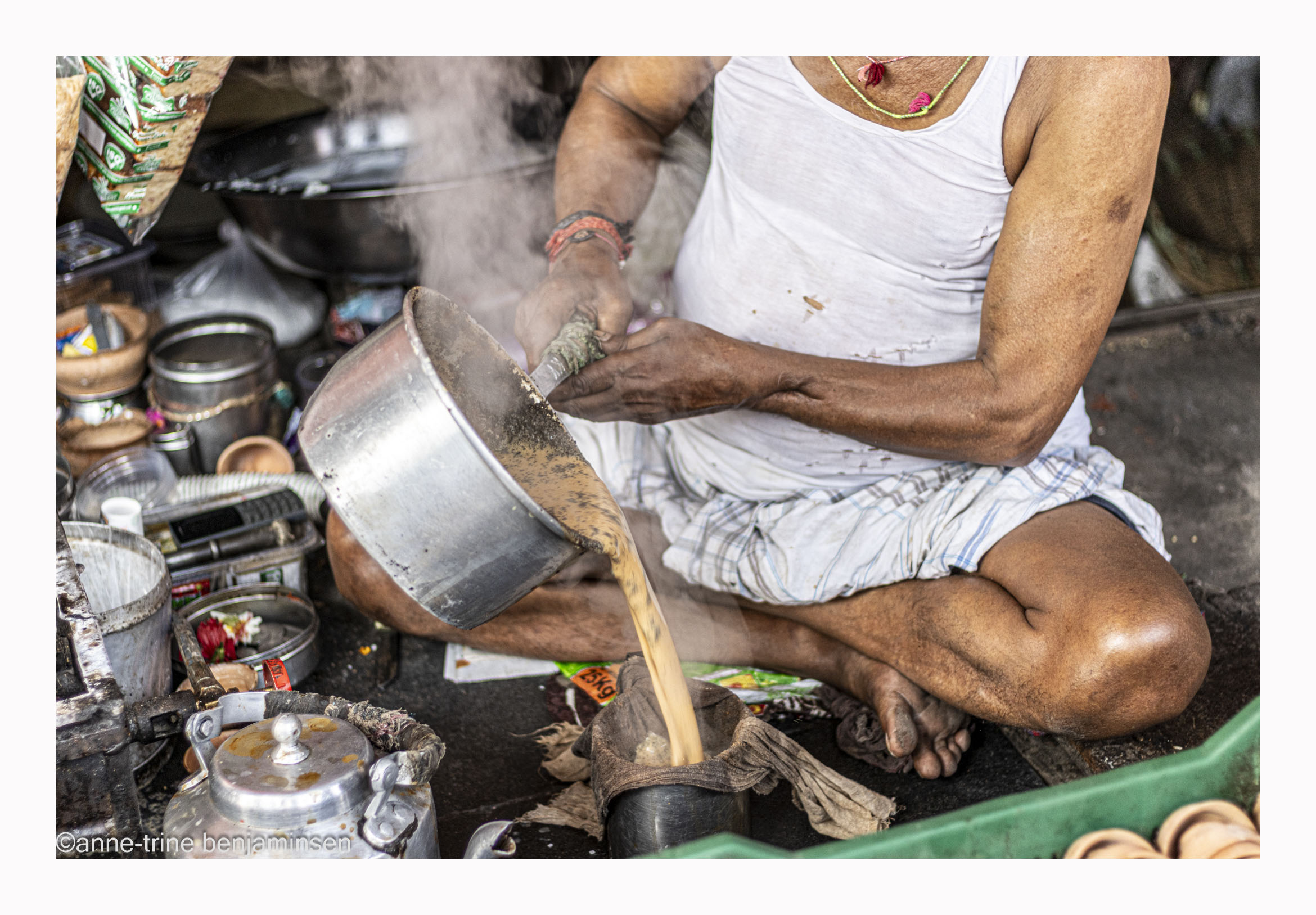 |
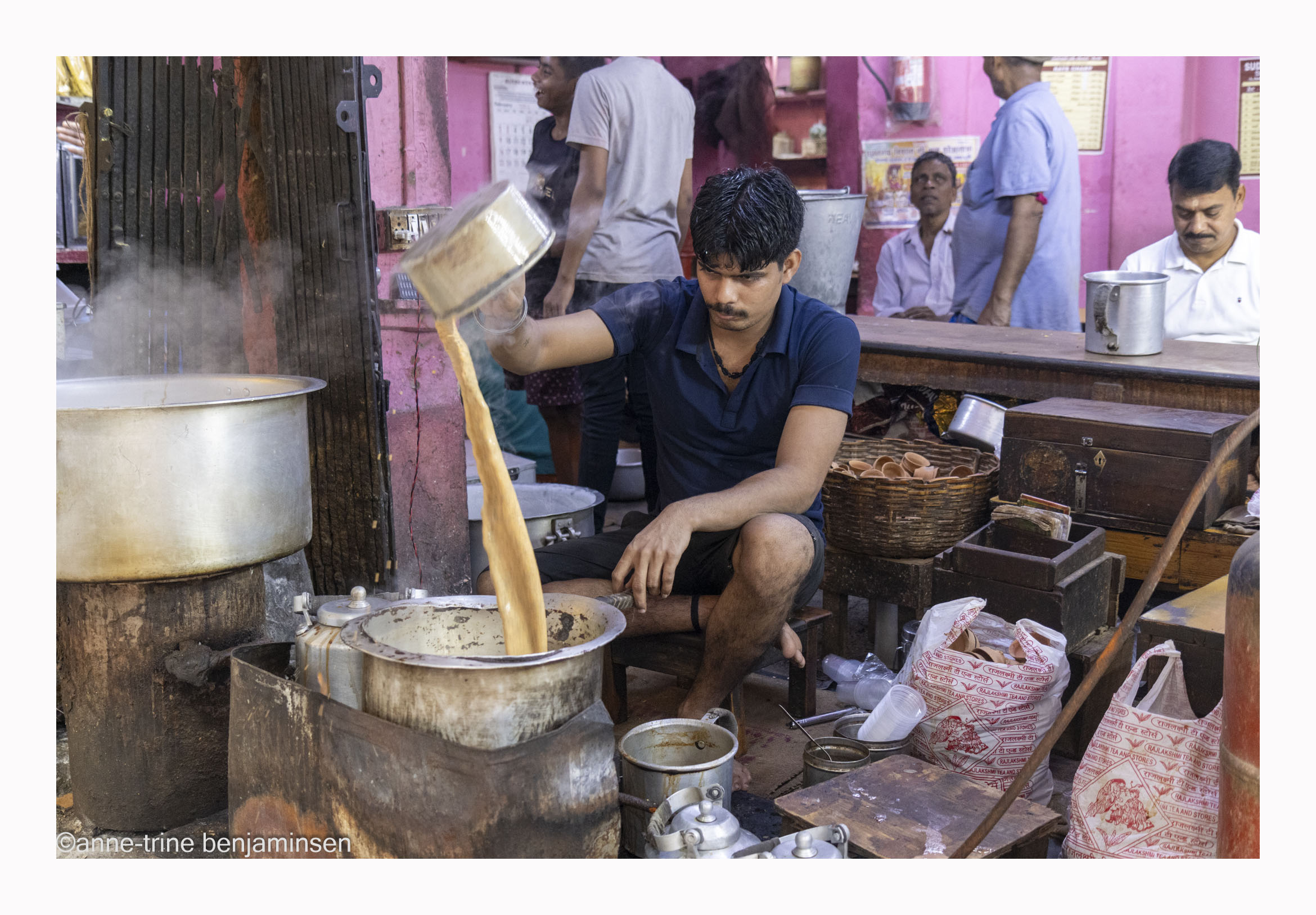
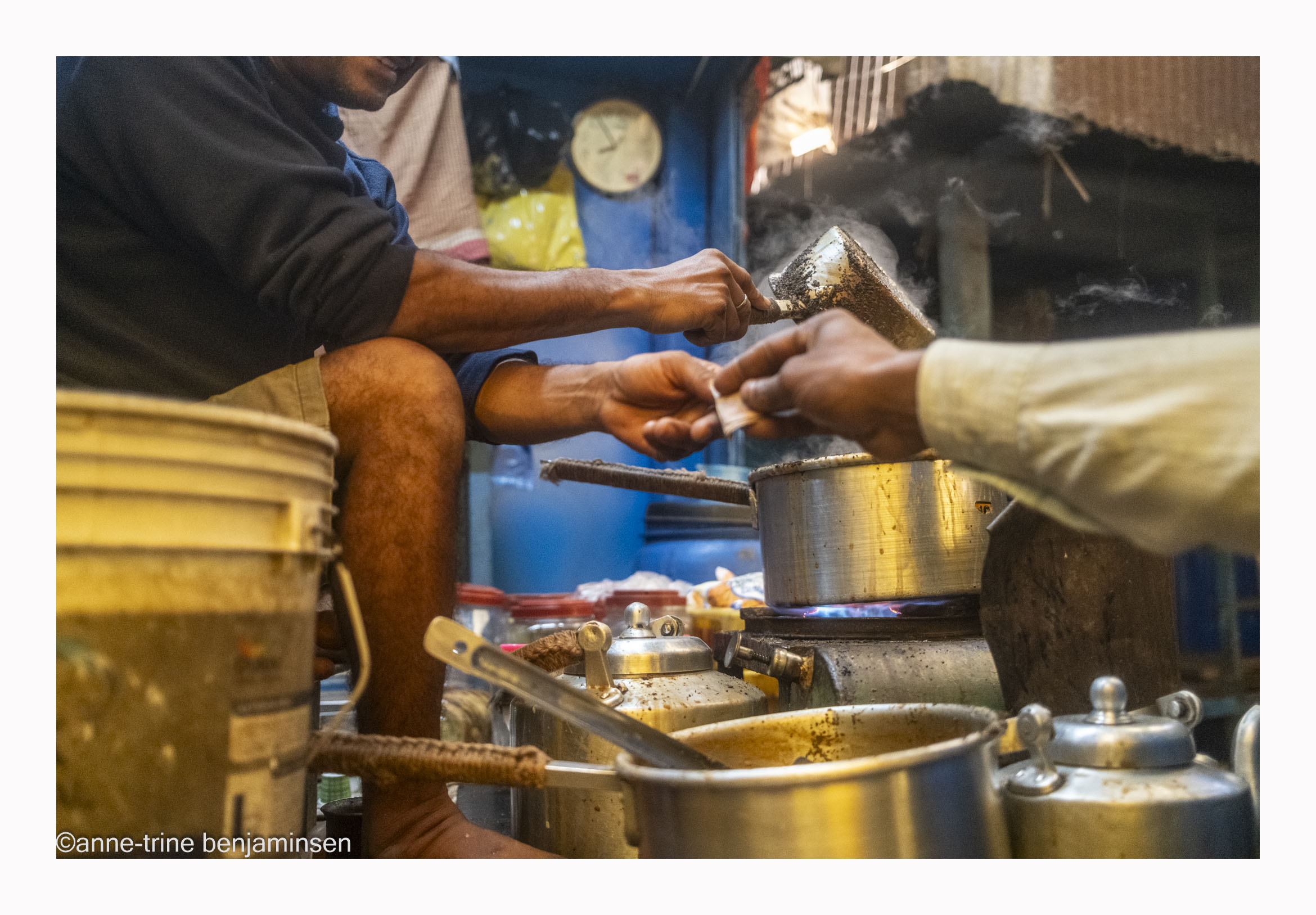
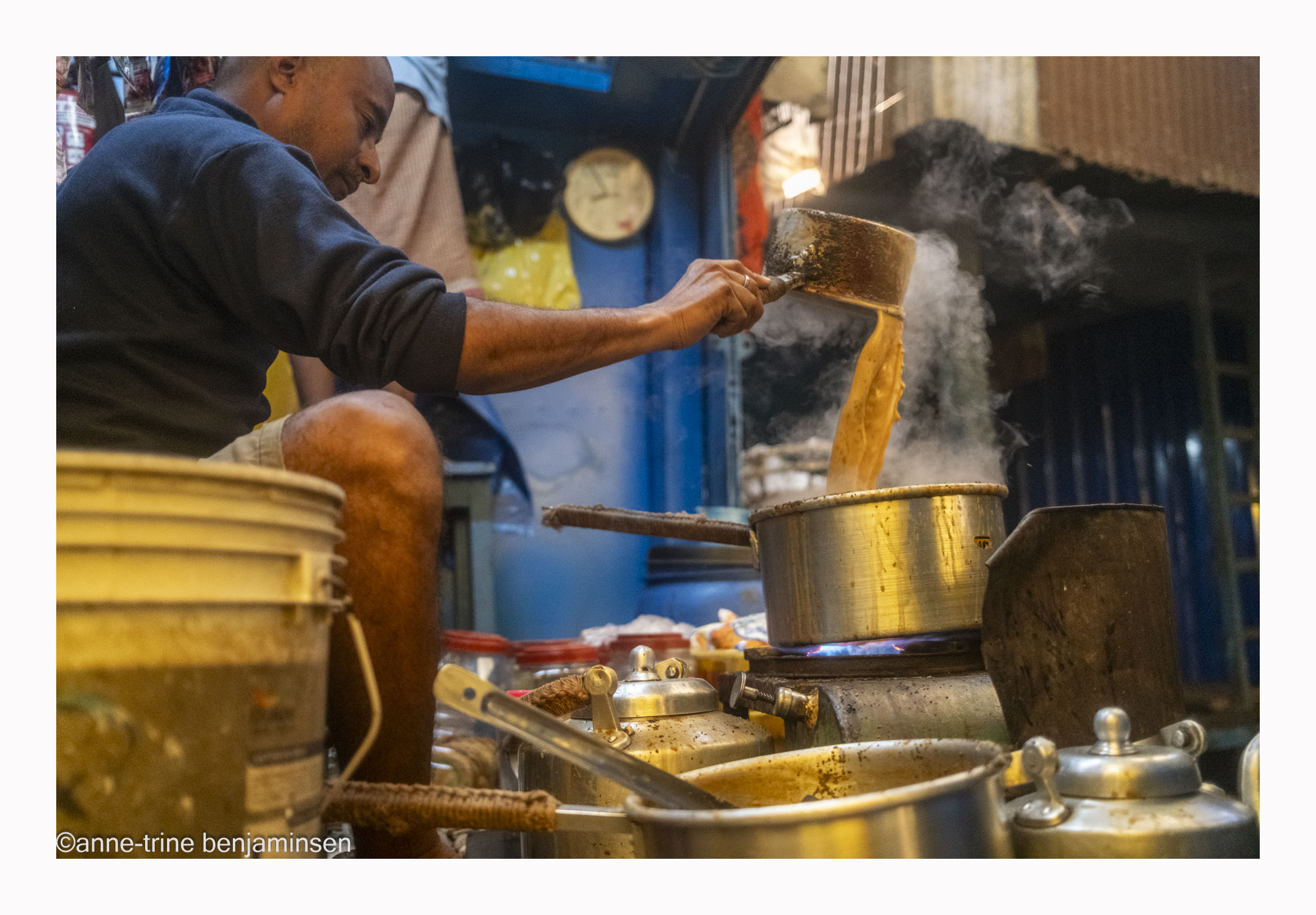
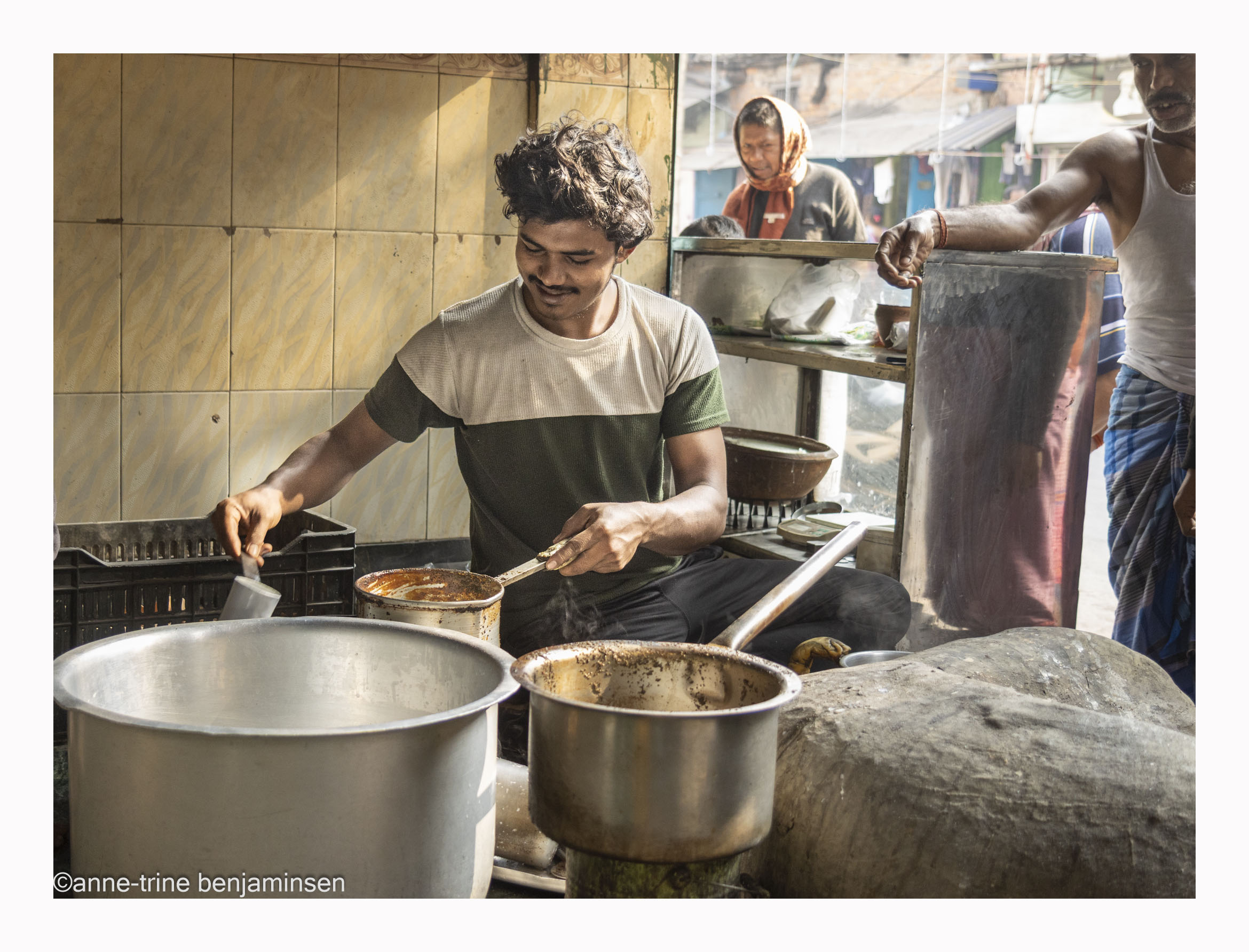
| Chai is always boiled because it then extracts stronger flavour and blends spices with milk more effectively. Watching the chaiwallahs, often cross legged surrounded by all their paraphernalia, lifting the ladle up in the air and letting go of the light brown jet of tea back into the pot, is very pleasing to the eye – not to mention a camera. Often, the chaiwallahs put on a show for the keen goras with cameras in hand. | 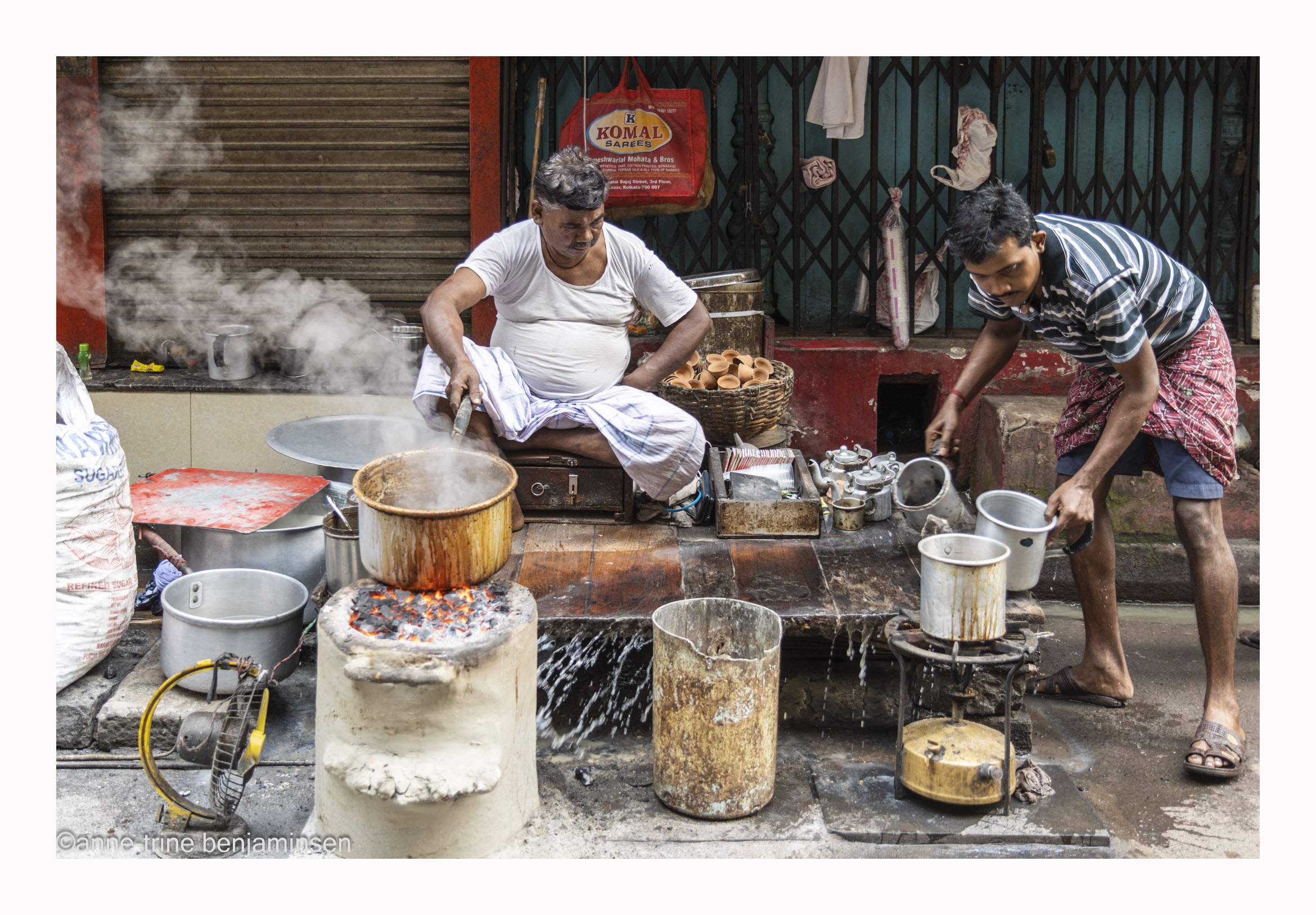 |
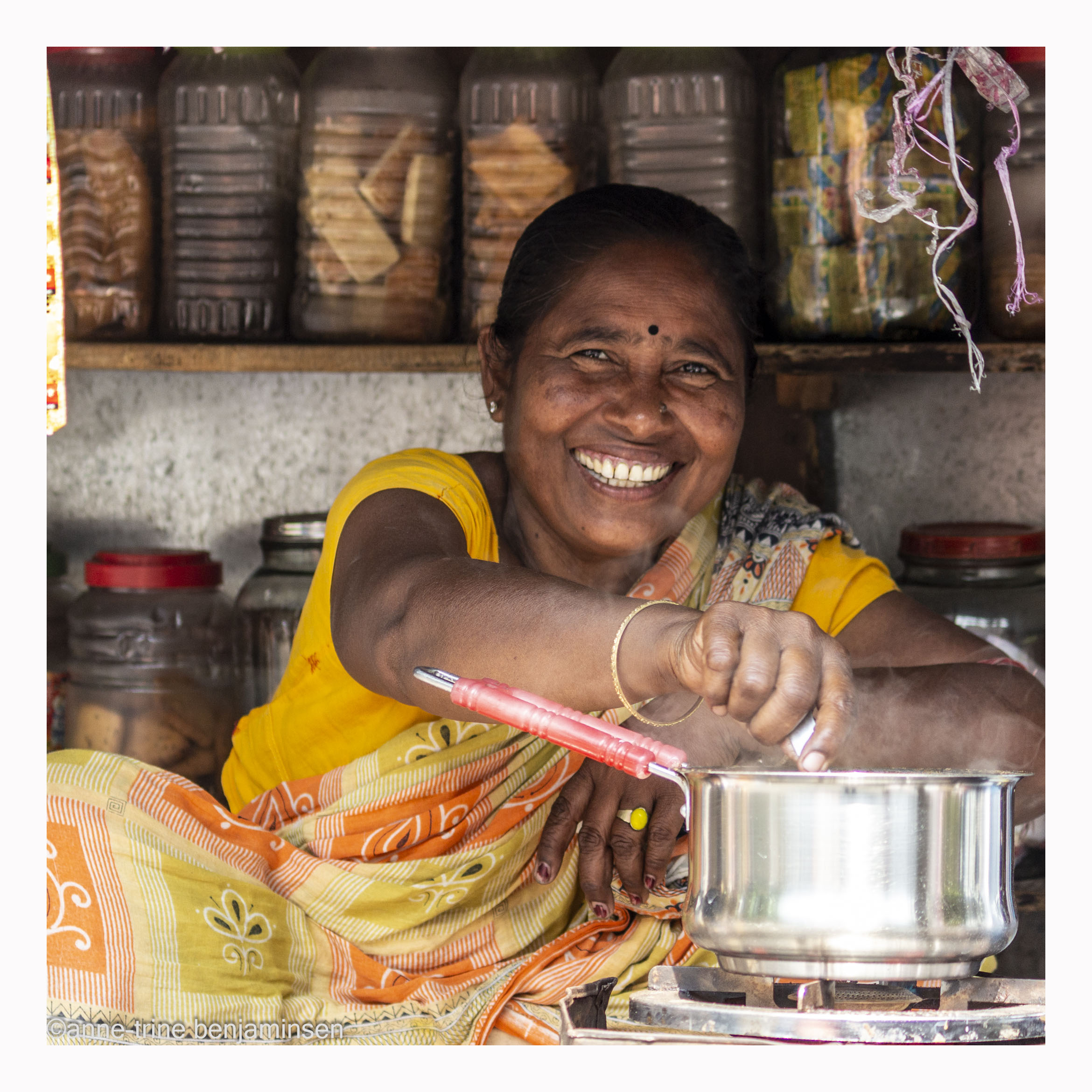
Those small pit stops, savoring a tiny cup of chai and a couple of sweet biscuits – the latter always kept in plastic jars, it’s simply India! If you haven’t been through this ritual, you haven’t been to India.
 |  |
The history of chai goes back to British rule. The British established tea plantations in Assam and Darjeeling in the 1830’s to compete with Chinese tea imports. As production increased, tea became widely available across India. Initially, tea was said to be too complicated for the poor, but it eventually spread to the whole population. It was sold and made easily available on the streets by chaiwallahs. And over time, tea evolved into what we know as chai by adding heaps of sugar and milk which made tea into a sweet and milky concoction. What tastes even better is Masala Chai, chai spiked with cinnamon, cloves, ginger and pepper; sometimes said to be India’s way of reclaiming tea from the British.
 | Tea in India went from a foreign habit into the soil of Indian life. Chai is affordable and uniquely Indian. You don’t pay a lot for those small cups of chai so wildly available. India is the world’s second-largest tea producer of tea, after China. India is also the world’s largest consumer of tea and the second-largest exporter. Chai means tea. When Western cafes put “Chai” on the menu, or even “Chai Tea” they most probably serve tea with milk and Masala Chai would rightly be tea with spices. |
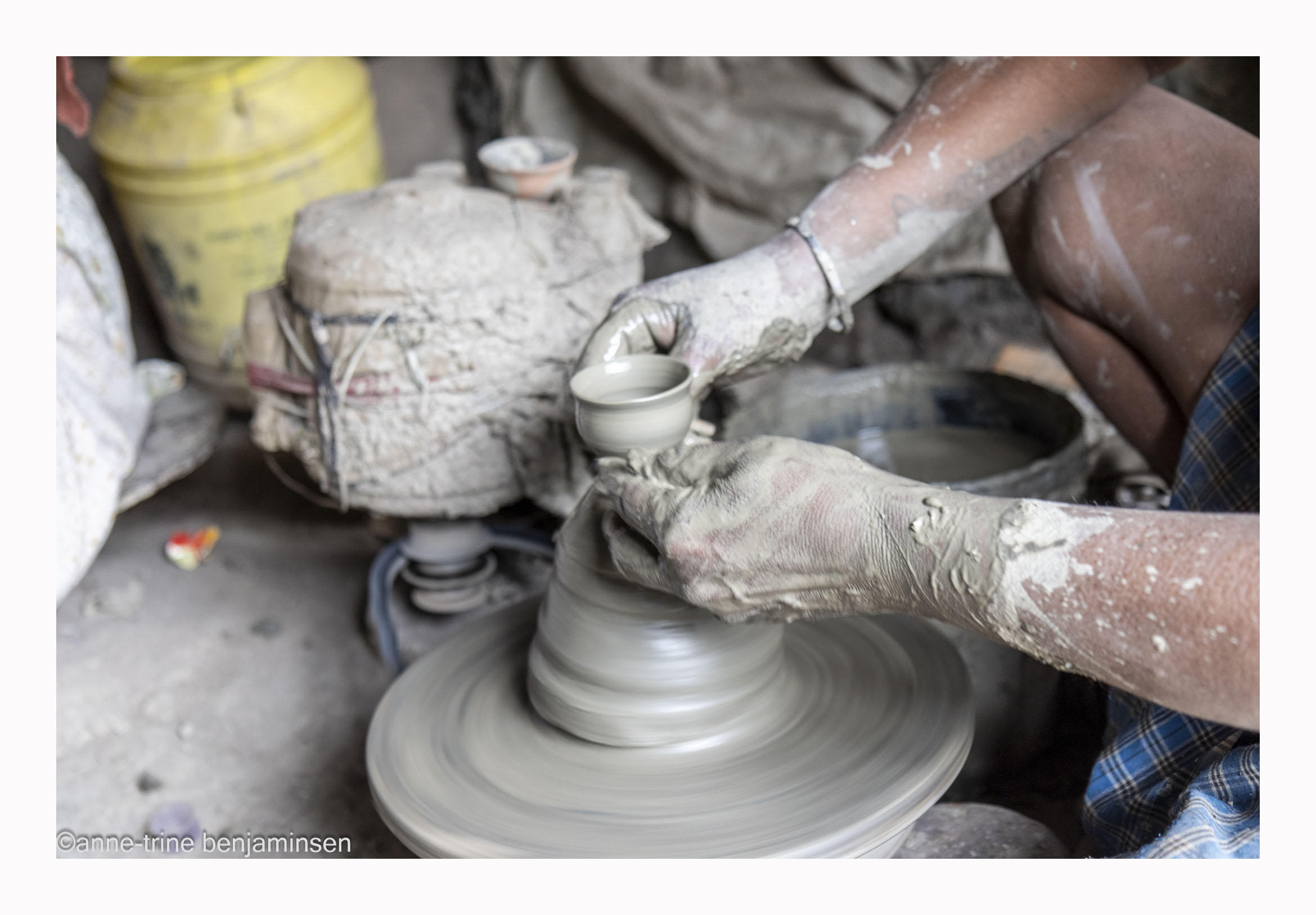 |  |
Left photo: Small home industry at the banks of Hooghly river in Calcutta. Earthen cups are produced at high speed before they are set to dry in the sun.
Right photo: A woman at the Mullick Ghat flower market in Calcutta taking a small break, a chaiwallah is never far away.