Benjamuna's Blog

Stories…. with a touch of India….

A stroll through Lodhi Garden November 1, 2013

Filed under: INDIA — benjamuna @ 2:08 pm
Tags: , , , ,

Lodi_2

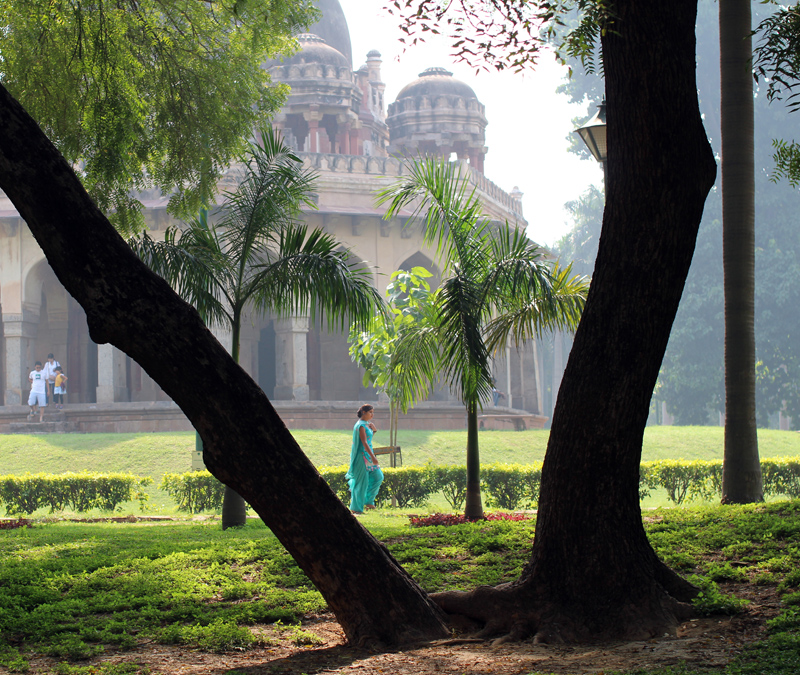
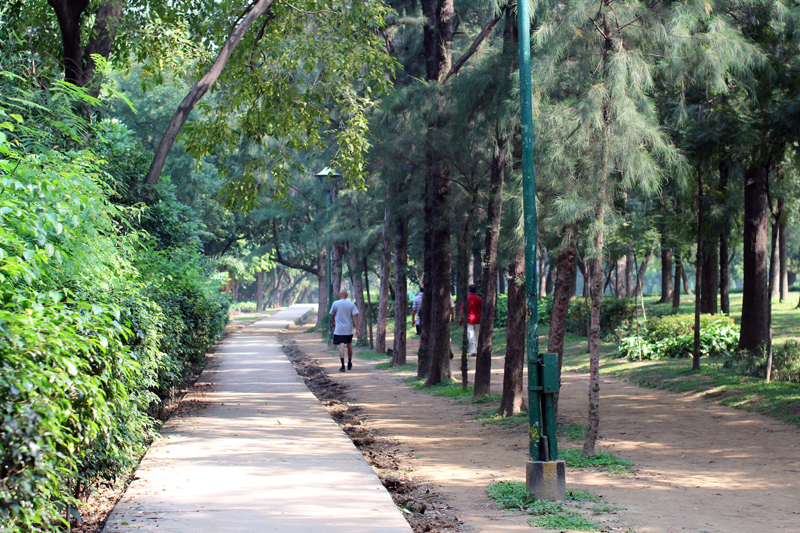
I didn’t make it in February, so top of my list in October was a visit to Lodhi Garden only a five-minute walk from where I was staying. The garden, which covers an area of 360,000 m2, is found in central New Delhi, where the surrounding areas are nearly as full of greenery as the park itself…. I entered through one of the gates at Lodhi Road and stumbled upon heaps of colorful Bougainvilleas. A perfect first impression… But the park is first of all full of trees and paths that cuts through the area. As well as several tombs and monuments dating back to 15th and 16th century.

The park is said to be a hot-spot for morning walks for the Delhiites, and yes: I saw more than one Delhiite walking briskly (or jogging) alone or in twos and threes. With a water bottle in hand. The heat came rapidly creeping upon me, but finding shelter from the sun is not a problem as trees are so plentiful.

Lodi_1

Of course I had to go through one of the Indian “cross-examinations” on my way through the park. As I was taking some photos a young man came up to me with the evergreen initial question; Where are you from followed by First time in India? To be honest, I have been through this many times before, I answer out of politeness and try to make it short although I never feel offended in any way. A little later I asked a young woman for directions, she invited me to join her and eventually came up with the same questions.  But I didn’t mind answering, after all it was me who approached her.

Lodi_4

When I reached the area with the small lake, which was my goal, I noticed that the number of young couples had increased. They sat close together everywhere, close but at the same time not touching. In India, it is still not quite right to be in love…. at least not before marriage.  Just the day before I had been seeing some young girls who was in the midst of their studies and I asked them – mostly as an ice-breaker – if they had boy friends. Giggles and smiles filled the rom, but one of the men who was present corrected me from the sideline with a firm smile; “Indian girls don’t have boyfriends”. Well Lodhi Garden is definitely a place for courting….

Lodi_6

The park seemed well maintained, there were colourful dustbins pretty much everywhere. Just like Marine Drive in Mumbai, Lodhi Garden is a place to breathe freely. Big cities like Mumbai and Delhi can be quite “unbreathable” – especially in the heat. Marine Drive and Lodhi Garden cannot be compared, but they are beautiful escapes in two different ways!

Lodi_3


Reflections on some muslim writers… September 20, 2013

In my part of the world, muslims are looked upon in a very one dimensional way. We associate muslims with women in burkas, the Koran, mosques, eid, fast, Ramadan. And…. terror. Does people from, say Pakistan, drink alcohol? do they read Shakespeare? do they have any sense of humour??

I always turn to the books, novels in particular, in order to learn about foreign cultures, and have lately read quite a few books by Pakistani authors. My favourite might possibly be Kamila Shamsie. Highly acclaimed “Burnt Shadows” (2009) is translated into Norwegian, but all her previous novels (which I read in succession) are really worthwhile to read. Maybe more so than “Burnt Shadows”…

Image

Shamsie, and many other Pakistani writers, describes a muslim world we seldom hear about in the news. They describe the elite…. the intellectuals. Those who dance and drink and sing… Those who are in opposition to the establishment. Those who quote Shakespeare… Yes, poverty is there, in glimpses.  But those of us who has read say Indian literature extensively, is more than ready for a more differentiated picture of countries like India, Pakistan and Bangladesh. Which leads me to the novel I just finished; “A good Muslim” by Tahmima Anam, born in Dhaka, Bangladesh. Anam lives in London and has received several UK prizes for her first novel, “A Golden Age”. “A Good Muslim” is a good read. But it’s also tells the story of “the good and the bad” muslim and thus calls for reflection. (It also has a beautiful cover, which I’m always drawn towards…)

Image

Most of the muslim authors I’ve read travel between their homeland and the US, or other western countries. Shamsie has won prizes both in her homeland and UK.

Last but not least I should mention “How it Happened” by Shazaf Fatima Haider. Born in Islamabad, based in Karachi, this is her first novel. Haider has taught me all I need to know about arranged marriages…. besides, her book is absolutely hilarious. In the western world we despise arranged marriages, failing to see it’s part of a totality. It doesn’t fit in our culture, but that doesn’t mean it’s wrong. I wouldn’t say I’m now in favour of arranged marriages, but the novel gave me both insight and understanding – and a good laugh. Haider writes well and a difficult topic is handled with humour!
 

Some favourite book covers… April 26, 2013

I’m not a wine connoisseur…. I like wine, but I know nothing about it. I have tasted expensive red wines, but realised it wasn’t really worth it, at least if I would have to pay myself… So what I sometimes go for, is the label. Within a price range, of course… If I don’t know what to buy, I choose a really nice label.
But this is not about wine, it’s about books! Very often I go looking for a specific novel or a specific author. Sometimes I buy one by chance. And what initially attracts me is very often the book cover.  Then I turn around the book and read about it.

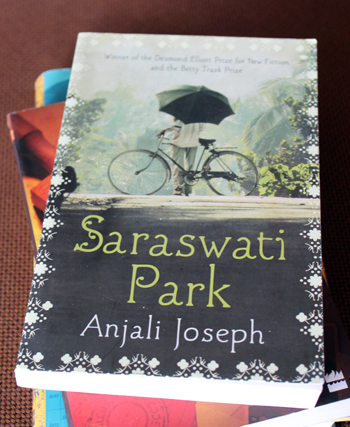
I can’t remember where I found Saraswati Park by Anjali Joseph, but I guess I fell for the bicycle, the flourish around the edges, the font and the green shades. The bicycle made me curious… although I didn’t expect the novel to tell a story about bicycles. What it does tell, is the story about Mohan; a letter writer in Bombay. A dying phenomenon. Never the less, when I visited Bombay last November a guide took me to the remaining letter writers outside the General Post Office in the south of Bombay. I felt lucky… I was able to see something that represents – soon – another time. In short; the letter writers have for decades written letters on behalf of those – migrants for example – who are not able to write themselves. Or, they fill in forms and help sending parcels. These days, even the underprivileged have access to a cell phone, and thus the letter writers are on decline.

BCover_3

A bitter-sweet story.

Calcutta Exile by Bunny Suraiya is definitely novel I bought because of the book cover, and also because I’d like to go to Calcutta – where I haven’t been yet. This might not be great literature and a book to remember, but it tells the story about Anglo-Indians and in that respect depicts a part of Indian history.

Calcutta’s Anglo-Indians, one of the most graceful and beautiful communities of India, became bewildered orphans, suddenly uncertain of their roots and equivocal about their future.

BC_3

A book cover that says… travel back in time.

Anosh Irani was new to me before I read about him in a magazine recently. Dahanu Road is his most recent novel. Literature never fails to enlighten me. I have now learnt that there are Parsis and there are Iranis… but that is another story. On the front cover you can see the chikoo fruit; not only does it look good but it plays an important role in the novel. Dahanu Road is one of these books permeated by domestic violence and whether the end is optimistic or pessimistic I really don’t know… It was, at times, a struggle to read.

The book is beautifully written – thus a quote from the book:

Shapur Irani always thought of dusk as a beggar. It had no light, it had no darkness; it lived on the scraps that were fed to it by day and night.

BCover_1

On the bike; Zairos and Kusum…

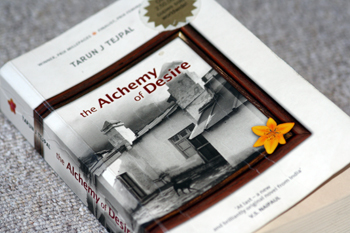
The Alchemy of Desire brought me to Uttaranchal in the north of India where I met Tarun Tejpal, his father and his wife. Which is yet another story…. I read the novel and knew I just had to go there.  The front cover shows a photo of a house which the story evolves around. This house is now turned into Two Chimneys, a bed and breakfast where we were the very first guests a few years back. I never really thought the house in the book was for real, and I took the cover photo to be nothing but an illustration. But it was all very much real… The house on the hill with the two chimneys… Literature can open doors!

BCover4

A book and a house….


Food in the gurudwara March 22, 2013

Filed under: INDIA — benjamuna @ 6:27 pm
Tags: , , , , , , , ,

In Bapsi Sidhwa’s novel Ice-Candy Man (1988) the partition of India is seen through 7-year-old Lenny’s eyes, herself a Parse. At one point she says

One day everybody is themselves – and the next day they are Hindu, Muslim, Sikh, Christian. People shrink, dwindling into symbols.

The novel shows how old friends become enemies because of their different religion. They promised each other eternal friendship, but the Partition eventually drove them apart.

Religion can be hard to defend, still when we travel we often visit temples and churches because they play an important role in many cultures. The Sikh temple, the gurudwara, always has a community kitchen. No matter how simple – or luxurious; every temple has a langar where food is prepared and cooked by volunteers and served to the poor – or to anybody else for that matter.

It’s a fascinating sight. In Gurudwara Sis Ganj i Old Delhi, people sit outside in the sun and prepare carrots and peas. Everybody can join. When I was roaming around inside, taking photos, my guide sat down and took part in the making of the rotis. – It feels right, she says. – I couldn’t just stand here, being idle…

Langar_1

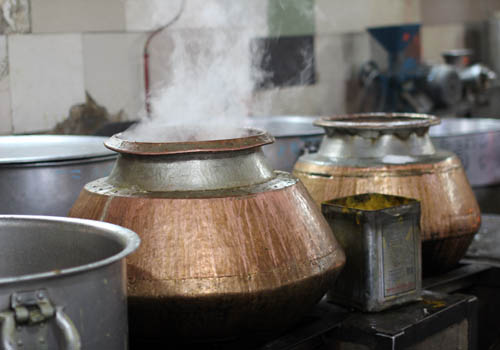
All utensils were of a formidable size….

Langar_10

Cooking dal…. Big size!

Langar_2

The men took care of the carrots, the women concentrated on the peas….

Langar_3

Inside, the women were busy with the dough…

Langar_4

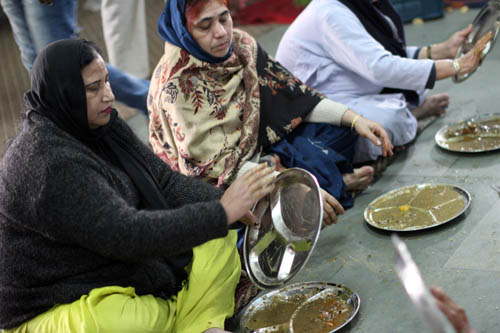
No food is wasted. These women take care of the food left on the plates:

Langar_6

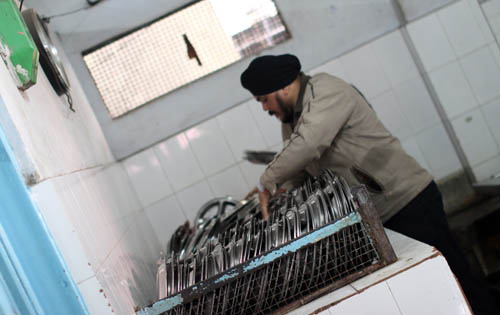
And somebody has to do the dishes…..

Langar_7

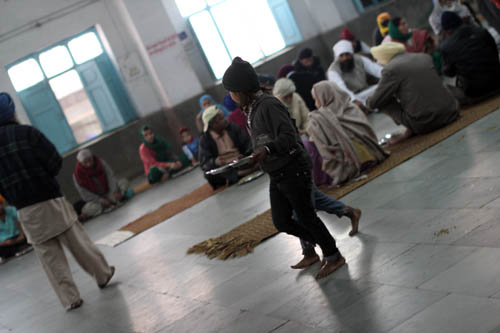
A glimpse of the dining hall.

Langar_9

Rice donations.


Delhi headgear March 17, 2013

Filed under: INDIA — benjamuna @ 5:57 pm
Tags: , ,

It’s interesting how we relate to temperatures. For a Norwegian, a sunny day when the thermometer shows 22 degrees Celsius is nothing but a summer’s day! Nice and warm. So when I travelled to Delhi 10 February, I had checked the forecast and I kept telling people that my holiday would be – weather-wise – just perfect. Unlike Mumbai in February, it would be pleasant. Around 22 degrees. Like a Norwegian summer. No sweating and gasping for air in 38 degrees C.

So I packed one pair of sandals, some light tunics and blouses. Funny then to be surrounded by Delhi people wearing sweaters, various headgear, even winter coats and boots. To be honest, I never wore my sandals and in the mornings I even needed a light jacket. You could easily spot tourists among the natives in more than one way… when going to India you sort of expect warm temperatures and pack accordingly.

I started to look at people’s headgear. Some is worn out of tradition or religion, some because it was , well, cold…
All photos are taken in Old Delhi.

HEAD_1

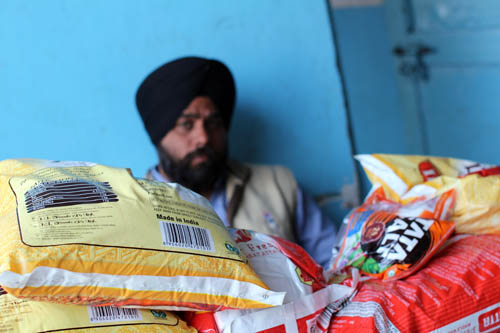
The old man above was seated outside the gurdwara Sis Ganj (Sikh temple). I passed by, but came back asking for his photo. His yellow turban was standing out, like a glowing star.

HEAD_6

Another sikh in the Sis Ganj, helping out in the community kitchen. He looked dedicated, to his chapatis….

HEAD_8

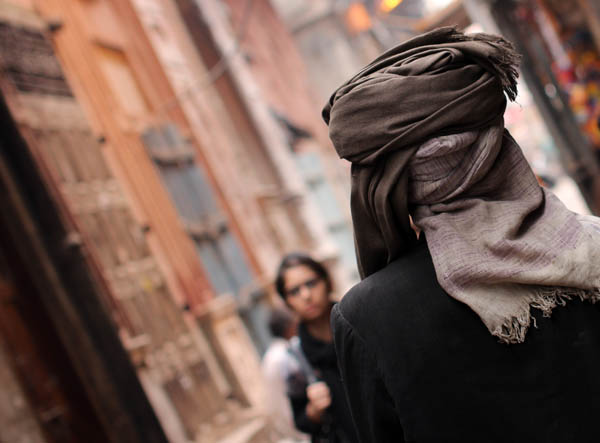
Turban, scarves, jacket…. It was after noon, but I still felt warm from the sun and definitely needed only one layer of clothes….

HEAD_7

A Calvin Klein (!) cap, it suited him. Like it was made for him!

HEAD_5

A crocheted  skull cap…, his clothing was amazingly starched white – in the midst of his potatoes…

HEAD_2

I can’t believe he was cold,  maybe he just felt he looked good with this scarf!

HEAD_4

I didn’t see his face, but I’m pretty sure he looked good!


Buying bangles…. March 5, 2013

Filed under: INDIA — benjamuna @ 6:17 pm
Tags: , , ,

I have a few kurtas…. Bought in India. Some are a bit “too India” and doesn’t work at home. But for the most part they could go anywhere. But there is this thing about sleeves…. the length of the sleeves to be specific. Almost all are designed with a 2/3 length of the sleeve, and if you wonder why? To make room for the bangles of course. At least that is my conclusion.

Bangles_1

Indian women are among the best dressed in the world. To me, there are two buzz words; colors and match. No need to speak about colors, we all know that Indian women are dressed in either saris or salwaars in bright colors (when speaking about traditional outfits). And every item matches; the kurta (tunic), the trousers and the dupatta (shawl).  Because it’s a set. When I dress in the morning I chose a pair of trousers; if they are black I find – for example – a suitable t-shirt and a blazer – but it’s not a “set” in the sense that these three items are bought together. If you go into an Indian shop you’ll see that a lot of outfits are bought as a set; trousers, kurta, dupatta. And then comes the icing of the cake; the matching bangles….

Bangles_5

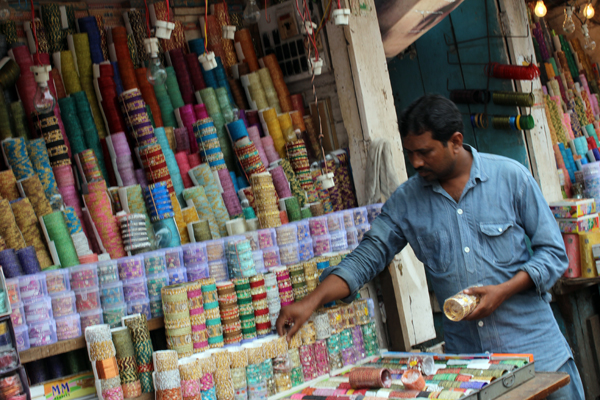
A street vendor in Chor Bazaar, Mumbai.

Bangles_6

Experienced hands…. Breach Candy, Mumbai.

Recently, I visited a bangle shop in Old Delhi. Old Delhi is a huge wholesale market divided into many bazaars: Kinari bazaar for beads and jewellery, or the spice market Kaori Baoli. Suddenly you find yourself in a street lined with shops selling marriage invitations only, or, bangles…. It’s amazing really and one shouldn’t turn down a good guide in this incredible maze. It’s easy to get in, I’m not sure I would find my way out without some helping hands. Old Delhi is crowded; you walk abreast with people, goats, cows, cycle rickshaws, two wheelers, bicycles, ox carts and the minute you leave Chandni Chowk – Old Delhi’s main arterial – you’re  a hundred years back in time.

Bangles_2

A fellow travellerer, overjoyed!! (Photo: Dhruv Gupta)

Our guide Dhruv took us to a basement full of bangles. – You can choose some, as a gift he said. Five “girls” panicked simultaneously, what to chose?? I went for brown-ish red-ish glass bangles. The man behind the counter asked me to show my wrist, cast a quick glance and gave me the exact size. I thought the 7-8 bangles I had put on my arm was what I got, but then I was given two boxes full of the same type I had chosen. Excess is a keyword when it comes to bangles… Put them on and remove them all at the same time, we were told. Otherwise they break easily.

Bangles_4

Some facts about bangles: Bangles are part of traditional Indian jewellery. They are usually worn in pairs by women, one or more on each arm. Most Indian women prefer wearing either gold or glass bangles or combination of both. Inexpensive bangles made from plastic are slowly replacing those made by glass, but the ones made of glass are still preferred at traditional occasions such as marriages and on festivals.

It is tradition that the bride will try to wear as many small glass bangles as possible at her wedding the honeymoon will end when the last bangle breaks. Bangles also have a very traditional value in Hinduism and it is considered inauspicious to be bare armed for a married woman.

Recommended trip if you’d like to eplore Old Delhi: www.masterjikeehaveli.com

All photos: Anne-Trine Benjaminsen

Bangles_3

Alladin’s cave… Fellow traveller Julia and me think it’s just…. awesome!


Indian textiles May 2, 2012

Filed under: INDIA — benjamuna @ 5:18 pm
Tags: , , , , , , , ,

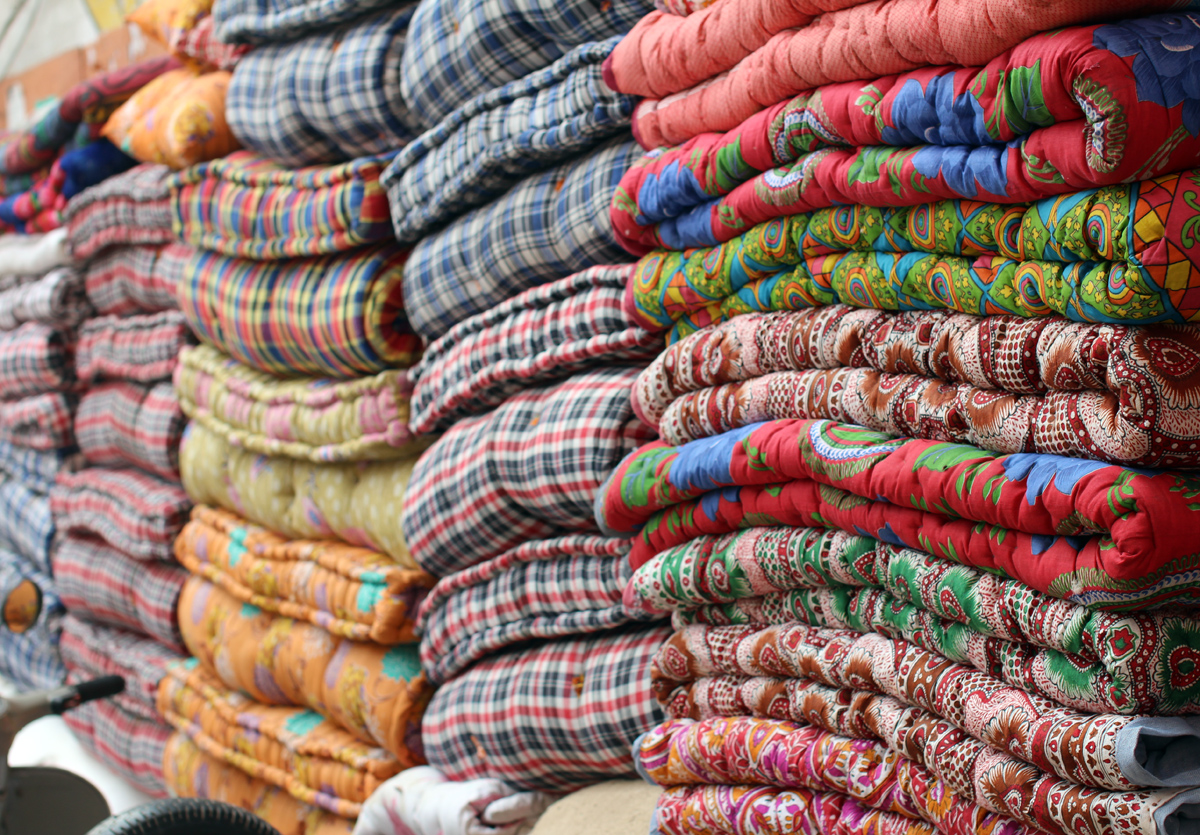
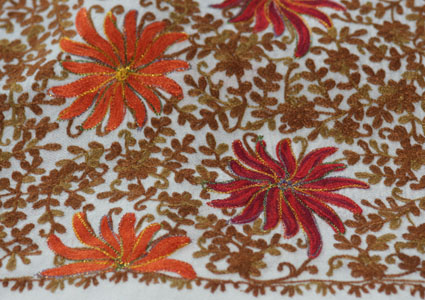
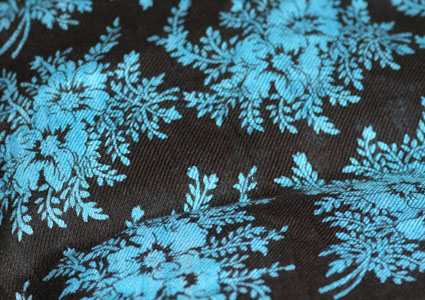
Why is India a shopper’s paradise…. Among other things; the irrisistable beautiful, colourful textiles….

In the book I’m reading right now; Planet India by Mira Kamdar, she writes about retailing in India. And tells the story behind FabIndia. Every time I go to Mumbai, I visit FabIndia in Kala Ghoda: A symphony of colours spread over three floors and a quiet cafe – with exellent coffee – as well. They sell clothes, all kinds of textiles and other stuff for your home, organic food, organic personal care… FabIndia was in fact founded by John Bissell, an American who came to India in 1985. He fell in love…, with both a woman and Indian handicrafts.  Qute understandable! FabIndia is now run by his son William.

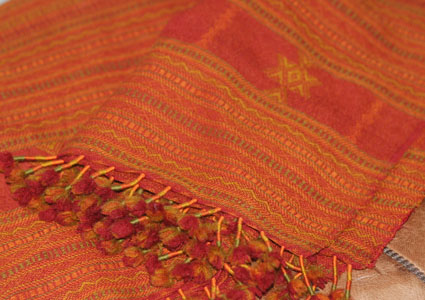
A big, beautiful woolen shawl from FabIndia.

I have many Indian shawls… The word shawl is in fact the Persian word for “a piece of wollen clothing that you wrap around yourself. ” The first I bought, and also one of mye dearest, I picked up in Cochin, state of Kerala. Black wool with golden embroidery. It’s always diffiult to chose among “a million” beautiful samples; the patterns, colour combinations – it’s endless and overwhelming.After many visits to India, I have now chosen quality before quantity. Shopping from the street markets is cheap, the haggeling is fun and the exciting feeling of getting something really, really cheap is always there…. But once you step indoors, especially in Colaba, prices leap upwards and so should quality. For the most part I believe I’m paying the right price even when I feel it’s a bit over the top, but you never know….

“Madam, real pashmina madam….” How often don’t you hear these words when you’re around & about in India. I have give up “real pashmina”, I don’t think I have one – I always avoid pashminas because I think you need to be a “conoisseur” to be able to tell right form wrong. Better then to buy a real cheap one because you really liked the pattern. It’s the same as buying silk; in Vietnam and Thailand you are always offered “pure silk” – but then the trick is always to carry a lighter. If the treads melt, it’s synthetic. If they just disappear, like hair, it’s the real thing. Or is it….? Well I have been cheated, and I’m not the only one. So when I’m affered “real pashmina” I’m at a loss…

Some years ago I discovered Maspar just behind the Taj Mahal Palace in Colaba. Quite a big store for home furnishing: colours…. quality…. I wanted to revisit in 2010, but alas, the shop was gone. It wasn’t until last year, when I sat in the car from the airport to Colaba that I spotted Maspar under the bridge at Kemp’s Corner. So I went back a few days later, just to disover that the shop had shrinked considerably. The shop assistant told me that after the terror attack against Taj Mahal Palace had made safety precautions in the area extensive – and thus clients had vanished.My best shopping tip? go and have fun………..and buy something for your mother and sister as well!


Updates on my reading… April 29, 2012

I never thought there would be an Indian detective, in fiction. Every time I come to India, preferably Mumbai, I spend considerable time in bookstores – always with a ‘wish-list’. But I have never come across detective stories. Not that I have been looking, I stopped reading crime novels many years ago, having read my share. But then a friend from Finland told med about Vish Puri; an Indian Herule Poirot.  However, the author is British; Tarquin Hall – and so far he has published two books about “India’s most private investigator”, a third is on it’s way. Years in India, and also married to an Indian, he is very much familiar with the Indian lingo. Vish Puri lives and works in Dehli, the books are funny  page turners and yes, I have become a fan.

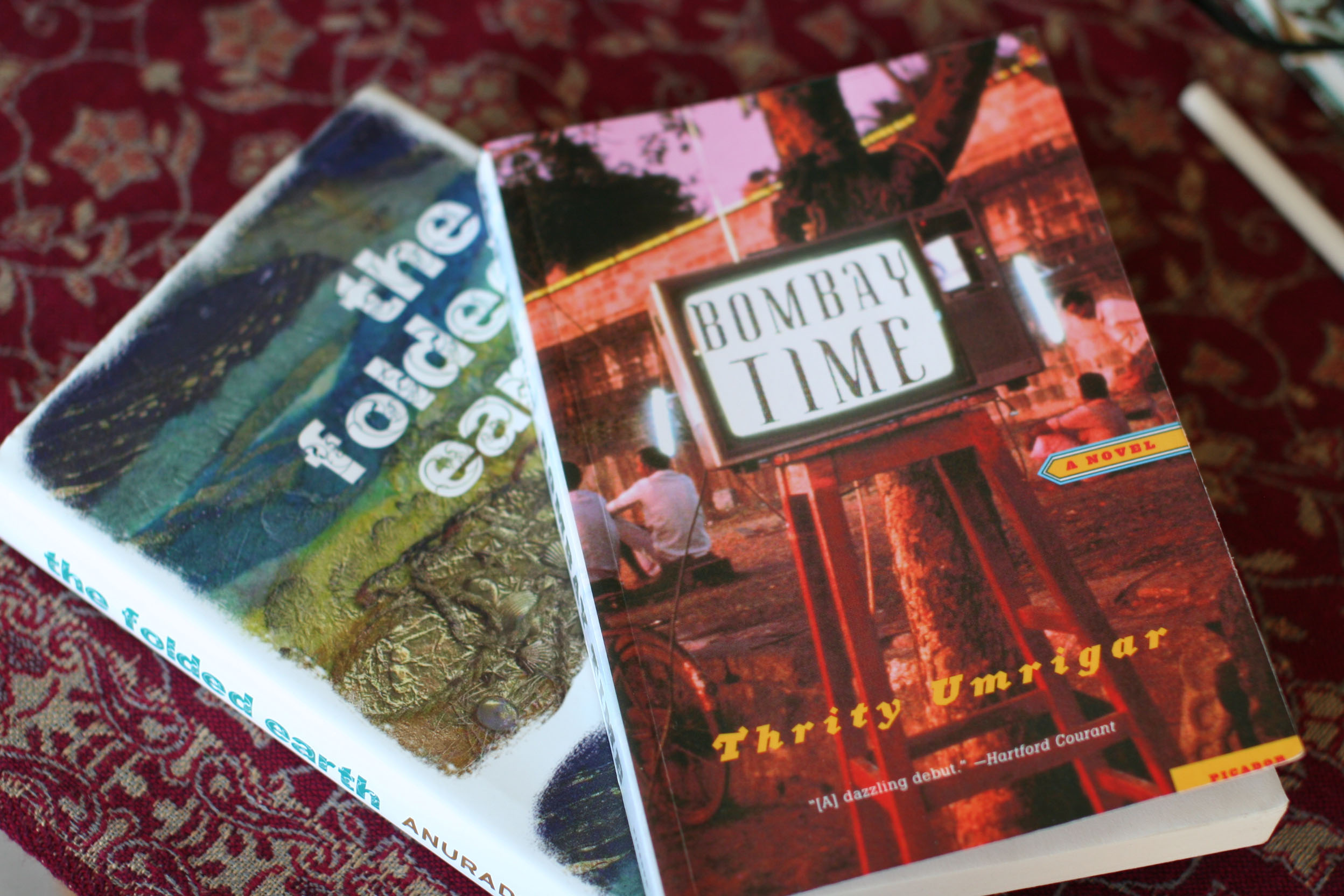
It’s no secret that i love novels set in Mumbai, that’s probably why I chose Thrity Umrigar’s novel Bombay Time. Also, she writes about the Parsi community – well known from the books by Rohinton Mistry. This is her debut and tells the story of a bunch of people in Wadi Baug. It may not be ‘Nobel Prize material’, but it gives you insight into the Parsi community. The novel has a hint of bitterness, but tells many interesting stories.

Anuradha Roy published An Atlas of Impossible Longing in 2004, and I have been waiting for her next book. The Folded Earth didn’t let me down, especially since it is set in a remote town in the Himalaya. When people ask me, – where should I go in India – I always say; the North. The Himalaya Foothills. The novel is set in Ranikhet in the state of Uttaranchal, and tells a rather sentimental story about Maya who has lost her boyfrind and takes refugee in the mountains. I have been to Uttaranchal and I could easily imagine Maya, Charu, Diwan Sahib and his mysterious nephew an this breathtaking landscape.

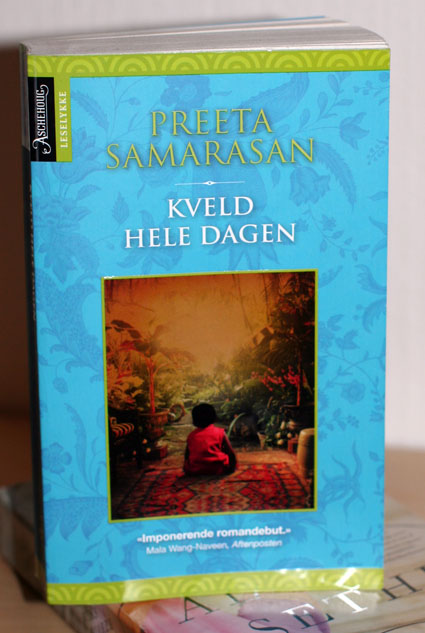
The most shocking reading experiene in 2012 has so far been Evening is the Whole Day by Preeta Samarsan. Somehow it reminded me of V. S. Naipaul when he writes about dysfunctional families where men hit their wifes and mothers hit their children – at the same time being able to write in a witty way.  This novel is set in a village in Malaysia, however in an Indian community, the street aptly name Kingfisher Lane. Raju and Vasanthi have three children, all of them neglected – especially the youngest girl: I have never in my life read such a dismal portrait of a child. The novel is an impressive debut. She is able to portray a family where every one is a loser, still – the book has a good portion of humour.

Ali Sethi was a completely new name to me, but I’m curious about literature from Pakistan and was happy to find this debut novel in a bookstore off The Strip in Las Vegas – of all places. The Wish Maker tells the story of “a fatherless boy growing up in a family of outspoken women in contemporary Pakistan” as the back cover of the book says. That made me decide to buy the book, and it definately gave me a taste for more…

At the moment I’m reading Planet India by Mira Kamdar. It’s an analysis of contemporary India, published in 2007 – thus the chapter about cell phones seems utterly outdated…. Kamdar writes interestingly and she has talked to a lot of people, Mukesh Ambani and his likes, for instance. Sometimes she interviews people who has great plans for the future of India, also short term plans – and this makes me rather curios to what has been ahieved in 2012 – if achieved at all. The book has chapters on retailing in India, villages, the cities, power – and more.


Morning walks…. March 20, 2012

Filed under: INDIA — benjamuna @ 7:17 pm
Tags: , , , , , ,

When I came to Mumbai last November, it was hot. Unusually hot, the locals said. And yes, the thermometer was constantly pushing 40 and the humidity made it almost unbearable to stay outside for a long time. My partner hates shopping, but suddenly he saw shops as an opportunity to cool down…. My good luck! But he also likes to walk, and how would we be able to take brisk walks in the south of Mumbai, when the heat made you feel dizzy just after one block.

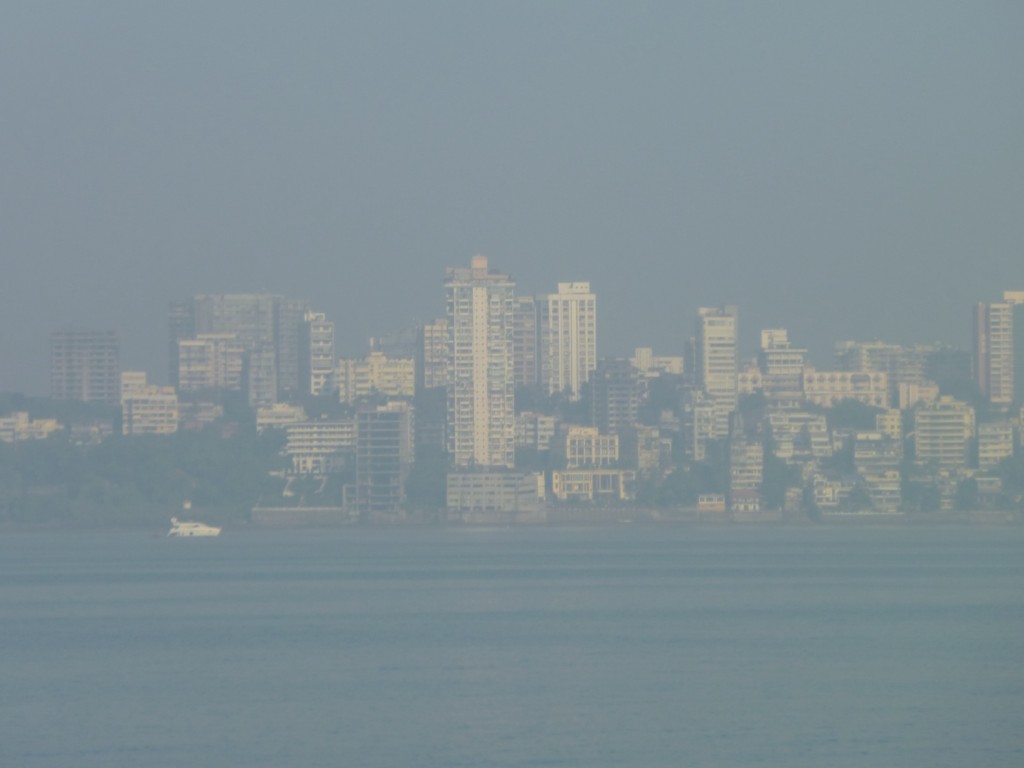
Morning haze, as seen from Marine Drive.

The solution was not hard to find. Our hotel, Suba Palace, is only a 15 minute walk away from Marine Drive. It would have to be morning walks. We set out just after a light breakfast. The big roundabout that makes the start of Colaba Causeway, S. P. Mukherjee Chowk, was still rather empty, we could cross the street in a civilised way…. And then we headed for Flora Fountain, along MG Road, through the charming Fort area, where we took a left turn and ended up on Veer Nariman Road that cuts through the Oval Maidan to the left and the Cross Maidan to the right!
Or we chose the more quiet Madame Cama Road that would take us directly to Marine drive, through a pretty quiet neighbourhood. Many of the streets in the south of Mumbai are lined with beautiful trees that also cast very pleasant shadows. But we didn’t really need the shadows in the early morning. The air felt cool and fresh and we could walk pretty fast.

Going north!

It’s always interesting to see a big city come to life. And especially a megacity, like Mumbai. I guess this part of the south of Mumbai will never get really crowded and these streets will not be lined with hawkers during the day – still – they won’t remain empty. The rush hour had not really started, some cars were there – but you couldn’t really call it traffic. Mumbai traffic….The Air India building rose in front of us, and Marine Drive was “just around the corner”. We passed a fantastic banyan tree, where we crossed the road and then: The Arabian Sea.
Marine Drive is a promenade, 3 kilometre long, and there is space for everybody on a Monday morning! People come here for a brisk walk (or just a walk), there are joggers, people do yoga and meditation, and contemplation. In a city of close to 18 million inhabitants, Marine Drive is a breathing space for many people – including an over heated tourist!

The Samudra, natural perfume….

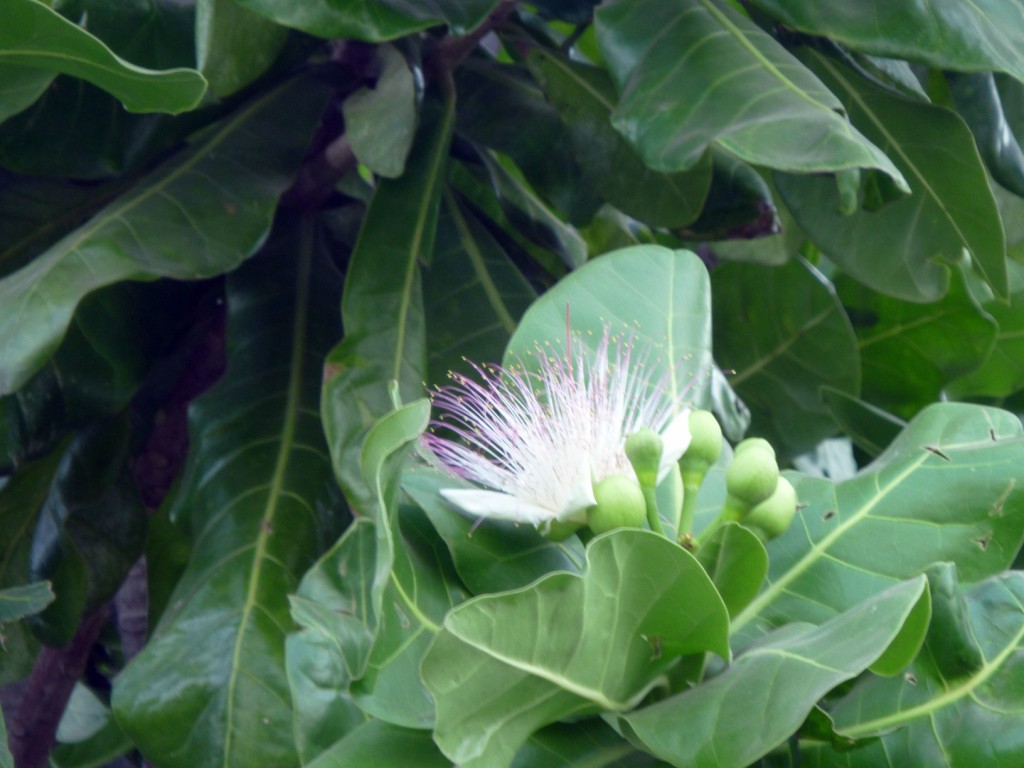
We walked to the very start (south) of Marine Drive and turned around – going north. Every morning I had to comment on the Samudra, its lovely fragrance and the funny flowers. But then suddenly: The sun strikes back…. When you walk in the early morning, or in the pleasant shadow, it’s hard to imagine how the sun burns. So we crossed the Netaji S Bose Road (Marine Drive), now heavy with traffic, and walked towards Churcgate station. We wanted a coffee really badly, every morning, but it was just about too early for the coffe bars we passed on our way. We knew the Barista, or the Cafe CoffeDay, both next to Regal Cinema in Colaba would be open any minute. Both serve excellent coffee!
The morning walk became a ritual. A ritual I will keep up as long as I visit Mumbai!


Looking for quick rupies….

A corner shop comes to life in the morning….

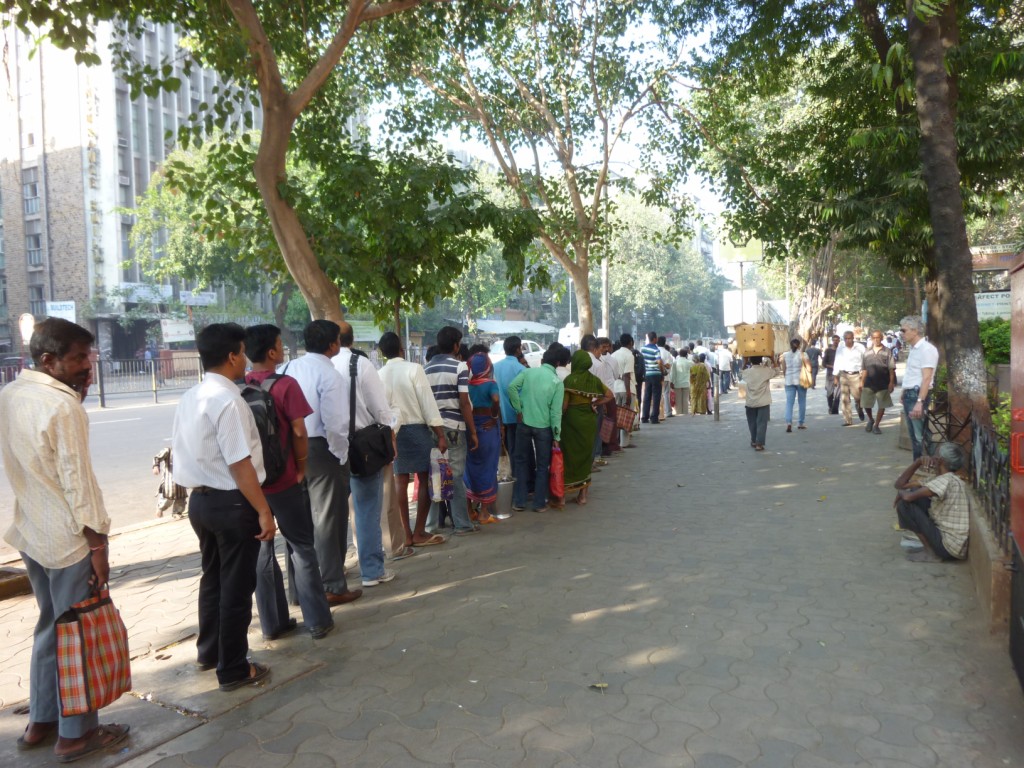
And the bus queues springs to life as well….

A man’s gotta do what a man’s gotta do…. as seen from our window at Barista!


The Khondaran experience… September 28, 2011

Filed under: INDIA — benjamuna @ 6:30 pm
Tags: , , ,

When I last came to India, in March, I spent some days together with Children’s future India. It was quite a marathon…. Early rise, breakfast on the way, many miles spent in the car, visits here and there – and the heat… Sandeep from CfI and Datta, the driver, were talking in the front of the car, continously – in order to avoid Datta from falling asleep. They were long days…

We were eventually heading for Dabhol – where I hadn’t been before. After a visit to the CfI office, we went through with a few appointments before our last leg of the journey that day; the small village of Khondaran. It was a few hours past noon, and the heat started to ease a bit. When you feel the heat losing its grip – the energy gradually comes back.

The colourful women of Khondaran!

Again – we were greeted by the village people – they popped up from everywhere and I was the star attraction, well, I was the foreign guest. A foreign guest in such a remote place is equivalent to an attraction. Most of the people who were swarming around me, were women. The men most likely being away for work, as daily labourers. What struck me was the fact that I was surrounded by colours,  bright colours of red, blue, green, turqoise, yellow….. And I said – let’s get together for a group photo. Indian people love “snaps” so we were all set in a few minutes. It’s one of my very fond memories and favourite photos.

On our way down to the well….

Among other things, we were supposed to visit the village well, made possible by CfI and Fadderbarnas fremtid.  So we started our “decent” down to the well. A lot of women followed suit, chatting along. One of them wanted to invite me to her home for a meal, at least she wanted to show me her home. Think about she said,  if we could communicate in the same language – we could talk about all sorts of things. The only thing I could do, was to sing some stanza from Salaam Namaste – the Bollywood hit….. This woman was close to me at all times, looking me up and down. I wanted to ask her about her life, much as she wanted to ask me about mine.

Life in Khondaran is simple and very poor, yet it doesn’t display the same hopelessness as I later should feel so strongly in one of the Mumbai city slums. The air is clean, surroundings wide and nice, everything seems well organised and the houses I visited rather spacious. But they were more or less empty, save a chula and some blankets. Regular work is hard to come by, the men must often travel some distance in order to earn money.

This woman was close to me at all times during the visit, she wanted to share her food, her thoughts, her hospitality…

When we arrived at the well, the light was wonderful.  The women in their bright saris became even more pretty. For the most part, they’re shy. I was talking to a young woman in a turqoise and brown salwaar, trying to explain to her that it’s my favourite colour combination and how beautiful she looked. She was giggeling, not quite ready to take a compliment.

I always try to comment on the women’s clothes because in comparison Western women seem so drab. Very often, when I visit slum areas it strikes me how the woman enlighten the gloomy surroundings with their saris or salwaars.

We left Khondaran in the late afternoon, reluctantly. It had been a nice visit, but it had to come to an end. The sun was setting and I was wondering when I would be able to go back….

A thoughtful young woman….