Chimanlals April 7, 2011
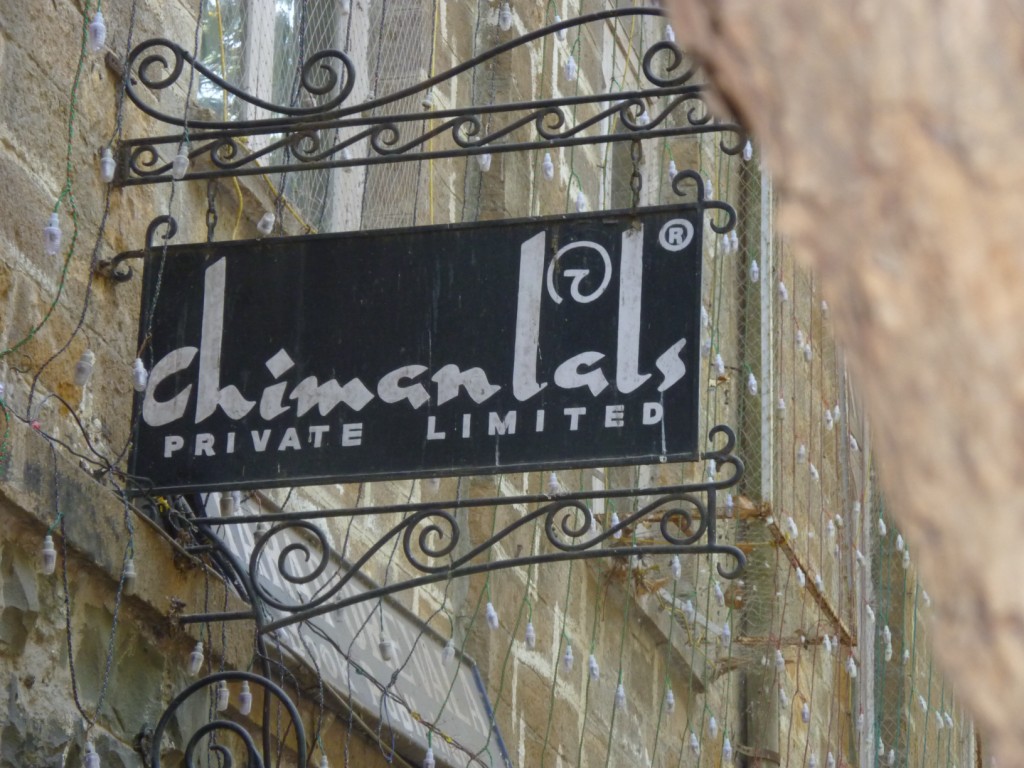
Every second time I go to Mumbai I visit Chimanlals, the paper store. The very first time together with my friend Joan, and I thought we would never get there. The taxi was criss-crossing the area and we even phoned the shop to get directions. Little did I know at that time, that I could have walked from my hotel in Colaba. Because Chimanlals can be found in the Fort area, just off one of the big streets; Dr. D. N. Road. But I hardly knew Fort then. Now it’s a favourite.
If you’re interested in paper, Chimanlals fulfills all your dreams…. The store has been around for many years. Though formally incorporated as a Private Limited Company in 1974 it started their designs and manufacturing in the late fifties. We are of course talking about hand made paper, and the designs reflect to a great extent Indian art and culture. At the same time, I use many of the cards for Christmas. Chimanlals are exporting to many European countries as well as the USA.
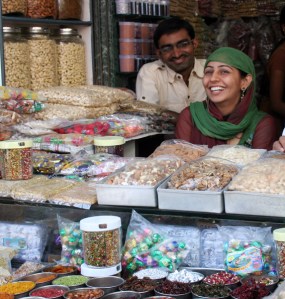
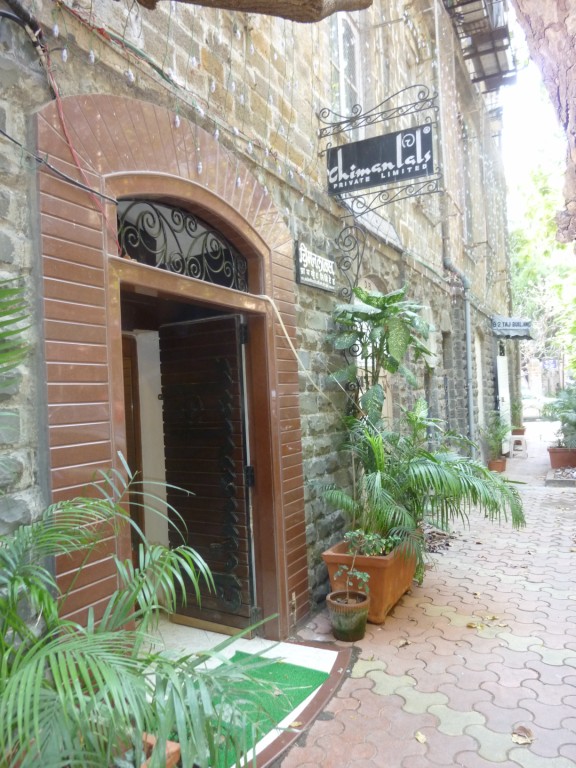
The shop is quite small, and yes – you would have to know where it is because neither the door nor the sign is very flashy – and there are no other shopfronts are around. There are two rooms. The first room has loads of writing paper and cards on display as well as the cashier; a long desk with two people; one man – I’m not really sure of what kind of role he plays – and a woman who does the work… namely count your purchases and make up the bill.
The second room is filled to the brink. Here we have cards, gift covers, gift wrappers, gift tags, bags, boxes, collapsible baskets, desk organisers, note books…. It’s quite incredibe, really. Most designs are absolutely lovely. Cards are mostly solds in packets of five, and the cards then come in five different colours. Very often the print is in “gold” and what is more suitable for say a Christmas card than a red card with gold ornaments!
The atmosphere is very calm, people wander around with their little trays where they collect one or many items… To say it’s cheap is an understatement. For a Norwegian wallet this is more or less free! Thus soooo tempting!
After my third visited I realised that Chimanlas doesn’t really come up with new designs too often. As a matter of fact, this time I didn’t find anything new at all. But it was worth the visit, because now I have Christmas cards, tags and wrappings for the coming Christmas.
I visited Chimanlals on a very hot day. I had taken a cab from a shopping mall in Worli, and I had to give the driver all the landmarks given in my guide book. And with the help of many helping Mumbaikars, we eventually reached there – but! the door was closed. …. A young woman outside the shop said; well it IS 31 March today – as if there should ring a million bells in my head. – Taking stock day, she fortunately added. – But we will open at 2 pm. I felt a surge of relief, but realised I had almost two hours to spend in Fort on a very very hot day. But in Mumbai somethings always pops up. I found a brand new bookstore almost just around the corner, with a lovely little cafe. But that’s another story.
The last day of the holidays… January 13, 2011
When you’re on holiday, there is always The Last Day when you very often feel restless, a day difficult to enjoy in full. Sometimes, when you’re on a low-budget airfare trip to Europe, the last day means getting up at four in the morning in order to catch a 6-ish plane back home via, say Amsterdam. So in that case there is barely a last day, only a bad start of the day. Travelling home midday is probably ideal; after checking out of the hotel there is nothing much left to do but to go to the airport and hope the tax free shops are good… Travelling home at six in the evening, well… it’s OK if the weather is warm and sunny and you don’t really miss a hotel room.
Travelling back home from India, well that can be a challenge. Lufthansa is definately worse than KLM. Lufthansa leaves Mumbai at approximately 3 30 in the morning. Now that means many hours to while away without access to a hotel room. KLM is slightly better, leaves Mumbai right after midnight. Given the fact that you should be at the airport 3 – 4 hours prior to departure, and that the taxi ride from say Colaba in the south of Mumbai could take up till two hours on a bad day – you better leave for the airport around nine in the evening. But what to do all these hours in between room check-out and departure….?
I was ready and prepared to go home on the 6th of November last year, but I had plans for the long and last day. But then my friend Joan called in sick in the morning. OK, I decided against going back to Bhuleswar market because I wasn’t sure I would find my way around that crowded maze. Furthermore, it felt more hot than ever…and I knew from some days earlier that the market would be terribly crowded.
Better opt for a day in slow motion. Go to cafes, read, buy those last minute presents, eat, more coffee, read….
When I checked out, the hotel offered me a room for free a couple of hours prior to my departure, to relax and fresh up. Great! SUBA Palace knows how to treat returning guests!
Next… When I came out of the hotel and took my usual right-left turn I almost got a shock when I entered Colaba Causeway. No market, no stalls, no vendors, almost no cars and hardly any people – and it hit me – of course – : Mr Obama was due to arrive the next morning and he was supposed to stay at the hotel only a stone’s throw from my hotel. But sweepers were plentyful, cleaning the streets where Mr Obama would never set his foot. And oh, beggars were obviously driven away.
I opted for the nearest coffee bar where I knew the coffe was good, and read for an hour (+ went to the toilet, a must whenever toilets seem nice and clean). When I came out I ventured down the causeway, left side southwards. Shops were open, but the causeway felt horribly deserted without the stalls. And it struck, something is not right when itæs not crowded… And in the midst of Diwali, on top of it. I hope somebody told Mr Obama how much his visit hurt on an otherwise great day for shopping.
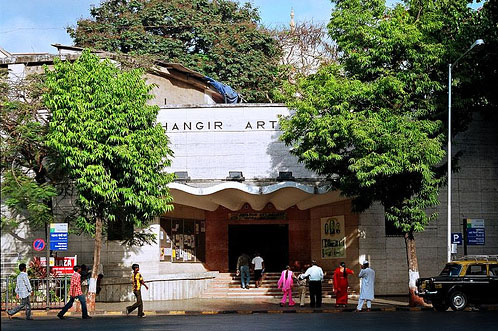
I visited some shops, but my jhola felt heavy on my shoulder and I decided I needed another break so I set course for the Jehangir Art Gallery where I initially wanted to visit the famous Samovar Cafe. But it was closed because of Diwali so I opted for the art gallery itself. Jehangir Art Gallery is Mumbai’s most famous gallery, built in 1952. The art gallery is the most prestigious and modern venue for Indian artistes in the city. It is situated in Khala Goda (“black horse“), and area with many other art galleries. Visiting the gallery is pleasant for many reasons; the four halls are spacious and quiet and above all, it’s cool. And I needed to cool down!
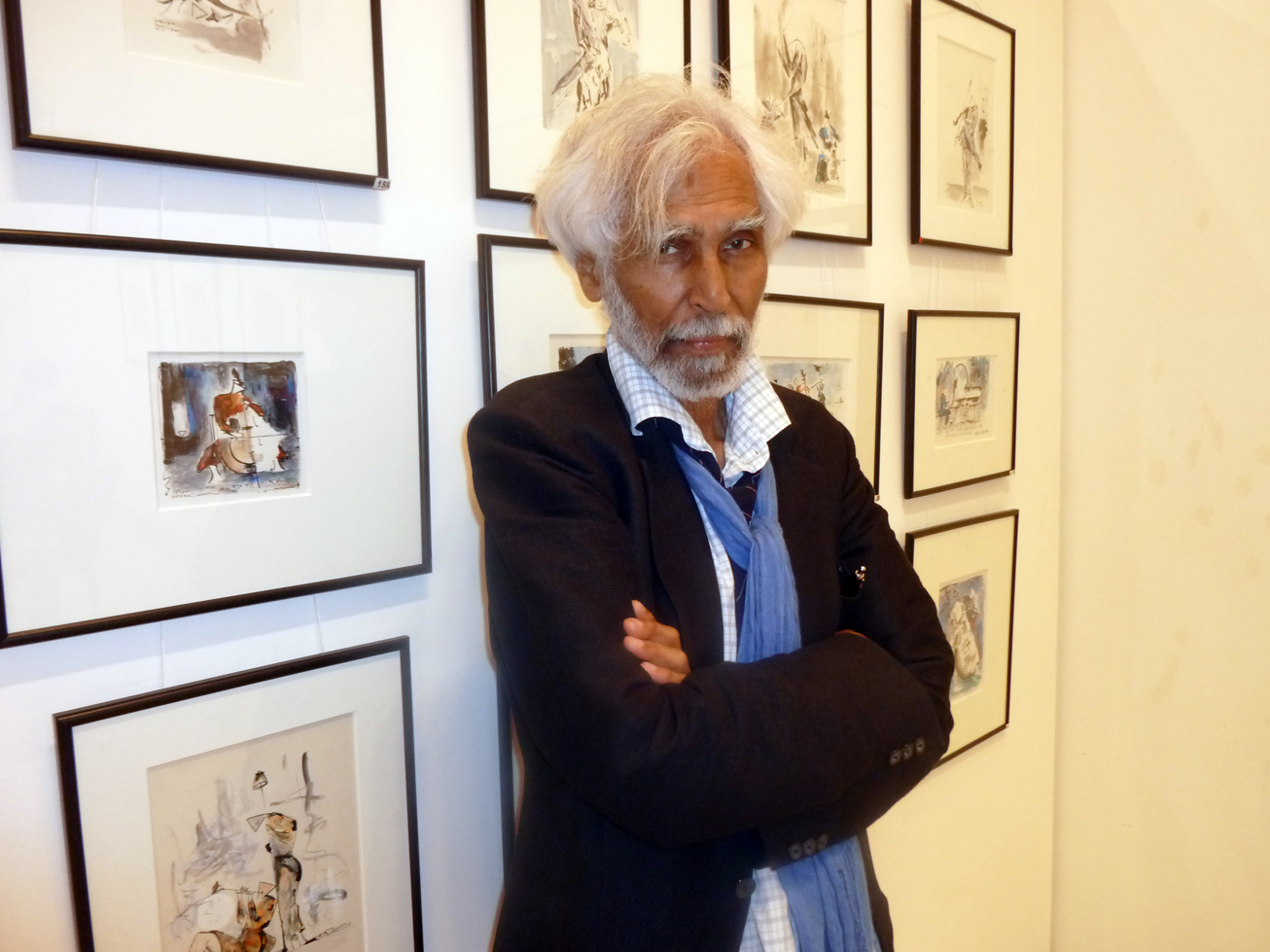
In the second hall the paintings caught my attention. As well as the artist himself. Because in India, artists spend their days in the exhibition hall, talking to visitors. The tall man, dressed as a kind of dandy, was Yaseen Khan. Oh yes, I could sense his charm when he approached me. We struck up a conversation, and I eventually asked him if I could take a picture of him, because: I like to take pictures of people I meet and talk to. – I’m not peope, he said, I’m God… Well, I don’t know God, so he could well be. When I returned after taking a look at the exhibition in the next hall, he approached me with his mobile phone, put his arm around me and we stood there listening to Air by Bach. And thus said god bye!
Outside the gallery I met some young people who seemed happy about Diwali in their nice Punjabi dresses. I made a halt and they asked me: – Do you want to dance with us? We talked for a little while and I thought of going for a walk towards Fort and the many books stalls at Flora Fountain. But decided against it, my suitcase was already 22 kilos. Instead I found a shadow and contemplated the traffic who holds everything in India.
I took another stroll down Colaba Causeway and eventually found The Oak Tree, a shop I had read about. Many a time have I wondered; will I ever find a handbag in my favourite color combination turqoise and brown…? And as I entered the shop, the bag hung right in front of me. The Handbag itself. Right color combination, right shape, right size. Before checking the price tag I made and estimation; and was more or less right. I wouldn’t be ripped off, it would set me back around 500 NKr. The handbag was designed by Mumbai designer Vani Gupta, and I’m sure I will never see another one. The shop was otherwise great, but I bought the bag only (I’ll give you 10 percent off the obvious owner said) and I went next door, to Theobrama, and celebrated my prey. Strong coffee and a sandwich. And I was ready to go home to Norway!
India quick-fix November 26, 2010
Among all the things I appreciate about India, is how everything can be fixed, just like that. No fuss. No it-might-be-difficult. I arrived in India with a belt bag that had become too big. I like my belt bag, bought in Goa some years ago, made of genuine leather. So what to do?
You don’t have to walk long before you spot a shoemaker on the streets in India. They sit there quietly with all their well used tools around. We explained the problem, he put aside the work he was doing and without a word spoken he fixed my belt bag in five minutes. For almost nothing.
A week later, in Mumbai, I bought a jhola (a simple bag made of cloth). Joan and I was walking up and down Colaba Market, because I wanted that particular jhola, but the seller wouldn’t give it to me for 150 rupies and we thought – let’s find the same jhola elsewhere. Because that’s what very often happens; the same things are sold by various stalls. But, there seemed to be only one jhola of this kind…. Actually, we made it on our third try because Joan really knows how to bargain. But the next day, the zip broke down….and off to the nearest tailor I went. Because tailors are also found everywhere. I chose one I was familiar with; Smart and Hollywood (!) opposite Jehangir Art Gallery.
My jhola was examined, a zip was found and we agreed that I would come back a little later. The zip cost med 50 rupies (6 kroner), the work was free.
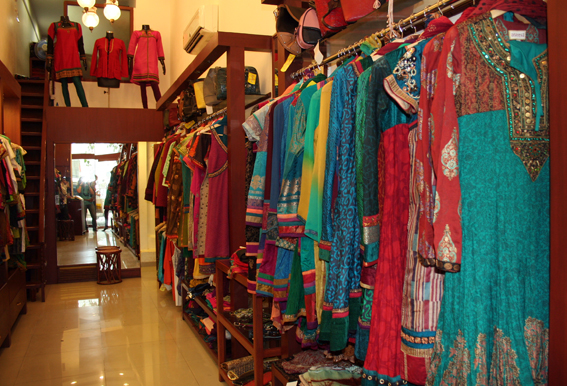
When you buy clothes in India, the magic word is alter. My favourite clothes shop in Colaba is aseesa. A tiny, tiny shop, always packed with people. They sell colorful dresses, every one a dream. I tried one, but found it to be too tight under the arms. – We can alter it Madam, no problem. Then it will fit perfect. We examined the seam, and well, I realised I would have to buy it if they altered it. But I said yes… So she whisked it away to a young man who disappeard to the back of the shop and asked me to come back in 20 minutes. Simple as that…. Everything can be made bigger, smaller, different – for free. So that you always get what you want…………
Coffee – in two different ways… November 25, 2010
It happens – when in India – that you need a break from everything… The heat, the traffic, the pollution, the people, the noise. It just happens. I always feel in need of decent coffe at some point every day, so I go to a Barista or Cafe Coffe Day – Starbucks look alikes and very good they are. They sell all kinds of coffees, sandwiches, muffins and the bigger ones, at least Barista, sell good Italian food.
But on my last day in Mumbai I came to notice a place called Theobroma at Colaba Causeway, the main thoroughfare in Colaba, South Mumbai. It was incredibly hot, I had hours to spend before my plane left Mumbai after midnight and I realised I had to stop shopping – which is easily done because 1) the shops cool you down and 2) it whiles away the hours. So I stepped into Theobroma, another modern western style coffebar I quickly realised – and entered another world. In fact, it could have been Norway. But there is one major difference, staff is more plentiful than guests and customers. In fact I thought I saw a new guy every two minutes and was thinking where on earth do they come from… And yes, only male staff. All with hygienic plastic gloves.
The coffebar cum bakery was small, but the interior very nice. Four or five small square tables fit for two people and some more tables along one wall. The menu was extensive, it was in fact difficult to chose. The counter had a variety of tasty food on display; typical French bakery, smoothies and even cup cakes. On the menu was sandwiches, salads… on the shelves bread and a lot more for sale… For a moment I forgot that was in India, this could easily have been Ostehuset or Food Story in Stavanger. Absolutely nothing reminded me of India, as we mostly think of India.
Even the clientele was different from most people on Colaba Causeway, saris were few and far between. In fact, during that one hour I sat there, only one woman who came in was dressed in a sari. The rest of the customers and guests were dressed in western clothes. Jeans and a t-shirt. A lot many girls and women do dress in jeans of course, but very often with a kurta as a top.
The food was delicious, the coffe tasty. But you pay a price.
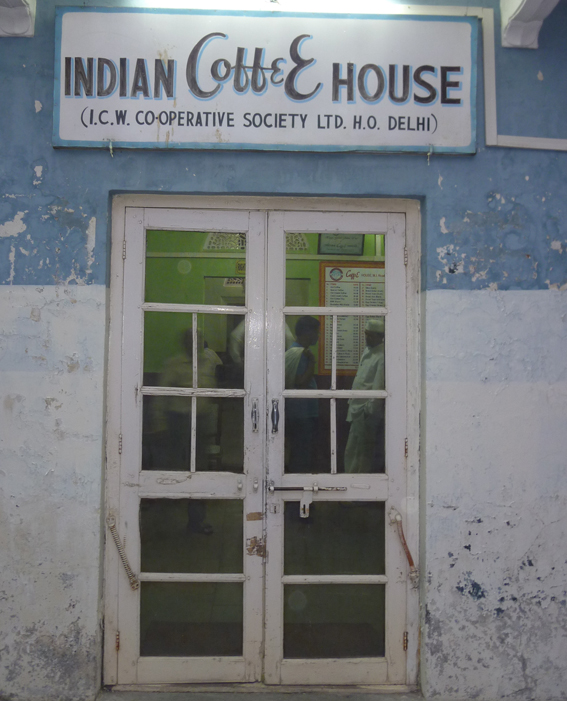
As I sat there I came to think of a coffee bar in Jaipur. It was that time of the day I just needed what I call a decent coffee. We had hired an autorickshaw for the day and asked th driver to take us to a Barista before we paid and left him. Well he did, but only too late did we realise that the Barista was shut down… so we started to walk and search for another coffee bar. What we found was the Indian Coffee House, a business found all over India run by cooperatives. It was simple, to say the least… But very retro. Close to cool! And incredibly cheap, a cup of coffee cost 10 rupies, equivalent to 0,21 Dollars or 1,5 kroner. They might as well give it away! But to be frank, it was not drinkable. The food on the other hand, was good.
The coffee house had two kind of separate chambers for woman and families. In India, the society very often sees to that women can sort of withdraw a bit. Like Mumbai trains have women’s compartments. But the few women who came in, preffered the main area. Strange then, that the toilet was for both sexes. The first thing I saw when I opened the door were the pissoirs, but no men… Well I didn’t venture futher though.
The coffee and food at Theobroma was good, but this is what you get everywhere these days. The atmosphere at Indian Coffe House was memorable!
Bazaars of South Mumbai November 24, 2010
People tend to hate guides, I don’t quite understand. Yes is can be nice to roam around with no head and tail, but sometimes it’s nice to have somebody to ask and get first hand information. That’s why I had booked a tour with Mumbai Magic, to do their bazaar walk. It was me and Max from Australia and famous Crawford Market was our starting pont. The market houses a wholesale fruit, vegetable and poultry market. One end of the market is a pet store. – YUK – Imported items such as foods, cosmetics, household and gift items are plentiful as well.
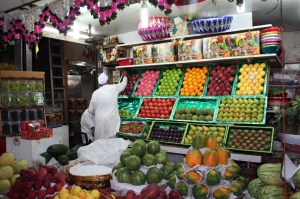
Because of Diwali, all the fruit sellers were busy making fruit baskets – a popular Diwali gift. In fact I was rather surprised to see this, as sweets seem to play an important role during Diwali. I didn’t want to see more poultries-ready-to-slaughtered, but I managed to see some of the puppies. And well, they seemed slightly better off than the poultry I had seen in Colaba market some days earlier.
It was 11 am when we met and the inside of Crawford market was manageable. No sun and not too crowded. – It’s still quite early, the guide said reassuringly. But when we, after some time, came out and ventured further on to the cloth market it was as if the whole area had exploded. Even the guide was overwhelmed, but after all – we were in the midst of Diwali. Just think about Stavanger or any other place the day before Christmas eve, people shopping like we were close to the end of the world.
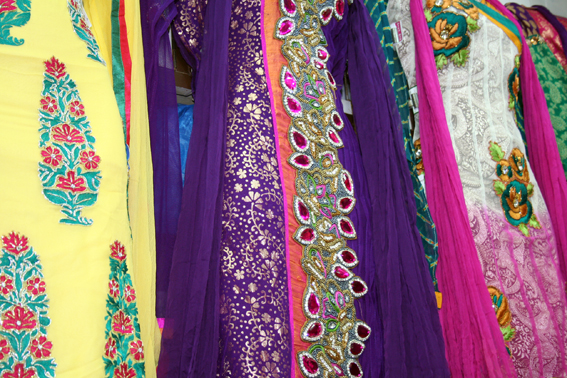
But then we escaped into the Mangaldas cloth market, a world of colours. Again we got shelter from the sun… The market sells all kind of fabrics – preferably wholesale. Having a stall here is priceless. As I was in the hands of a guide, AND a man…., there wasn’t really time to stop and admire and spend – something I hadn’t really expected. I just wanted to get an overview, and go back on my own some time because we had a tight schedule.
I was very curious about Zaveri Bazaar, the market for gold, silver, diamonds and precious gems. And again, it was Diwali and people were buying gold, as well. And even more so, this was The Auspicious Day for buying gold. The street was a little bit more than crowded, it was absolutely packed with people, cars, carts, bicycles – and the odd cow. Jewellers were lining the street. – Look around you, said the guide. – Do you see any police, guards, security? The shops have gold worth God knows how much, but security is scarce.
A few years back I wouldn’t have given Indian jewellery even a quick glance… And if so, I would have said too much. I tend to like simple things made of silver. Something has changed though…is it called assimilation?
Have a look at an Indian bride, all dressed in red, red and white bangles, fabulous jewellery – it’s quite overwhelming, and I can understand Indian women’s addiction for gold. Myself I could never extinguish an imitation from a real peace of jewellery. But imitations are very common. An imitation would probably start to itch on my body though….
– Indian women think about gold as their birth right, the guide says. I’m thinking of adopting this birth right!
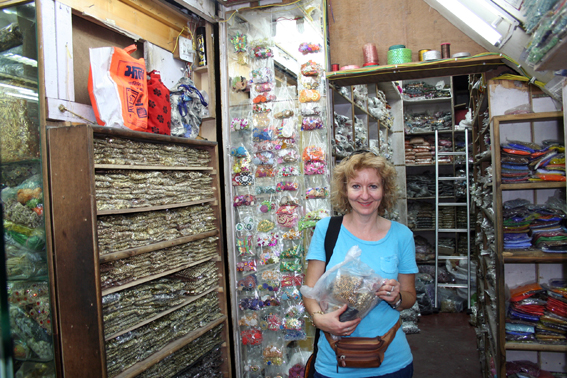
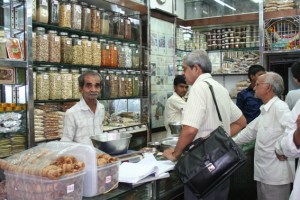
I couldn’t resist asking the guide about beads…. even though I realised Max wouldn’t bee so keen… But we easily found beads in this area and I got a card from an interesting seller, promising myself to come back…. next time (when you already have 1,4 kg of beads in your suitcase, you simply do not go for more….). So we visited the Mirchi Galli (spices market), the Phool Galli (Flower Street), and finally Mumbadevi Temple. Inside the temple area I came across a shop selling incense and what is called dhoop: incense powder. I got some really nice dhoop and have already asked friends in Mumbai for more…. Can one be addicted to a smell? definately!
What really made an impact was the cow shelter… the Panjra Pole. A shelter for homeless cows, where else than in India would you find such a place? They were well kept, sweet (!), all were named after godesses and came when called for (ie. they recognised their name). We fed them, admired the young ones and well, thought about the homeless people on the streets of Mumbai… How could we not! They were even protected from paparazzis; no photos allowed.
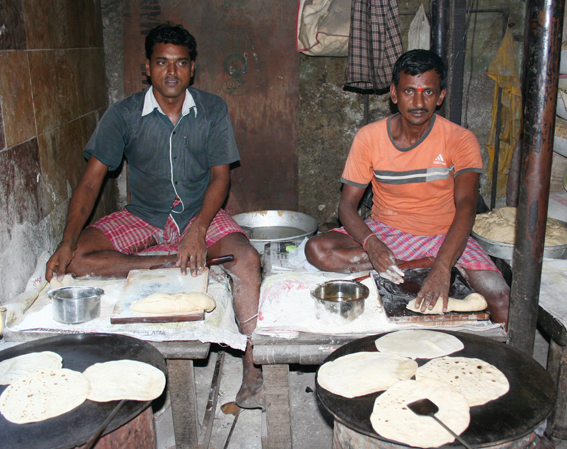
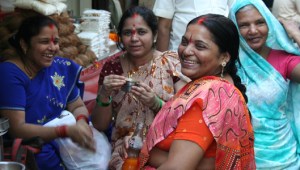
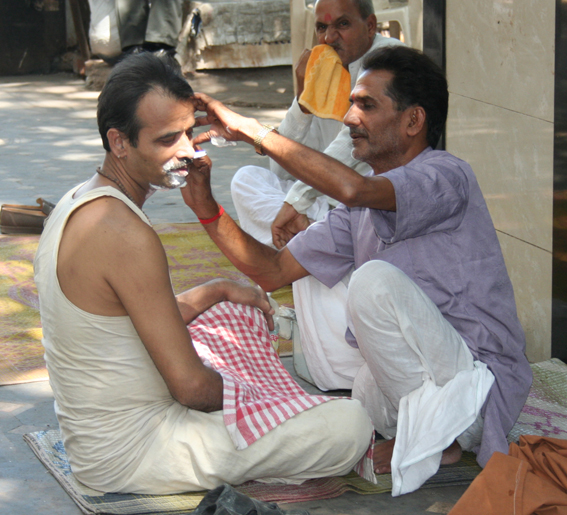
These markets are really fantastic, don’t go for the markets aimed for tourists. This is where real Indian LIFE unfolds. I spotted a wedding taking place right there, on the street. A barber on the street. A cheerful group of women enjoying a cup of chai, – in the middle of their Diwali shopping? And an outdoor chapati bakery.
People are in general very nice, they don’t push goods upon you, you can really enjoy being the observer. After almost 4 hours I felt drenched, all I could think of was a shower. But wow did I enjoy…………….
A glimpse of Rajasthan November 23, 2010
Most people who visit India for the first time, do a “Golden Triangle Tour”. Which means Delhi, Agra (to see the Taj Mahal) and Jaipur in the state of Rajasthan. I have been to both Delhi and Agra earlier, now I was curios about Rajasthan.
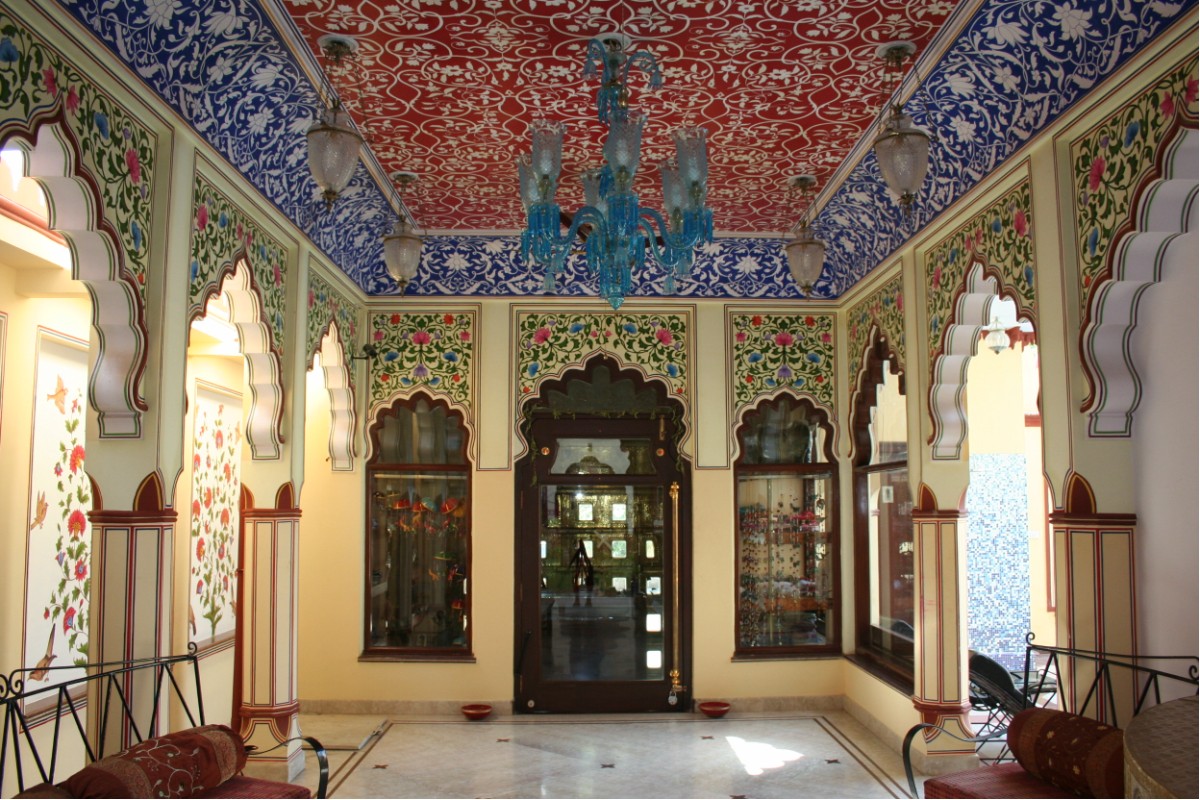
I flew to Delhi 23 October and teamed up with my friend and colleague Ram – already on holiday in hometown Delhi. Sunday at noon we entered a bus that took us to Jaipur, known as The Pink City. The best thing about Jaipur was …… the hotel. The Umaid Bhawan is definately the best hotel I have ever stayed in. The house itself is not really old, but the furnitur, the decor – everything – makes you think of old money. It’s incredible, and not at all costly. I dreamt about a Kingfisher on a beautiful roof top restaurant, exactly what I got!
Jaipur has heavy traffic, the roundabouts are crazy. All means of transportation in every possible direction. The old part of Jaipur is painted in pink, thus it’s called The Pink City. So is that why tourists go to Jaipur?Well Rajasthan has numerous old forts and palaces. After five days in Jaipur and Udaipur I got the feeling we saw them all….
But in between all that history, we were searching for beads. The search took us to back alleys that reeked of the stank of urine. We were talking to numerous people, beads beads beads – where to find? We found… in a basement. And left with 1,4 kilo, simple as that.
Jaipur is a shopper’s paradise: streets lined with shops selling colourful textiles – and everything else under the sun. But as a tourist you’re constantly attacked from every possible angle, and in the long run shopping doesn’t seem like a very good idea. Walking the back alleys, where the natives go shopping is more fun!
Next on the agenda was Udaipur and we decided to take the night bus. A good bus is often known as and equivalent to a Volvo. Good branding, Sweden…. And yes, the trip was comfy enough! Bt we arrived in Udaipur at five in the morning, quite tired and the bus station seemed cold and unwelcoming. Also, it took some time to wake up the hotel: The Krishna Niwas, run by three brothers, two of them artists.
Udaipur was different from Jaipur. We were staying in the old part of the city, narrow and hilly. Udaipur seemed small, in a way. But when we took an autorickshaw to a Barista – because I desperately needed a decent coffee – and further on to a pizza place called Uncle Sam (because I desperately needed a pizza) – I realised that the city was not so small and cramped after all. But, not unlike Jaipur, with Western tourists just about everywhere.
Udaipur has lakes, and thus some really beautiful views. Hotels market “lake view” hard, but how often did I look out of my window in order to enjoy the meagre lake view? It was nice though, the Picola Lake, and fortunately Rajasthan has had quite a lot of rain this year (doesn’t happen too often) and thus all the city lakes were filled to the brim. Very often the lakes are dry.
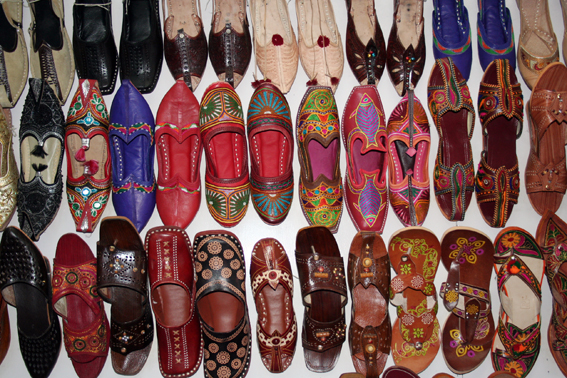
If we were looking for beads in Jaipur, Udaipur took us to numerous shoe shops. Ram’s wife wanted mojaries, Rajasthani slippers. It was fun, the shoes are very colourful and we went to the local markets, not those for tourists. But we did do the City Palace… the heat was intense and we decided that enough was enough! Instead we intensified the search of mojaries.
Our hotel didn’t have Umaid Bhawan’s grandeur, but lots of charm. The narrow building had no lift, we were constantly climbing stairs. The hotel had a small shop selling leather books and binders of all kinds, they were even produced on the second floor. All over the old part of Udaipur these types of books were sold, very nice handiwork. Also, miniature painters seemed to be plentiful, art galleries were everywhere – also in our hotel.
So what was my first, second and third impression of Rajasthan….. If I had to chose between – say – Rajasthan in the west, Kerala in the south and Uttaranchal in the north – Rajasthan would come third. Maybe it was the swarms of tourists everywhere, the dryness and the heat, the overwhelming historical tourist attractions. Well who knows. But I enjoyed every minute of the stay, and if I get the chance to stay at the Umaid Bhawan in Jaipur once more, it would be hard to resist!
Mumbai taxi ride November 5, 2010
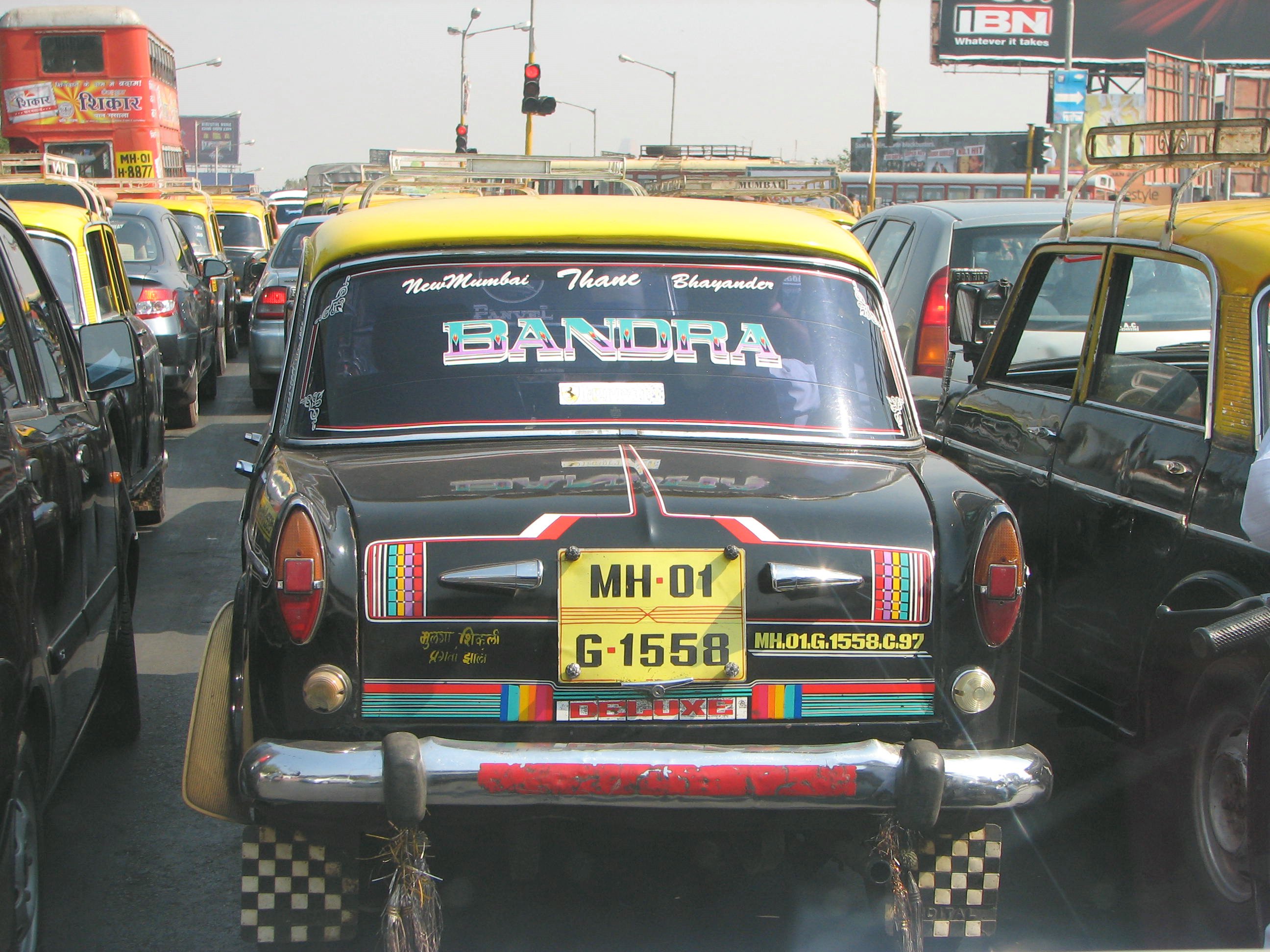
There is basically two ways to ride a taxi in Mumbai, the hard way or the easy way…. The hard way is going by the black and yellow cabs with no AC. They can be of all sorts. Some old and battered, – Once I sat in one with a big
hole in the floor. Or fairly new ones, not yet worn out by the streets of Mumbai. Well those are good for short rides, they manouvre the traffic amazingly: Like every other car zig zagging their way through the traffic with great confidence. But drivers can be choosy, sometimes they just won’t take you from one place to another. But there’s always another one, and another one, and another one… Mumbai has about 60 000 taxis, but then again – the city has close to 20 million inhabitants.
Going a long distance with these cabs can be a trial sometimes. With no AC it gets hot, when the traffic comes to a standstill you want to open the window and get some air. Instead you get outstretched hands form beggars. As well as the fumes from every other car around. I did one and a half our last night, not until we got to the Worli-Bandra sealink – a new bridge cutting short this distance with sometimes as much as 40 minutes – was I able to breathe freely. But, after passing the bridge at full speed the havoc started again. Slow traffic, honking horns and heat.
Tonight I did 2 hrs in a Meru cab, a fairly new company – and a very proffesional one. One can see quite a few of them in the streets, but not nearly as many as the black and yellow ones. They are green with lots of ads, their drives impeccable and you’ll find a proper meter and a modern display quoting customer and where from to. Instead of feeling drenched after two hours on the road, beating several bottlenecks and struggling through the sea of cars and auto rickshaws and what else, one feels quite OK. Sit back in a train of thoughts or study Mumbai life, and especially now – enjoy the festive Dwali lights!
And then there are of course the three wheelers, or auto rickshaws, or autos or ricks…. There is total 246,458 auto rickshaws in Mumbai. They accomodate three people, and well, perhaps not the most comfortable means of transportation – but it works. In terms of safety – well it depends on which standard one relates too.. They are good for short journeys and cost little. I once took one for more than an hour together with my friend Joan, sometimes squeezed between two buses I didn’t know whether to laugh and cry. It was an experience for sure. They are not allowed in the City, but has to stick to the suburbs.
Mumbai people November 2, 2010
I take photos almost all the time when in India, but not of people I really pity. People with no dignity. There are lots of them in the streets of Mumbai.
The first time I came here, I was intrigued about the number of people sleeping on the streets, at all times. No shelter, just there, on the pavement, their only belonging a sack perhaps. Chappals have to make do as a pillow. In the city, the south part of Mumbai up to Mahim where the suburbs start, people mostly sleep on the pavements. I haven’t yet seen so many families who live their life on the pavement – but they might be there. The City is quite nice, especially in the morning. Colaba, Khala Goda, Fort, Nariman Point…. – lined with great buildings put up by the Britishers – and the green maidans. Still, the many poor people remind you constantly about the hard life of Mumbai.
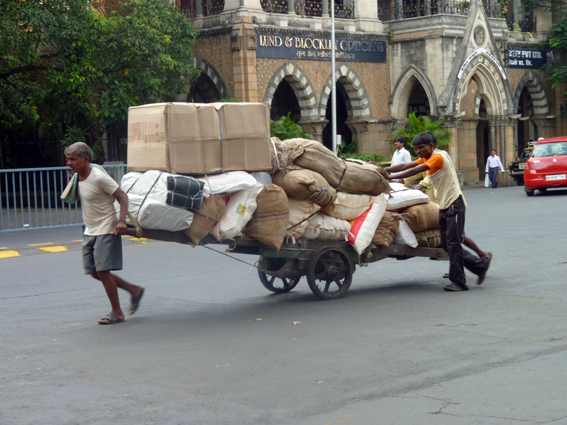
People tend to walk not on the pavement itself but along the cars in the street. Now I do the same. The pavements are fully occupied with stalls, hawkers, vendors …. and sleeping people at all hours.
In the suburbs you get to see all sorts of living conditions. Big areas of slums. Shacks lined along the pavements. But many are those who just live on the pavement itself. They sit around a small fire, eat some food, half naked childre crawling around or going to the toilet just there. Going by car through Mumbai on a late evening is an emotional rollercoaster.
I have never seen so many deformed people anywhere. Limbs are missing, or totally deformed – here you can see every disorder possible. Very often they move among and around the vehicles on the roads, begging for money. They search out tourists, come to our cars. It’s heartbreaking, but if you start giving money you’ve got yourself a full time job.

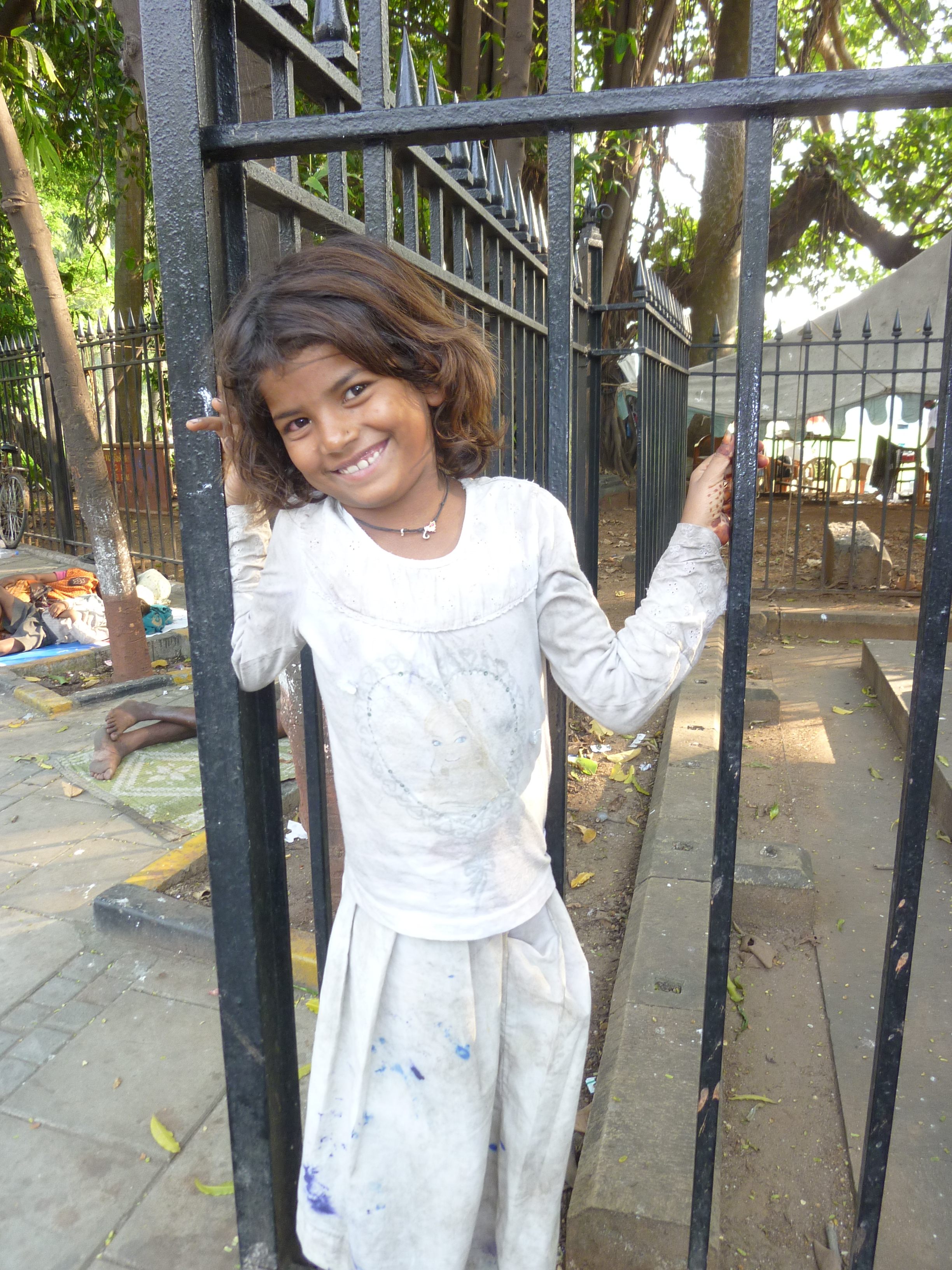
I couldn't resist giving this little girl some money, she was sleeping on the street. We even managed to get her to smile, after some time.
Children is another story. Many work for the mafia. They are brought from the outskirts of Mumbai into Dadar (I’ve been told) and spread around the city in order to beg all day. Strike up a conversation with a native about these issues and very often you will feel he/she doesn’t really pity. -They live a simple life compared with ours, a friend told me. – They have no rent, no maintenance, no work to worry about. They just beg and eat and sleep… Maybe you have to grow up in Mumbai to take such an attitude, for us it’s impossible.
Mumbai local trains November 1, 2010
Most tourists don’t travel the local trains in Mumbai. Taxis and autorickshaws come cheap, and one doesn’t really bother to get to know the system of the trains. But if you really have to save money… or if you just want to have som fun… have a try.
There a re two railway lines running through Mumbai, Western Railways and Central Railways. The system carries more than 6.9 million commuters on a daily basis and constitutes more than half of the total daily passenger capacity of the Indian Railways itself. It has one of the highest passenger densities of any urban railway system in the world.
Together with my friend Joan’s son Tash we started out from Churchgate, the southernmost station, on a seemingly quite Sunday at noon. The trains have women’s compartments, but since we were a mixed couple we had to opt for the mixed compartment. Incidentially I saw a sign just as we we were boarding; some compartments are reserved for the handicapped and for cancer patients.
The train was filling up as we went along, every time I thought the compartment was absolutely packed, 50 more people boarded in a rush. I was lucky to sit, squeezed into a corner. Indian men tend to stare openly, so I had put on a cardigan which made me boil.
The train ride was no hassle really, but when Joan and I returned later in the afternoon, the fun began. We had boarded a wrong train and had to change only after one station. As the train came rolling into the station, everybody started to run along the train. And as we were going for the women’s compartment, a horde of women kept running…. and then jumped on the train before it had stopped. In open sandals and a long skirt I think I did nicely – for a beginner. At the same time people were getting out. The trains stop for only two minutes, so people are just frantic – to be in or out.
The compartment was really packed, – in my opinion, and most women were chatting away. According to Joan, the compartment was nowhere near packed…….
The good thing about India and its train culture, is that there is always space for more people. Nobody should be left out, the rule is – there is room for everybody. How good it is in terms of saftey, well…
The trains have no doors, that’s why you see people hanging almost on the outside of the trains. I was standing in the opening myself, allowing the warm air to embrace me. I never thought it wasn’t safe.
A lot of people live along the tracks in poor conditions. Defecating along the tracks is normal…. as well as walking along them – or on them. And children are playing. One has to see for oneself, really.
I can’t remember which station, but suddenly almost everybody went off – like a cowherd they were fighting their way out of the compartment. Indian women must be tough!
All sorts of bric a brac are sold on the trains; simple jewellerey for example. One easily gets bored on a train ride through Mumbai that takes more than an hour depending on if it’s a fast train or not. One might as well by some earrings for 20 rupies.

![MD_family [Skjermoppløsning]](https://benjamuna.com/wp-content/uploads/2011/04/md_family-skjermopplc3b8sning.jpg?w=300&h=225)

![MD_beggars [Skjermoppløsning]](https://benjamuna.com/wp-content/uploads/2011/04/md_beggars-skjermopplc3b8sning.jpg?w=200&h=300)
![MD_queens [Skjermoppløsning]](https://benjamuna.com/wp-content/uploads/2011/04/md_queens-skjermopplc3b8sning.jpg?w=300&h=207)


![Jaipur and Udaipur 004 [Skjermoppløsning]](https://benjamuna.com/wp-content/uploads/2010/11/jaipur-and-udaipur-004-skjermopplc3b8sning.jpg?w=300&h=200)