Benjamuna's Blog

Stories…. with a touch of India….

Colours… March 7, 2014

Filed under: INDIA — benjamuna @ 12:35 pm
Tags: , , ,

If you don’t see colours in India, your eyes are not wide open. I came to think of colours when I recently  attended an occasion where the guests really were supposed to dress up. – Look around you, I whispered to my partner, how do women in Norway dress when they really want to look good? – In black, he said within seconds. A colleague wanted to defend all the women by saying; – But it’s winter, we would never dress in black in June. That well may be true, but there are clearly other colours suitable for winter than black.

In India, I’m always struck by the bright colours I see around me. No matter how poor the area is, how poor the people are, it’s impossible to avoid the colours.

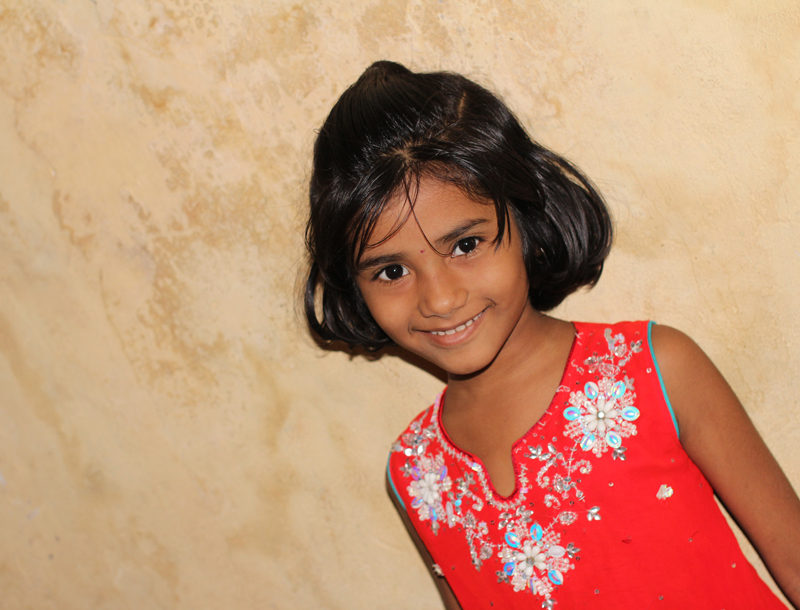
RED – LAL

IMG_3216

Many female politicians in Norway wear red when they want to be noticed, it’s  a colour that attracts attention. It took me quite a few shots to make the shy girl above smile, and then her face opened up. She is very poor but she looks like a queen.  I met her in Pune, south of Mumbai, she came with her mother in order to get nutrition packs from an NGO. The room was packed with mothers and children, but albeit small and thin she stood out in her red dress.

PINK – GULABI

IMG_7771

Pretty in pink…. A young girl in Burari, one of the poorer districts in the North of Delhi. It’s festival time. She’s all dressed up, full of anticipation. She looks like a million dollar, I wish for her a happy life!

BROWN – BHURA

IMG_7963

My guide Anju and me were stuck in a rickshaw in Old Delhi, the intensely crowded area just behind the Jama Mashid. The traffic moved slowly slowly but I was totally engrossed in a sari… of a  woman in the rickshaw in front of us, and didn’t really mind the lack of speed. We were trailing behind for quite some time. The traffic made it impossible to break free. So I enjoyed the sight of the beautiful earthen “ensemble”; the colours, the patterns…. Somehow she noticed, after a while. She looked offended and covered her head with the dupatta.

GREEN – HARA

IMG_8141

How could you not be attracted to this man in his green turban. He sat at the entrance of a Sufi temple in Delhi. Maybe I wouldn’t have noticed him if it weren’t for the green headgear. He would more or less have blended into the background. Or maybe not…

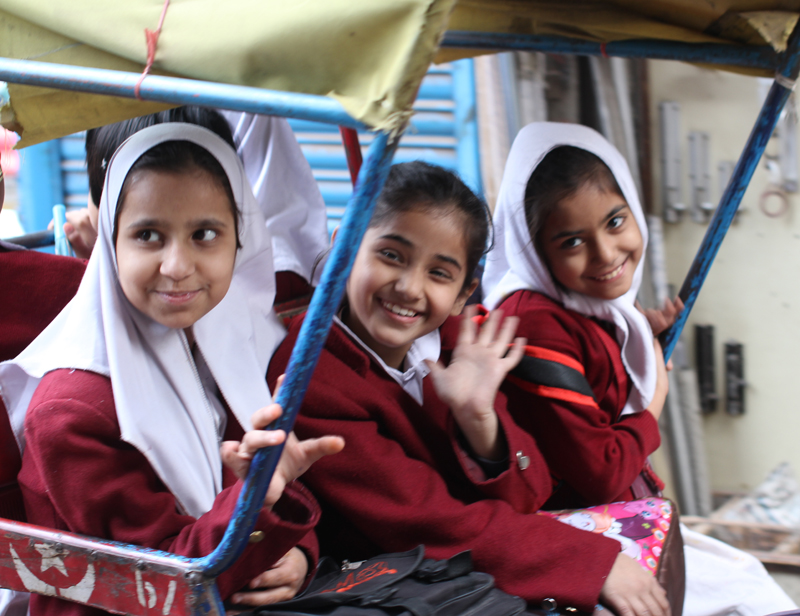
INDIGO – NIL

IMG_4806

Three muslim girls in Old Delhi, dressed in their school uniforms. I wonder why the girl in the middle is not wearing her veil. Is she naughty? Did she forget it? Is she not a muslim? But I shall never know.

BLUE – NILA

IMG_4678

– Tell me about Norway, how big is it? The guide from Salaam Balak Trust in Delhi fell into steps with me. He was otherwise dancing along in his bright, blue t-shirt. A proud guide, formerly a street child.  Eager to share his past, and his dreams for the future. And eager to learn. – Give it a guess I said. – Five million people he said.

WHITE – SAFED

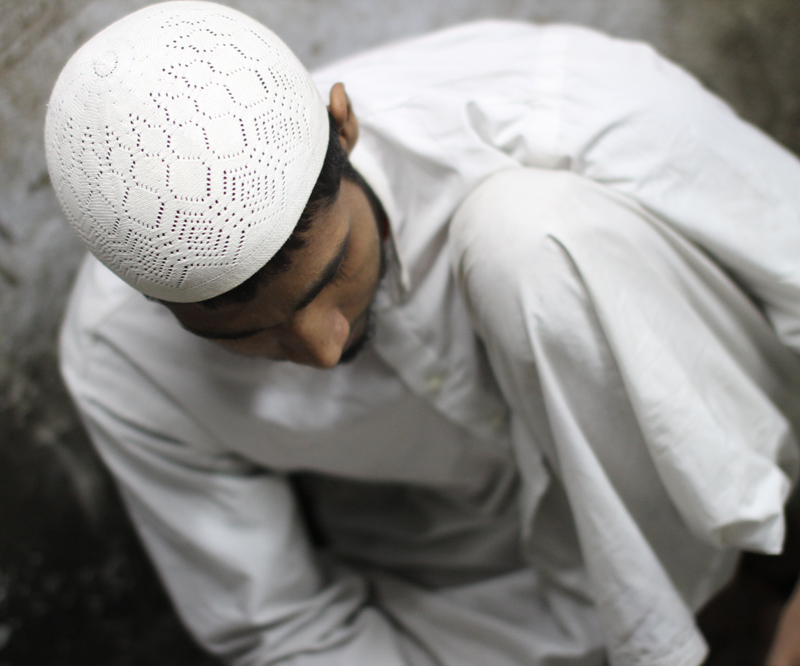
IMG_8062

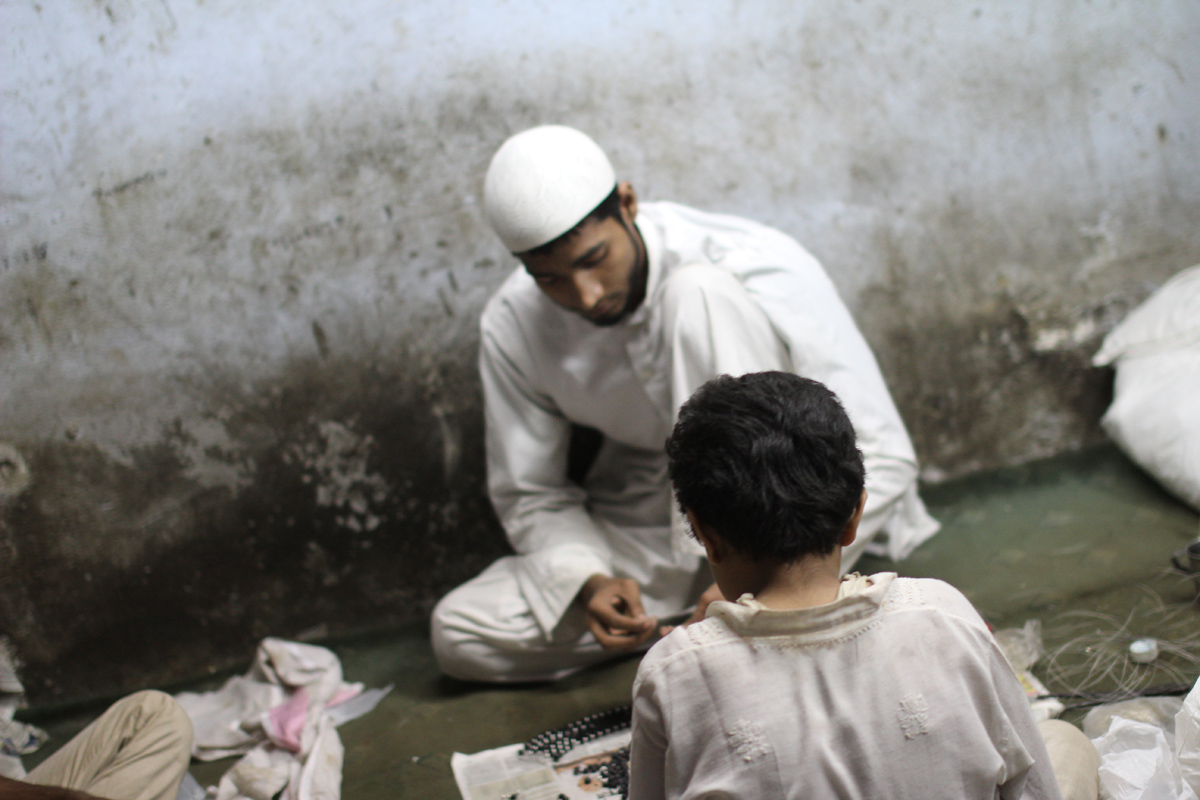
White can be exceptionally white in India. Many parts of India is by our standards dirty. The white scull cap belongs to a jewellery maker in rather bleak surroundings in the maze of Old Delhi.

ORANGE – NARANGI

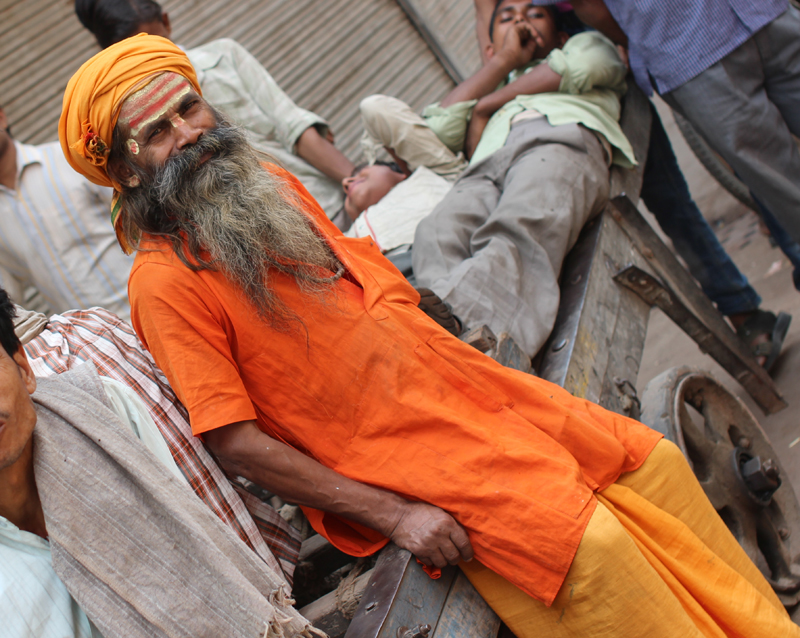
IMG_7923

It’s impossible not to grab your camera when a holy man appears; a Sadhu. Everything around him was grey, a grey grey…. The cart, the men, their clothes, the street, the walls… – I know him, said Anju, he’s not like the other holy men, he wants work, he wants to contribute.
These men, and many more, are hanging around in Old Delhi, waiting for chance work.


A glimpse of the taj February 14, 2014

Filed under: INDIA — benjamuna @ 7:48 am
Tags: , , , ,

“Why do you feel you have to excuse yourself for staying at the Taj…” A Mumbai guide said. She was showing us the south of Mumbai and I told her with some hesitance that we were staying at the one and only, the legendary Taj Mahal hotel. If it hadn’t been for a friend, who insisted we stay there, I would have ended up at Suba Palace, only a few blocks away but more than a few rupis cheaper.

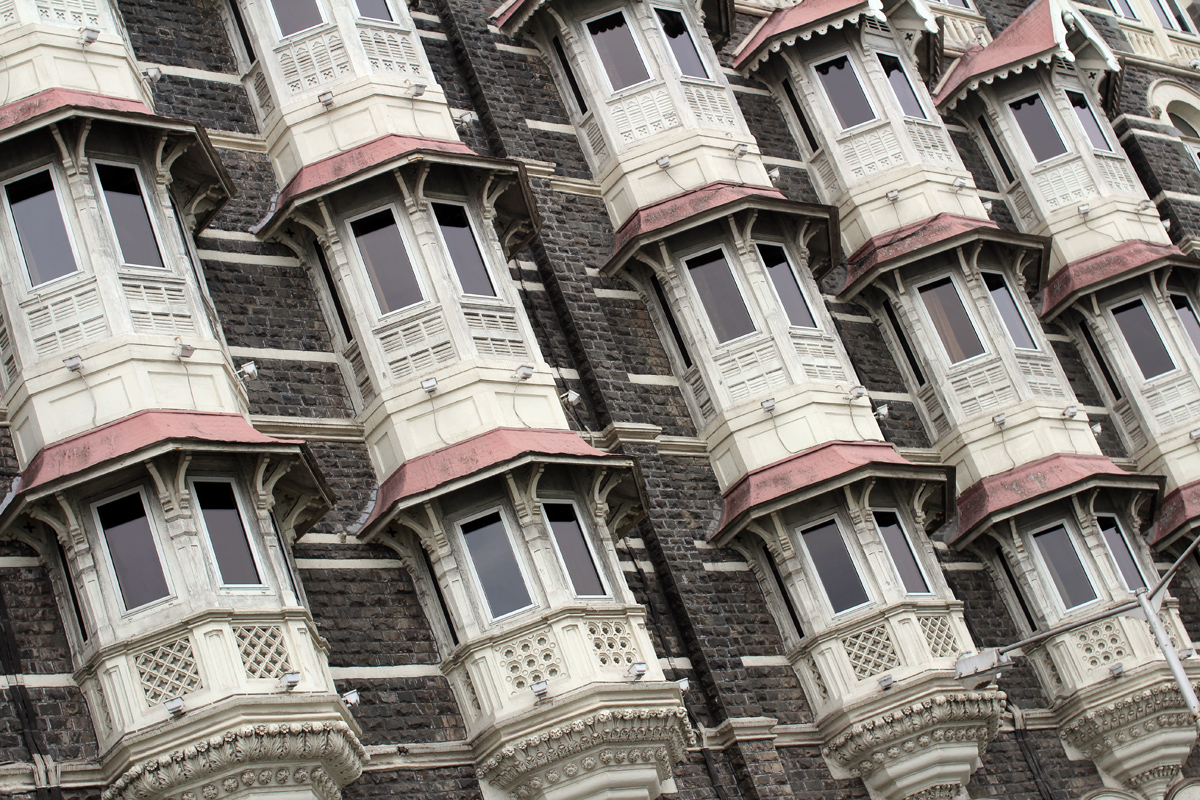
Taj fasade

A part of the beautiful facade.

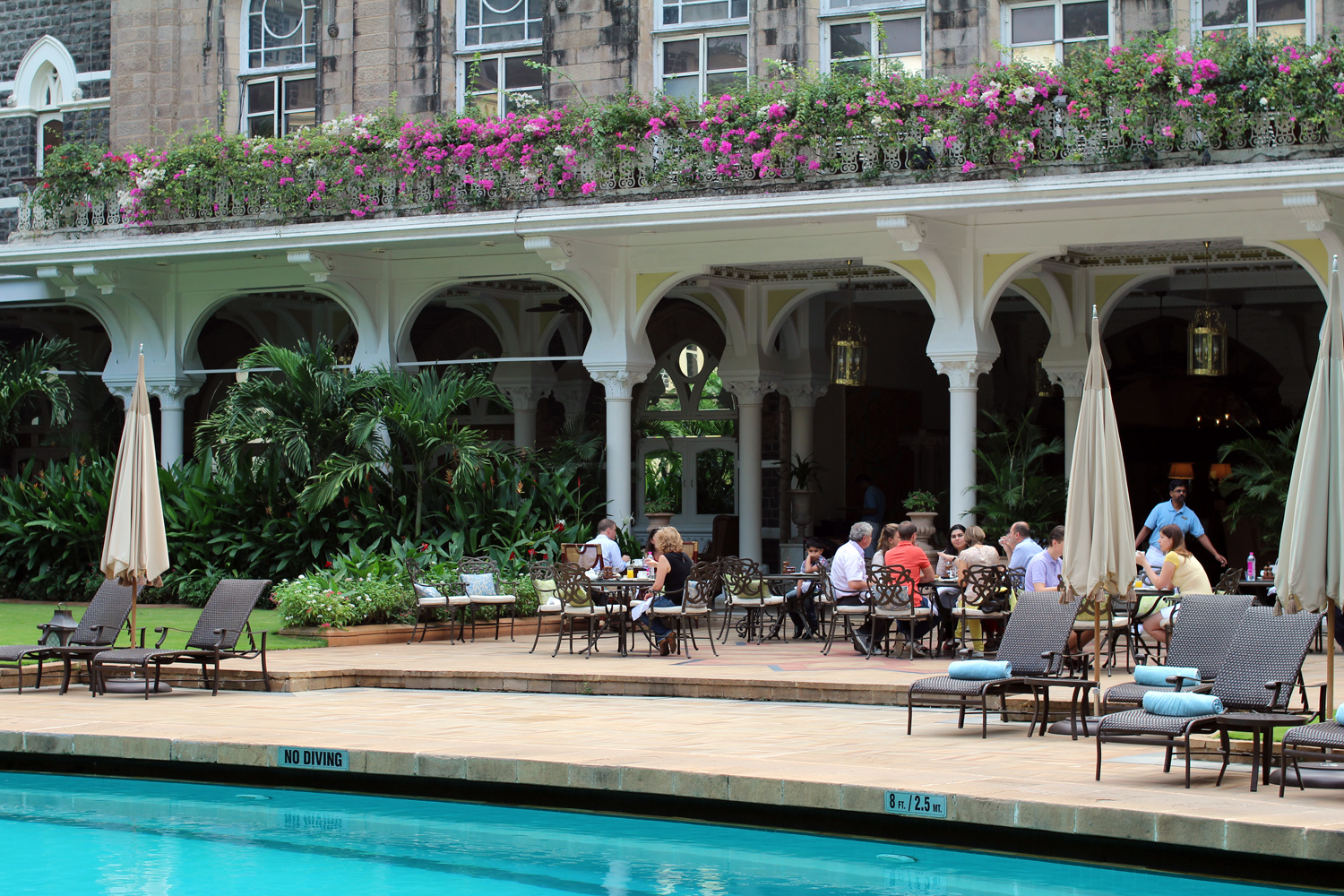
The Taj… as people say, yes it can set you back quite a few rupies – at the same time it’s manageable. And once you’re there, although in the cheapest wing and the cheapest room – which you’re sharing with your friend of course, your’re treated with a rare subdued respect and pleasantness. The whole hotel buzz with activity, but every sound seems muted.

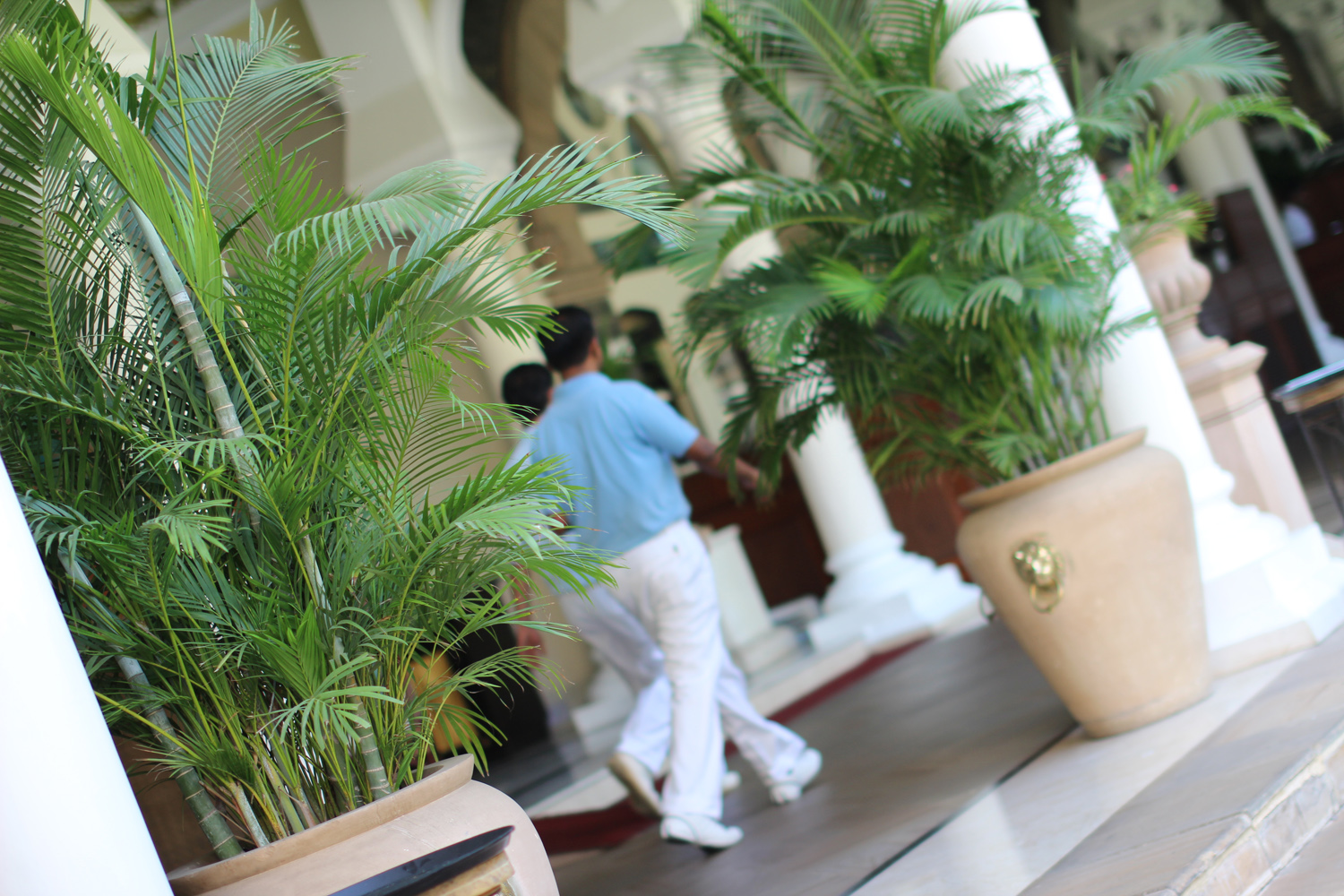
The interior is grand; and creates a fantastic atmosphere. The huge lobby with its many object des arts and the front desk that instinctively draws your attention because of the huge painting by M. F. Hussain, is what welcomes you once you’re “cleared”. The Taj with its recent history, the terror attacks a few years ago, has its own “airline security check” and reminds us what has become of the world.
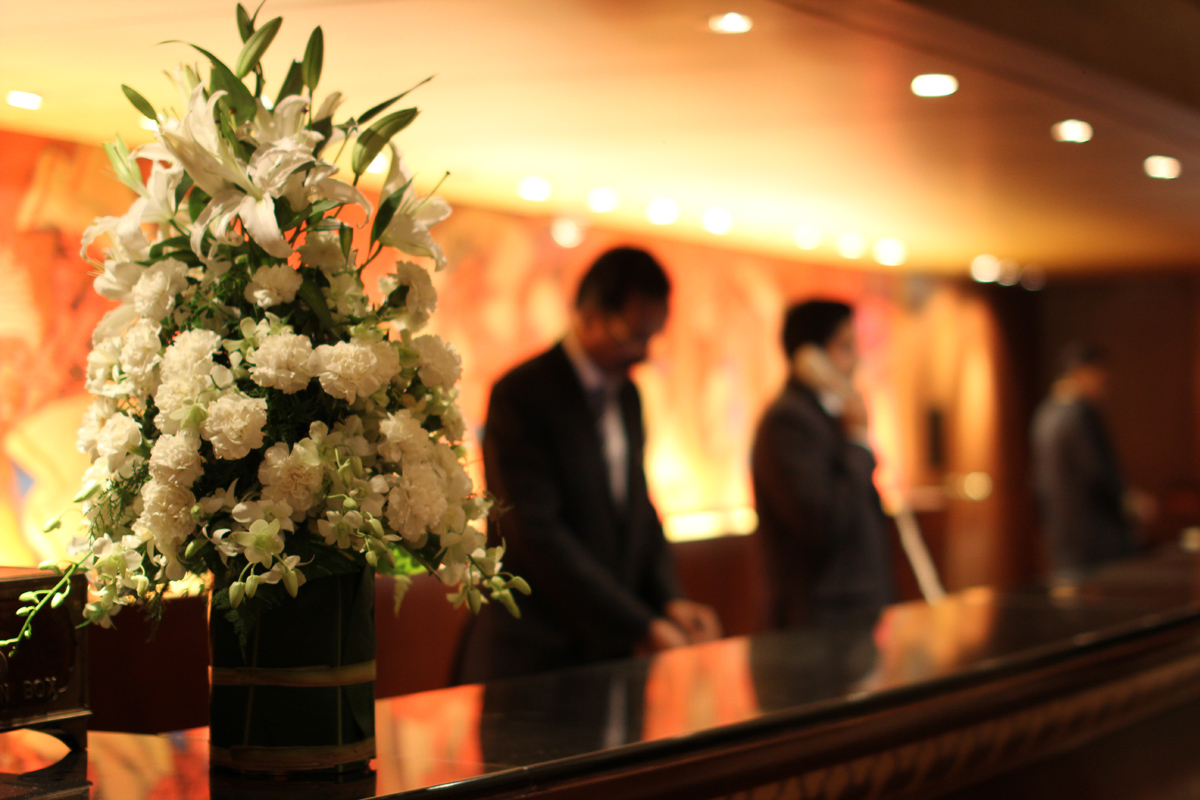
The flower arrangements are grand and exquisite, one may wonder if the budget has any limitations. The shopping arcades are tempting although you know very well that shopping should be done miles away from the Taj…

TAJ main lounge

The reception area, with the grand painting of Hussain; sometimes known as the Picasso of India.

Most of the time, a hotel is a place where you sleep and eat breakfast. When staying at the Taj, one should take time to linger. Walk about, look more closely at everything around you, and try out some of the restaurants, – if only for the atmosphere and the service. It’s even possible to take a guided tour of the hotel, which left us infatuated with the guide as well as the surroundings.

TAJ resepsjon

Breakfast is undoubtedly an experience. We made sure to allow plenty of time every day. The outdoor breakfast area is a pleasant distance from the pool. The wrought iron chairs have lovely pillows, once you’re there you want to stay a while.  And once seated, you’re taken care of by two, sometimes three waiters. They handle the tactless crows and ask if you’d like to top the breakfast with pancakes and chocolate – with the same discretion… And this is also how they place a jasmine flower by our plates, every day. When the stomach is full and the pancakes have created an uneasy atmosphere of bad conscience, we just lean back, say yes to another cup of coffee, put on the sunglasses and enjoy the – in every way – cool atmosphere. The beauty of Asia is very often the early morning hours with the heat and the humidity still lurking in the wings.

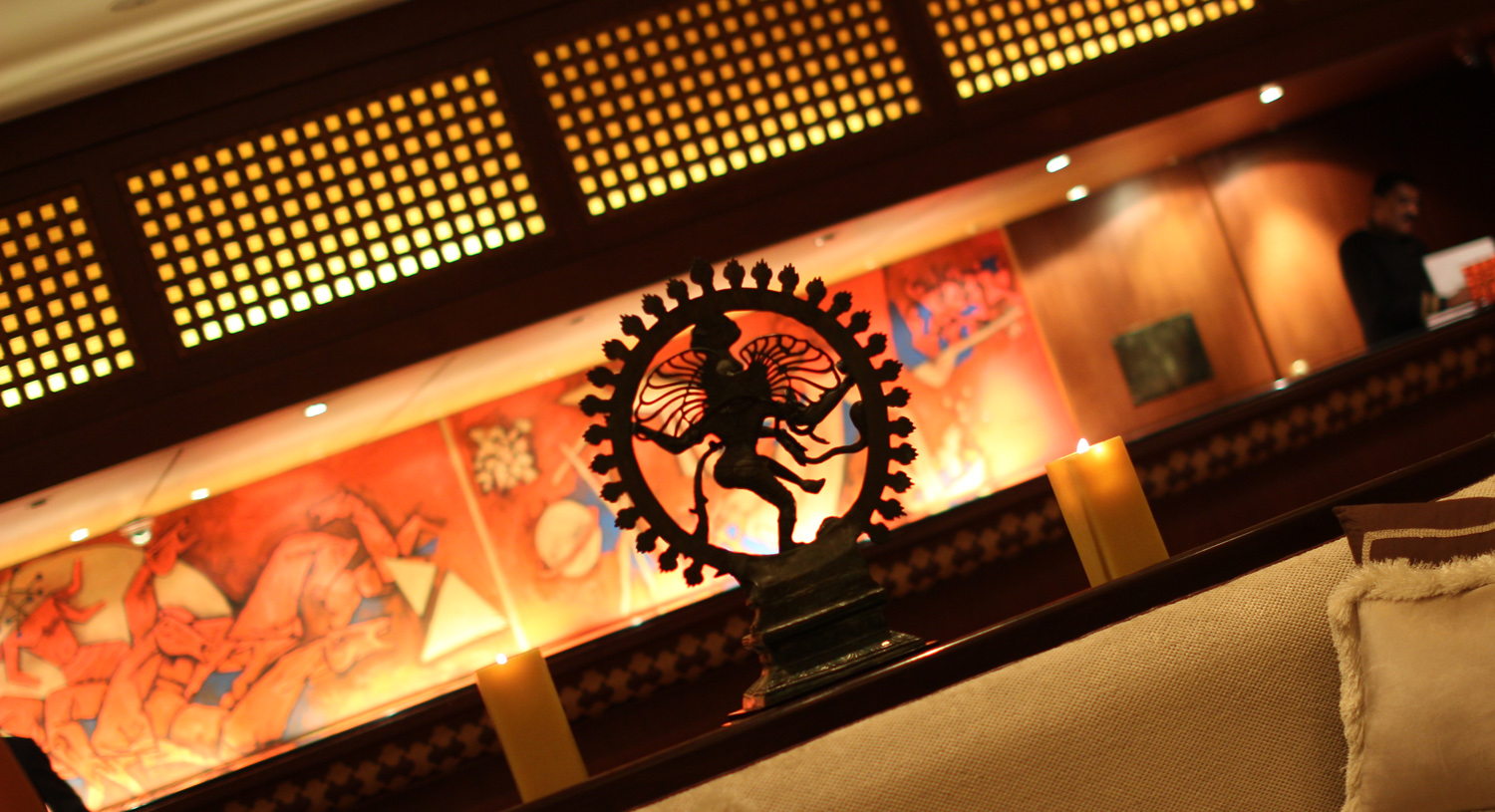
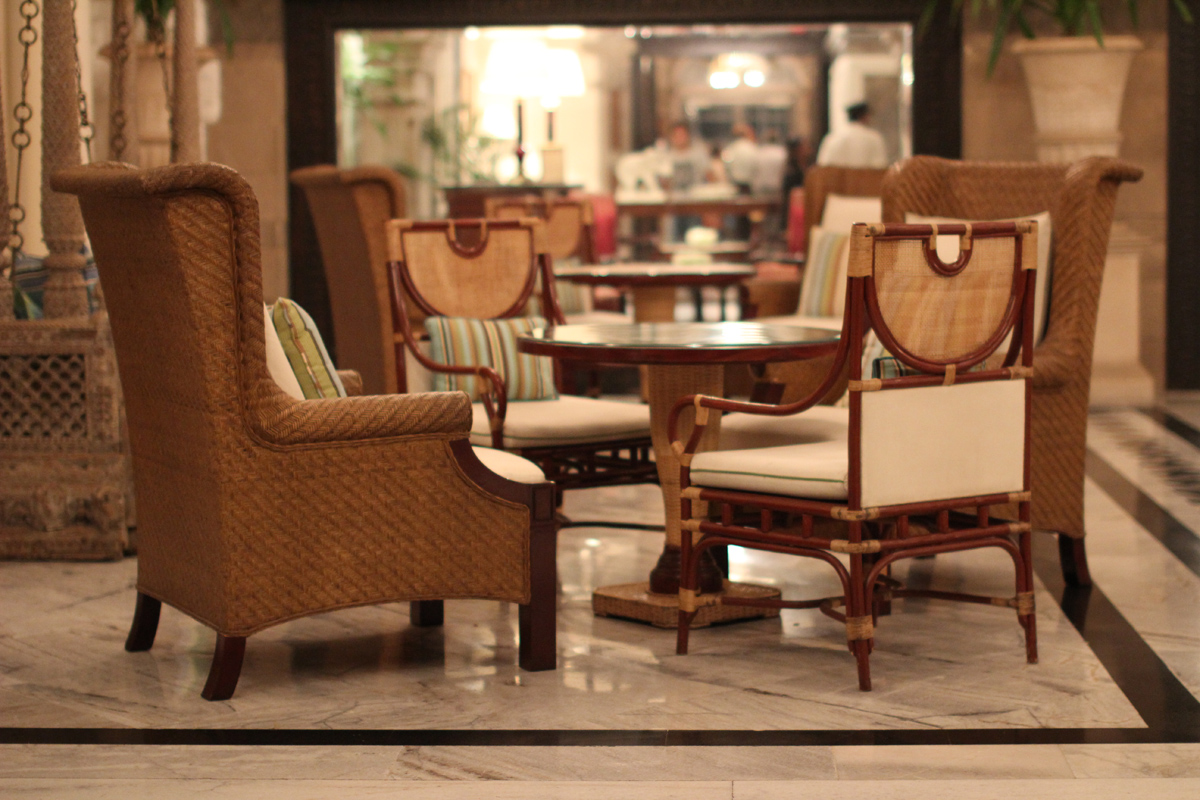
TAJ lounge

The bar lounge with its beautiful interior.

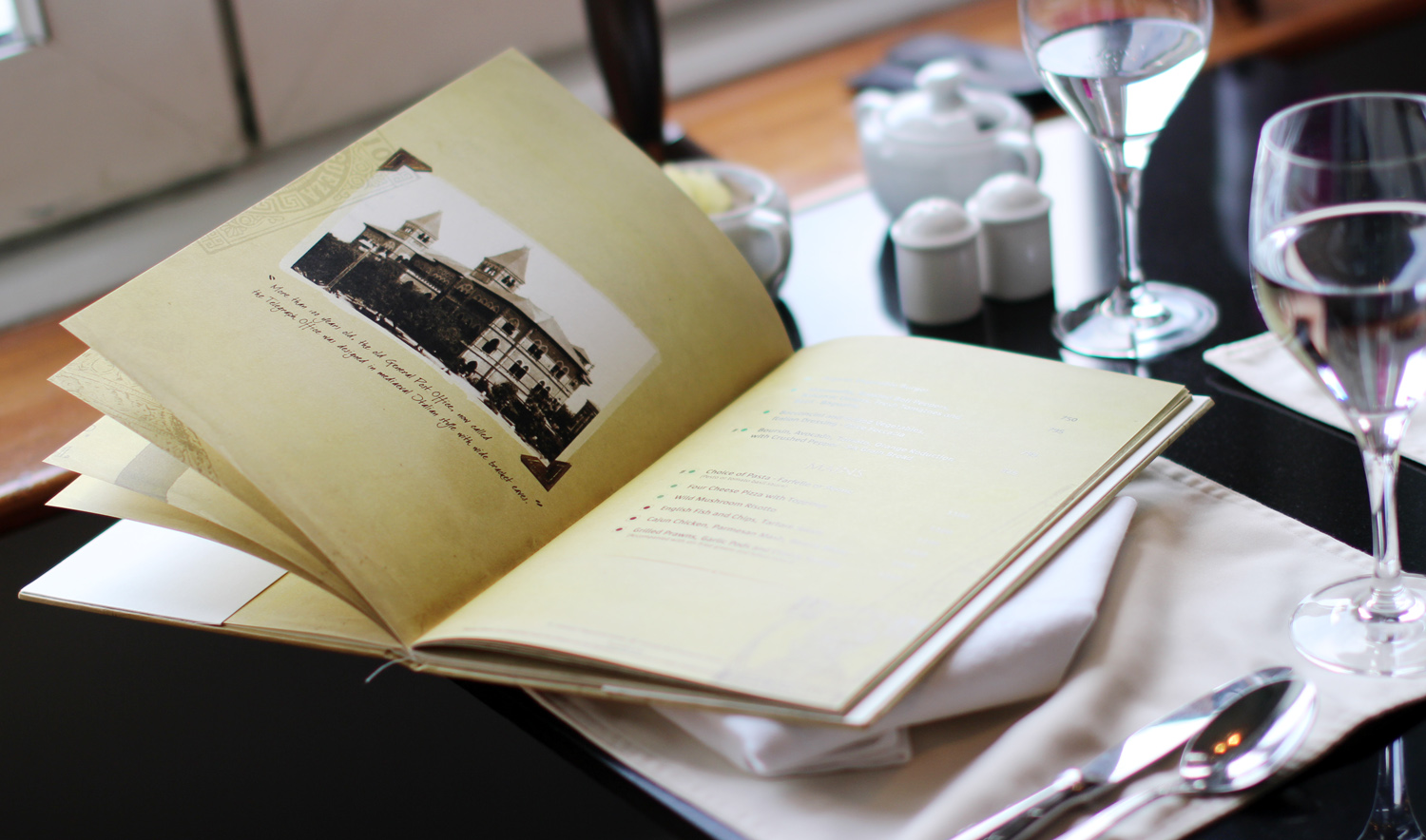
TAJ meny sea lounge

A menu is not just a menu at The Taj….. this is The Sea Lounge Restaurant with its beautiful sea view. Unbeatable….

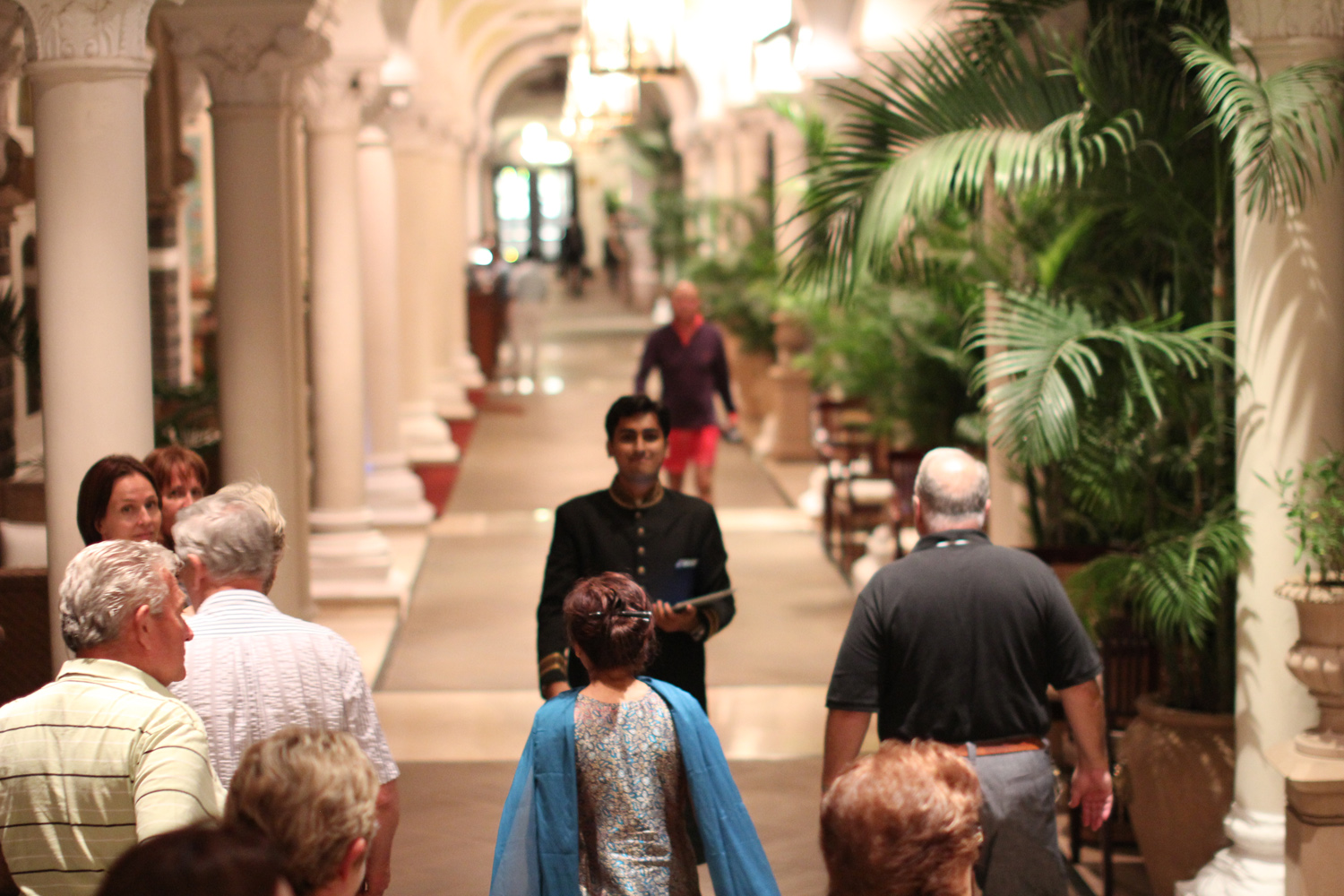
TAJ tour

A guided tour of the hotel should not be missed.

At the same time it is difficult not to think of life outside the Taj walls. The noise is there, more audible by the hour. The honking horns, the various wallahs shouting for attention. You know about the begging children, the newborn babies in their mother’s laps, people with handicaps you wouldn’t believe existed. That is why I feel uneasy about staying at The Taj, because it doesn’t feel right to spend money like that and enjoy the luxury.
TAJ frokost

TAJ breakfast


Paper at Jor Bagh Market February 2, 2014

– It’s only people like you, tourists, who come here. The owner of the small paper shop at Jor Bagh market in Delhi both looked and sounded defeated. – Well there are some foreigners in the area, they also come to shop here.
But it shone through, clients were not in abundance.

I almost missed it, the Four Seasons Gallery, as I was looking for the rather more famous JorBagh bookshop. I was walking through the arcade when I by chance spotted handmade paper in the corner of my eye, something that I rarely miss. I had never thought of finding a shop like this among the line of rather prosaic shops.

Jorbagh paper_1

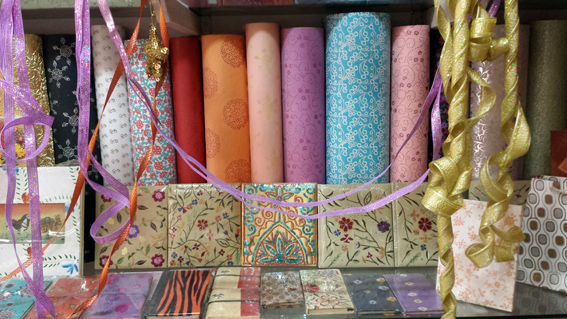
Beautiful stars and wrapping paper….

The Four Seasons Gallery, it’s tiny but colourful although a bit modest from the outside. The walls were lined with paper and paper products of all sorts. For a paper maniac, the shop was a small gem and I instinctly thought of my luggage (space being a key word…). As Christmas was only two months away, the many beautiful stars dominated the shelves.  Along with cards, note books, wrapping paper, albums, writing paper – everything in awesome colurs and patterns; from the beautifully ornamented elephants to more modern varieties.

Jorbagh paper_3

This handmade paper doesn’t crease in you suitcase. It almost behaves like fabric.

Sadly, paper is losing terrain these days. Although it might have happened once or twice, I never send birthday or Christmas wishes by SMS. I cannot think of anything more impersonal. I look upon it as an easy way out, but I realize I’m getting old fashioned. But people always say they treasure getting letters and cards sent by “snail mail”, and I will keep sending them so that I can come back to Jor Bagh and re-stock my own shelves.

Jorbagh paper_4

Temptations….

Jorbagh paper_5

Sadly, people prefer their smartphones to these notebooks…

If you should happen to be in Delhi, or in the area, the address is 13/4 Jor Bagh Market. It’s worth stopping by!


A book and a bestseller January 31, 2014

What makes a book a bestseller? Obvious?! It sells many copies. But what actually makes one book a bestseller – and another not?
My reading group recently read Shilpi Somaya Gowda’s bestseller Secret Daughter although I was very reluctant, I guess I was simply curious. When we took stock, two persons read it through and found it “OK”. One person read it on “fast forward”, one person gave up after 50 pages – and myself? – I left it when there was 50 or so pages left. The book is on display in whichever bookstore I enter and you can read it in more than 20 languages. To me, that is a mystery!

indias-datter

My reading group, concentrating on Indian and other Asian literature, ended up discussing not the characters in the book or the plot – but rather; is this a good book or not? We reached some sort of consensus.
Secret Daughter has roughly six main characters; An American couple with an adopted Indian daughter. A poor Indian couple who has “lost” one daughter, put one daughter up for adoption and well, there is one son. So the main plot of the book? It goes without saying.  My main objection to this book is the way the writer gives life to the characters. There simply is no life, as if they’re made of cardboard. And it’s not a story, it’s a rigmarole of events.

We left the book and moved on to the next: The House of the Mosque by Kader Abdolah. After only a few pages I felt I had a gem between my hands. It’s a family saga and the back drop is Iran, and moreover – the story leads up to the revolution in 1979. Secret Daughter told you a lot about Indian culture, but it was as if the author had a list of events that she wanted to include in her story. And then, check….
Abdolah tells a story and at the same time manages to include Iran’s bitter history in a very natural way. But it is the characters that most and foremost makes the book such a good read. They stand out as real, rise from the pages, and come to life. The book makes me curious, I’d like to step into the house, and the mosque; take the stairs up to the roof, sneak into the minarets… Go downstairs, get a glimpse of the “grandmothers” keeping the kitchen ship-shape, down to the pottery in the basement…. The book is about characters who give life to an environment, and vice versa.

Huset ved moskeen


A small enterprise…. November 9, 2013

Filed under: INDIA — benjamuna @ 6:13 pm
Tags: , , , , , ,

It’s a ll about business in India, it sometimes seems like… What intrigues me most, is all the really small enterprises; shops virtually on the threshold of old and often dilapidated buildings. Old Delhi, my favourite spot in Delhi, is a labyrinth of lanes and a shopper’s delight…. if you like to browse or shop in congested, warm, chaotic and noisy surroundings. Old Delhi is  a wholesale market where you’ll find everything under the sun, and be prepared to step back in history. This is far from the glittering malls and don’t expect toilets to freshen up.

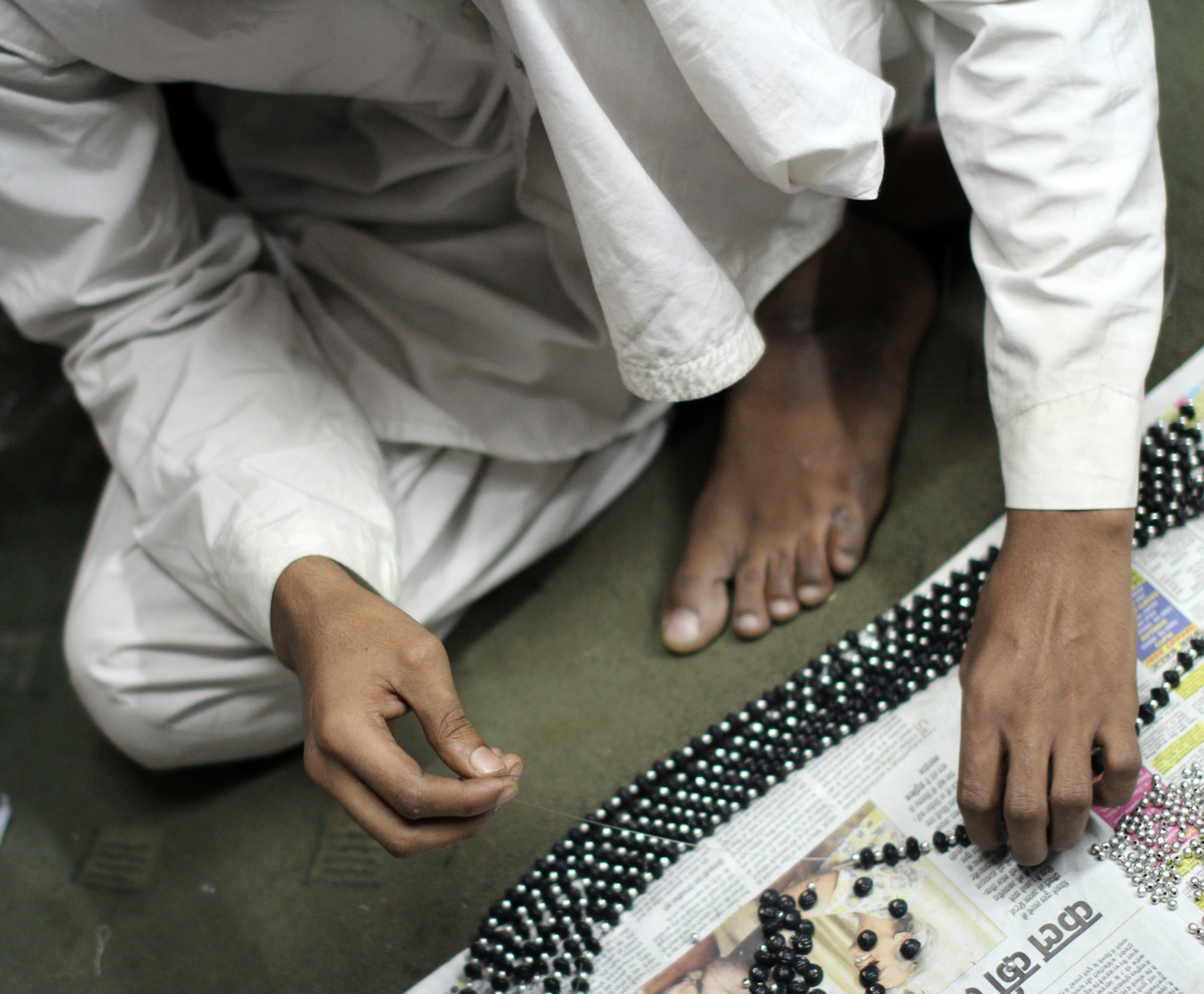
The man below repairs jewellery and this is his shop; a tiny table. I noticed him in February and brought a bracelet for him to repair. While I was waiting, people came and went. Threading necklaces seemed to be a sought after service.

BL_E_1

And talking about necklaces…. Old Delhi is an important place for gold and silver, but women don’t always need to wear “the real thing”. The guy below is making simple jewellery ready to be exported to… maybe your favourite clothes shop where you end up buying accessories matching your new dress – and that might be a necklace produced in these simple surroundings: A small room, dirty by our standards, hardly any furniture…

BL_E_2

BL_E_3

BELOW:
This guy is making bracelets for export to United Kingdom, we were told. They were three in his little workshop, it looked chaotic with materials lining absolutely every wall. And the floor wasn’t exactly empty either…. I was standing in the doorway, unable to leave, taking in the solemn atmosphere.

BL_E_5

He showed me his bracelets,  and I asked if I could  buy some…. I got three samples for 100 rupees each; the golden one, a bluish and a red. They will always be special to me!

BL_E_4

BELOW
I’m not sure what this guy is doing in his little workshop. One of the many small enterprises of Old Delhi. Will there be a new generation for him to pass on his workshop?

BL_E_6

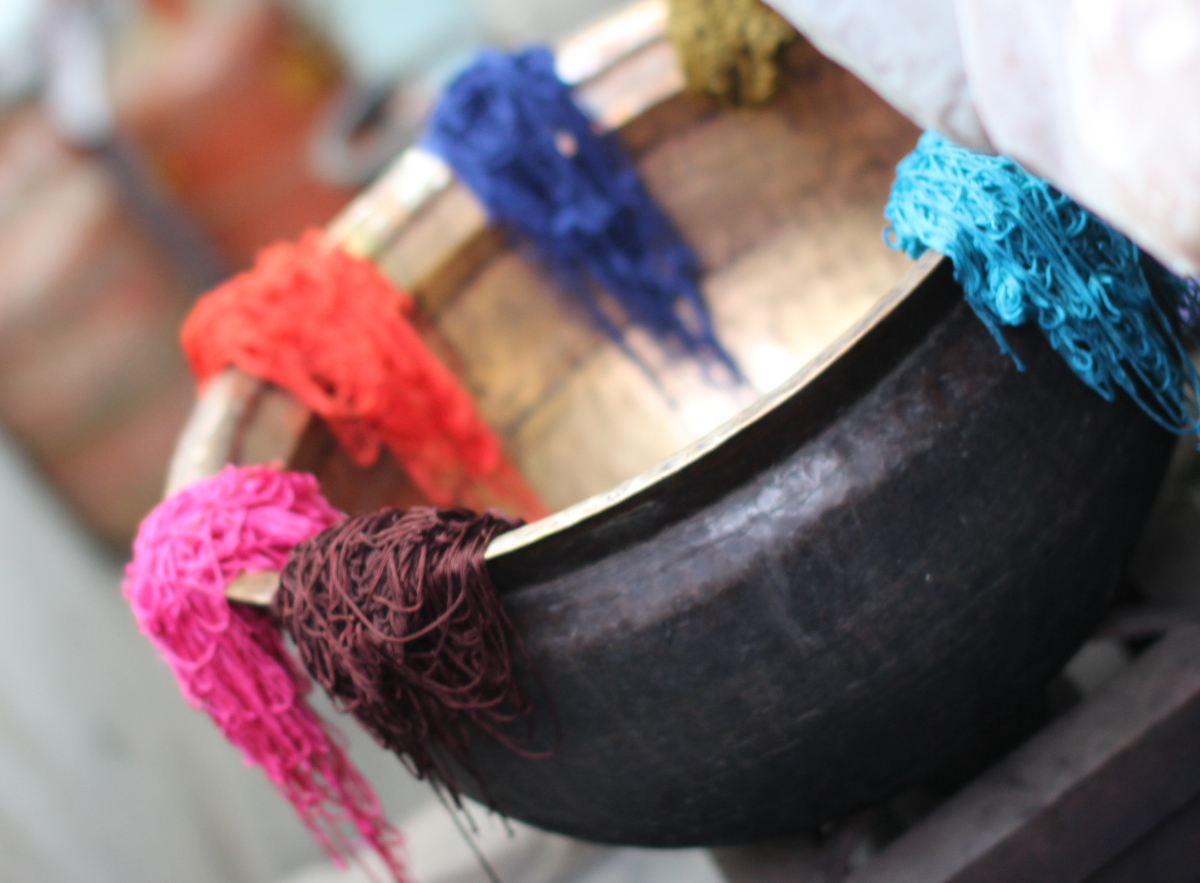
Dying beads in the doorway. It’s amazing how this is done by one man on the threshold of his workshop. If not anything else, it’s very social…. I’m thinking; this could be done a hundred times more effectively in a big workshop or factory. But he has a buyer, he has a job and he obviously makes money!

BL_E_8

BL_E_7

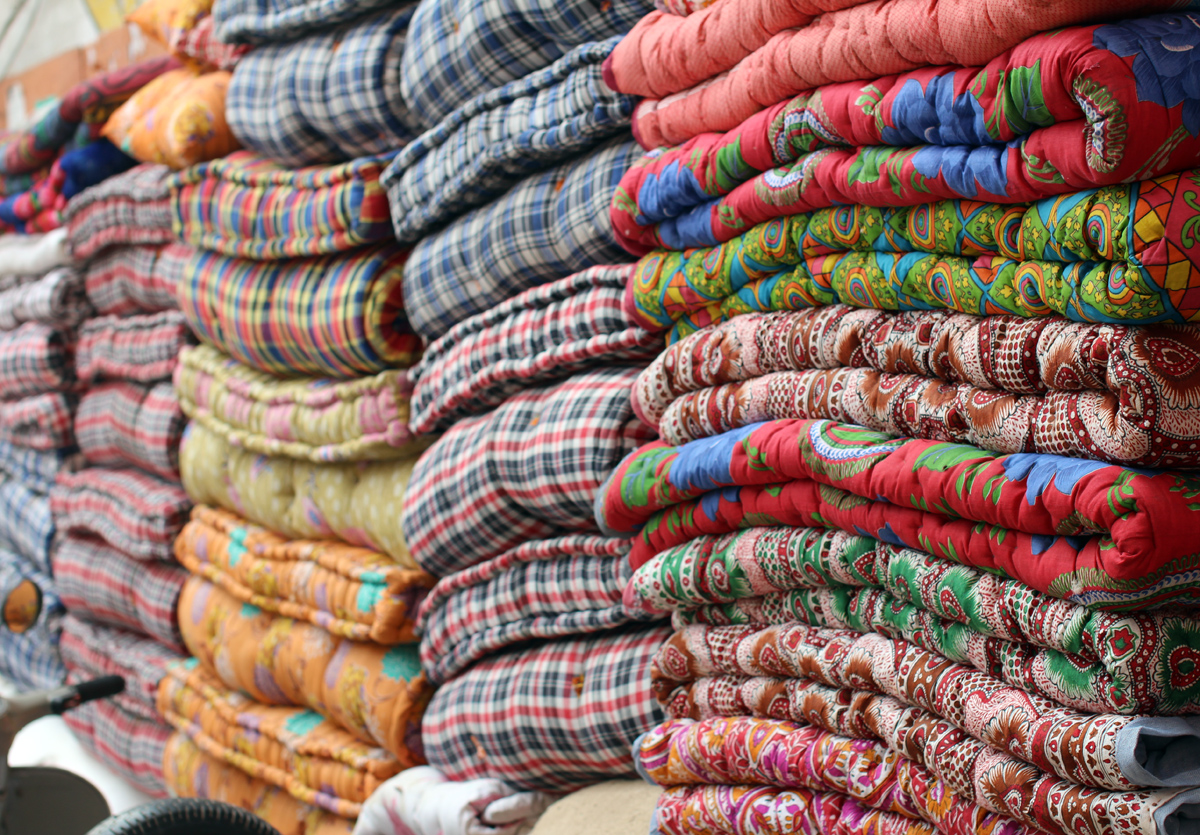
I came upon these colorful, padded quilts in Mehrauli and never thought they were produced in the area itself. You would think a production would need space, but a glimpse into the modest rooms told me another story.

BL_E_11

Raw cotton goes through the machine dating from – who knows when – and comes out refined and ready to be stuffed into the material in the room at the back. This guy is wearing protection, rarely seen in small enterprises like this….

BL_E_9

And last but not least…. the chai wallah! Tea is sold everywhere in small cups. Chai is tea The Indian Way; with milk and sugar. The demand is enormous, the profit can be likewise even though chai doesn’t exactly rip you off… Tea stalls are everywhere, this particular enterprise might seem simple but I was told he was one of the most prosperous chai wallahs in Old Delhi!

BL_E_12

It might not look too tempting… but once I tried it without sugar it felt right. But I don’t know if this is always a choice.

BL_E_13

Thanks to Anju afrom Master-ji Ki Haveli and Shriti of Beyond Delhi who took me places….


A stroll through Lodhi Garden November 1, 2013

Filed under: INDIA — benjamuna @ 2:08 pm
Tags: , , , ,

Lodi_2

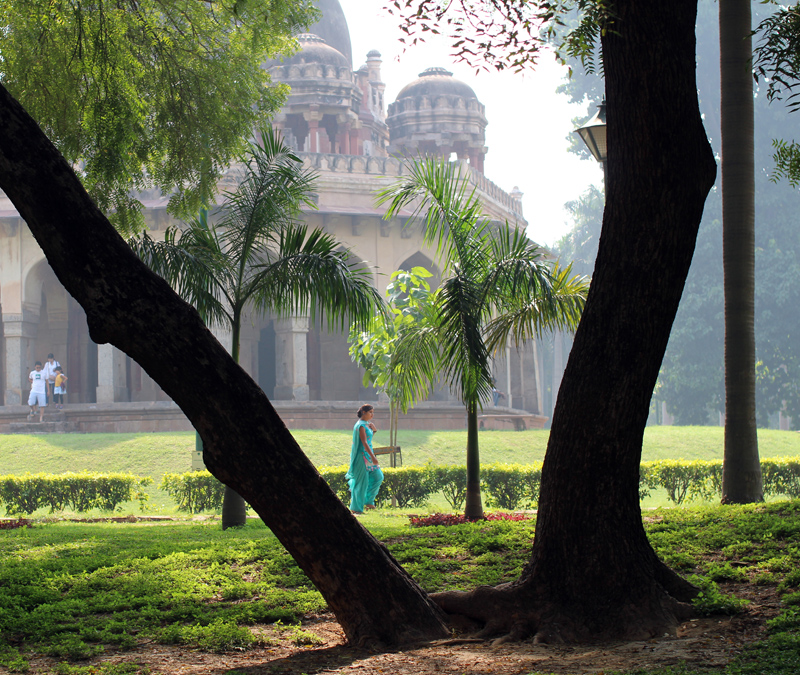
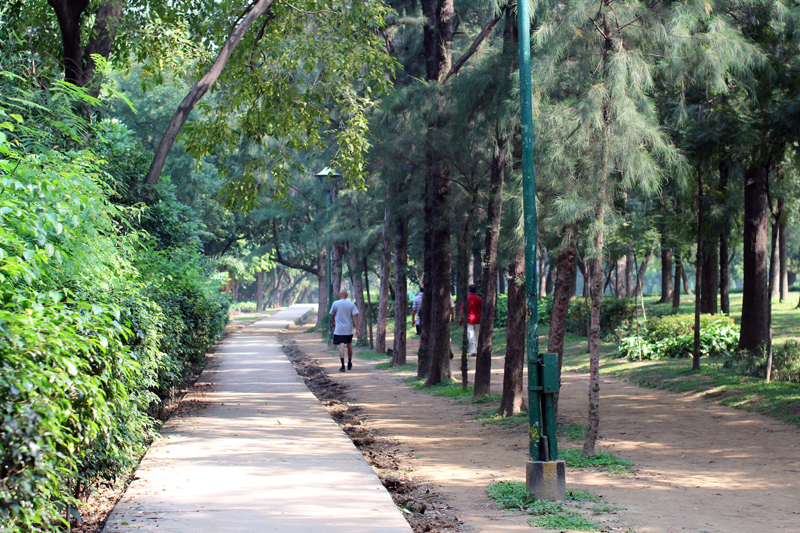
I didn’t make it in February, so top of my list in October was a visit to Lodhi Garden only a five-minute walk from where I was staying. The garden, which covers an area of 360,000 m2, is found in central New Delhi, where the surrounding areas are nearly as full of greenery as the park itself…. I entered through one of the gates at Lodhi Road and stumbled upon heaps of colorful Bougainvilleas. A perfect first impression… But the park is first of all full of trees and paths that cuts through the area. As well as several tombs and monuments dating back to 15th and 16th century.

The park is said to be a hot-spot for morning walks for the Delhiites, and yes: I saw more than one Delhiite walking briskly (or jogging) alone or in twos and threes. With a water bottle in hand. The heat came rapidly creeping upon me, but finding shelter from the sun is not a problem as trees are so plentiful.

Lodi_1

Of course I had to go through one of the Indian “cross-examinations” on my way through the park. As I was taking some photos a young man came up to me with the evergreen initial question; Where are you from followed by First time in India? To be honest, I have been through this many times before, I answer out of politeness and try to make it short although I never feel offended in any way. A little later I asked a young woman for directions, she invited me to join her and eventually came up with the same questions.  But I didn’t mind answering, after all it was me who approached her.

Lodi_4

When I reached the area with the small lake, which was my goal, I noticed that the number of young couples had increased. They sat close together everywhere, close but at the same time not touching. In India, it is still not quite right to be in love…. at least not before marriage.  Just the day before I had been seeing some young girls who was in the midst of their studies and I asked them – mostly as an ice-breaker – if they had boy friends. Giggles and smiles filled the rom, but one of the men who was present corrected me from the sideline with a firm smile; “Indian girls don’t have boyfriends”. Well Lodhi Garden is definitely a place for courting….

Lodi_6

The park seemed well maintained, there were colourful dustbins pretty much everywhere. Just like Marine Drive in Mumbai, Lodhi Garden is a place to breathe freely. Big cities like Mumbai and Delhi can be quite “unbreathable” – especially in the heat. Marine Drive and Lodhi Garden cannot be compared, but they are beautiful escapes in two different ways!

Lodi_3


A story from Iran October 13, 2013

Filed under: Literature — benjamuna @ 6:42 pm
Tags: , ,

I was 16 or 17 years old, preparing for a history test. I was reading, turning one page after another but unable to remember a single word. Panic grew….drama… My father entered the room, sent by my mother. While leafing through my text-book, he started to tell me about the 2nd world war in his own words. Exit panic.

I have always found it difficult to read in order to pass a test.  History and geography never were my best subjects at school. So I don’t know much about – for example – Iran. But of course I remember Farah Diba from my childhood. She was the beautiful celebrity from somewhere far away, married to the Shah of Persia. Together they represented some sort of a  sparkling fairytale. The fairytale ended though – and my interest in Iran never really exceeded Farah Diba.

This summer I picked up a book by Iranian Dina Nayeri: “A Teaspoon of Earth and Sea”. The story takes place in the 1980’s and tells the story of Saba who at 11 was left by her twin sister and mother. In Saba’s imagination they fled to America, Saba’s Shangri-La. Saba grows as I’m turning the pages. Her family is Christian converts and Saba is a free spirit who buys American films and books from a pusher. She smokes hashish together with her best friends Ponneh and Reza. At one hand she leads a care free existence. Saba’s distant  father is wealthy, but struggles to cope as a single father. On the other hand, Saba constantly grieves the loss of her twin sister and mother and nobody really knows their whereabouts.

Teaspoon_1

But this is also about the post-revolution, the morale police (the pasdars), the chadors and hijabs, the mullahs… beating and harassment. It’s history. The book also tells me a lot of another culture. About the strong, energetic women around Saba, her “surrogate mothers” who is hiding various unspoken bottles in their voluminous chadors.  The sofrehs, the khastegaris, the parties behind closed curtains, the opium… the fun. In the midst of it Mullah Ali, a family friend who sleeps and snores through the hashish smoke and whatever else taking place that a mullah would never approve of – unless he was a true family friend.
It’s a story about arranged marriages, where Saba marries a very old man and becomes widow-in-waiting because everybody tells her that a married woman, even a widow can indulge in a freedom an unmarried student in Tehran can not even dream of. Besides, she will eventually get very rich.

I’m always thinking… if I had been a history teacher I would use literature as a teaching method. How can history ever get boring through the writing of – for example Dina Nayeri.


Reflections on some muslim writers… September 20, 2013

In my part of the world, muslims are looked upon in a very one dimensional way. We associate muslims with women in burkas, the Koran, mosques, eid, fast, Ramadan. And…. terror. Does people from, say Pakistan, drink alcohol? do they read Shakespeare? do they have any sense of humour??

I always turn to the books, novels in particular, in order to learn about foreign cultures, and have lately read quite a few books by Pakistani authors. My favourite might possibly be Kamila Shamsie. Highly acclaimed “Burnt Shadows” (2009) is translated into Norwegian, but all her previous novels (which I read in succession) are really worthwhile to read. Maybe more so than “Burnt Shadows”…

Image

Shamsie, and many other Pakistani writers, describes a muslim world we seldom hear about in the news. They describe the elite…. the intellectuals. Those who dance and drink and sing… Those who are in opposition to the establishment. Those who quote Shakespeare… Yes, poverty is there, in glimpses.  But those of us who has read say Indian literature extensively, is more than ready for a more differentiated picture of countries like India, Pakistan and Bangladesh. Which leads me to the novel I just finished; “A good Muslim” by Tahmima Anam, born in Dhaka, Bangladesh. Anam lives in London and has received several UK prizes for her first novel, “A Golden Age”. “A Good Muslim” is a good read. But it’s also tells the story of “the good and the bad” muslim and thus calls for reflection. (It also has a beautiful cover, which I’m always drawn towards…)

Image

Most of the muslim authors I’ve read travel between their homeland and the US, or other western countries. Shamsie has won prizes both in her homeland and UK.

Last but not least I should mention “How it Happened” by Shazaf Fatima Haider. Born in Islamabad, based in Karachi, this is her first novel. Haider has taught me all I need to know about arranged marriages…. besides, her book is absolutely hilarious. In the western world we despise arranged marriages, failing to see it’s part of a totality. It doesn’t fit in our culture, but that doesn’t mean it’s wrong. I wouldn’t say I’m now in favour of arranged marriages, but the novel gave me both insight and understanding – and a good laugh. Haider writes well and a difficult topic is handled with humour!


The letter writers of Mumbai September 13, 2013

Filed under: INDIA — benjamuna @ 10:43 am

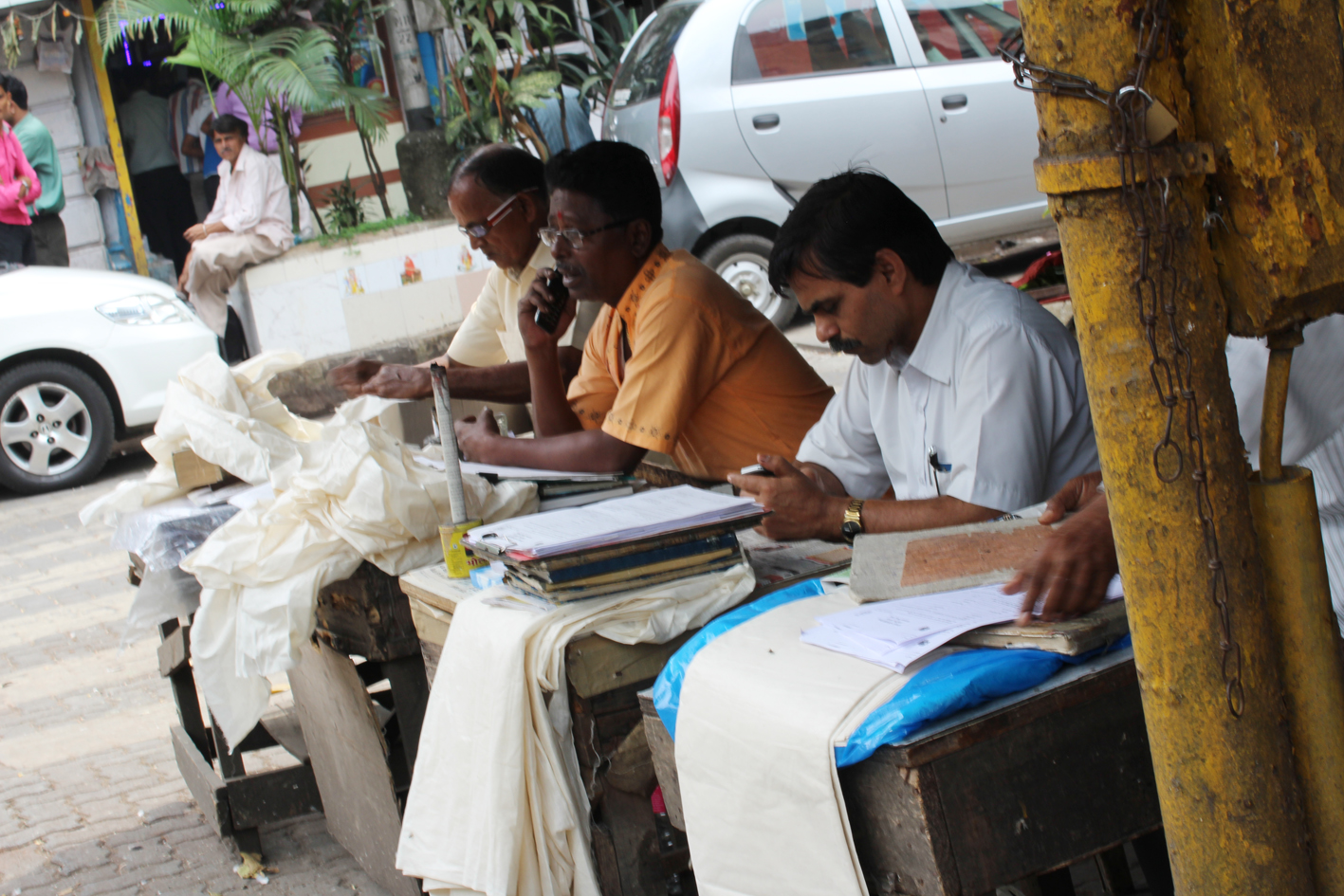
People sometimes ask me from where I get my knowledge about India. And I always answer; through literature.  It was by reading a novel I first learnt about the letter writers in Mumbai. The main character was one of these. He placed himself outside the general post office in Mumbai every day,  where he wrote letters on behalf of all those – immigrants for example – who were not able to write, and probably not read.

It doesn’t come as a surprise that this trade is declining. Not necessarily because more people are able to read and write these days, but because of the cell phone which is more or less common property – also among the poor and illiterate in India. India is after all the world’s fastest-growing market for cell phones.

When I first read about the letters writers, the phenomena intrigued me. I tried to envisage the situation; the letter writer and his customer. The latter sharing all kinds of information from happiness to tragedy. And with no other option than to trust the man, the letter writer, in front of him.

Image

From the outset, the letter writers sat inside the post office, but had to move out in 1995. I never believed I would find a single letter writer in our time. Just by chance, I asked a guide who took me to a market one day, of their whereabouts. But no, she said, they’re gone years ago. But it so happened that I took a tour with Beyond Bombay a few days later, we were walking in the footsteps of one of the characters in the novel Shantaram.  My tour started right outside the famous VT, Victoria Terminus – Mumbai’s grand train station in the south of Mumbai. And only a short walk away; the letters writers sprang to live in front of me… It came as a big surprise actually, but they were very much present – if not in abundance…: A few men at the base of a tree, under a tarpaulin. Not too busy, still, they were in business. Maybe writing letters is not their most important task these days, but wrapping parcels and filling in forms seemed to be in need.

It doesn’t some as a surprise that one finds this kind of business in Mumbai, or India for that matter. All kinds of business affairs take place on the pavement. But the letter writers will eventually disappear. I haven’t seen them mentioned in any guide book, and I’m glad that they’re not a tourist attraction. But I’m glad I read the novel that took me to such an interesting cultural phenomena.

Image


Some favourite book covers… April 26, 2013

I’m not a wine connoisseur…. I like wine, but I know nothing about it. I have tasted expensive red wines, but realised it wasn’t really worth it, at least if I would have to pay myself… So what I sometimes go for, is the label. Within a price range, of course… If I don’t know what to buy, I choose a really nice label.
But this is not about wine, it’s about books! Very often I go looking for a specific novel or a specific author. Sometimes I buy one by chance. And what initially attracts me is very often the book cover.  Then I turn around the book and read about it.

I can’t remember where I found Saraswati Park by Anjali Joseph, but I guess I fell for the bicycle, the flourish around the edges, the font and the green shades. The bicycle made me curious… although I didn’t expect the novel to tell a story about bicycles. What it does tell, is the story about Mohan; a letter writer in Bombay. A dying phenomenon. Never the less, when I visited Bombay last November a guide took me to the remaining letter writers outside the General Post Office in the south of Bombay. I felt lucky… I was able to see something that represents – soon – another time. In short; the letter writers have for decades written letters on behalf of those – migrants for example – who are not able to write themselves. Or, they fill in forms and help sending parcels. These days, even the underprivileged have access to a cell phone, and thus the letter writers are on decline.

BCover_3

A bitter-sweet story.

Calcutta Exile by Bunny Suraiya is definitely novel I bought because of the book cover, and also because I’d like to go to Calcutta – where I haven’t been yet. This might not be great literature and a book to remember, but it tells the story about Anglo-Indians and in that respect depicts a part of Indian history.

Calcutta’s Anglo-Indians, one of the most graceful and beautiful communities of India, became bewildered orphans, suddenly uncertain of their roots and equivocal about their future.

BC_3

A book cover that says… travel back in time.

Anosh Irani was new to me before I read about him in a magazine recently. Dahanu Road is his most recent novel. Literature never fails to enlighten me. I have now learnt that there are Parsis and there are Iranis… but that is another story. On the front cover you can see the chikoo fruit; not only does it look good but it plays an important role in the novel. Dahanu Road is one of these books permeated by domestic violence and whether the end is optimistic or pessimistic I really don’t know… It was, at times, a struggle to read.

The book is beautifully written – thus a quote from the book:

Shapur Irani always thought of dusk as a beggar. It had no light, it had no darkness; it lived on the scraps that were fed to it by day and night.

BCover_1

On the bike; Zairos and Kusum…

The Alchemy of Desire brought me to Uttaranchal in the north of India where I met Tarun Tejpal, his father and his wife. Which is yet another story…. I read the novel and knew I just had to go there.  The front cover shows a photo of a house which the story evolves around. This house is now turned into Two Chimneys, a bed and breakfast where we were the very first guests a few years back. I never really thought the house in the book was for real, and I took the cover photo to be nothing but an illustration. But it was all very much real… The house on the hill with the two chimneys… Literature can open doors!

BCover4

A book and a house….